
How to Start an HVAC Business in Texas: A Step-by-Step Guide

Why Texas Is a Great Market for HVAC
Texas is one of the best states in the country to start an HVAC business. Here’s why:
- Population growth: Texas adds 1,000+ new residents per day, creating constant demand for HVAC installation and service
- Extreme climate: With summer temperatures regularly hitting 100°F+ and winter cold snaps, HVAC isn’t optional — it’s essential
- New construction boom: Texas leads the nation in new home construction, and every new home needs HVAC
- Business-friendly environment: No state income tax, reasonable licensing requirements, and strong demand across urban and suburban areas
The HVAC industry in Texas is projected to grow 6-8% annually through 2030. If you have the skills and the drive, now is the time to start.
Step 1: Get Your HVAC License
Texas requires HVAC contractors to be licensed through the Texas Department of Licensing and Regulation (TDLR). Here’s the licensing ladder:
HVAC Technician Registration (Entry Level)
- No experience requirement
- Must work under a licensed contractor
- Cost: ~$20 registration fee
Class B HVAC License
- Requires 2 years of practical experience under a licensed contractor
- Pass the TDLR Class B exam
- Can perform installations and repairs but cannot pull permits independently in some jurisdictions
Class A HVAC License (Contractor License)
- Requires 4 years of practical experience
- Pass the TDLR Class A exam
- Can operate an HVAC business, pull permits, and supervise other technicians
- Cost: ~$115 license fee + exam fees
Also required:
- EPA Section 608 Certification — Required by federal law to handle refrigerants. Must pass the EPA-approved exam.
- City/county permits — Many Texas cities (Dallas, Houston, Austin, San Antonio) require additional contractor registration
Step 2: Create Your Business Entity
You’ll need to register your business with the state of Texas:
- Choose your business structure — LLC is most common for HVAC contractors (liability protection + tax flexibility)
- Register with the Texas Secretary of State — File a Certificate of Formation ($300 filing fee for LLC)
- Get your EIN — Apply for an Employer Identification Number from the IRS (free)
- Register for Texas sales tax — HVAC parts and equipment sales are taxable in Texas
- Open a business bank account — Keep personal and business finances separate from day one
Step 3: Get Insurance
Don’t start a single job without proper insurance. One incident can bankrupt an uninsured business.
- General liability insurance: $500K-$1M minimum. Covers property damage and bodily injury. Cost: ~$800-$2,000/year
- Workers’ compensation: Required in Texas if you have employees (technically optional but strongly recommended). Cost: ~$2,000-$5,000/year per employee
- Commercial auto insurance: Required for service vehicles. Cost: ~$1,500-$3,000/year per vehicle
- Tools and equipment coverage: Protects your investment in tools. Cost: ~$300-$500/year
- Surety bond: Some cities require a contractor bond ($10,000-$25,000 bond; premium is ~1-3% of bond amount)
Budget: $5,000-$12,000/year for a startup operation.
Step 4: Buy Equipment and Stock Your Truck
Your startup equipment investment will be one of your biggest costs:
Vehicle ($25,000-$50,000)
A reliable service van or truck with organized shelving. Used cargo vans (Ford Transit, Mercedes Sprinter, Chevy Express) in the $25,000-$35,000 range work great. Add ladder racks and interior shelving.
Tools ($5,000-$15,000)
- Manifold gauge set, vacuum pump, refrigerant recovery machine
- Multimeter, clamp meter, combustion analyzer
- Hand tools, power tools, drill set
- Leak detectors, thermometers, manometers
- Safety equipment (PPE, fall protection for roof work)
Initial Parts Inventory ($2,000-$5,000)
Stock your truck with the parts you’ll use most: capacitors, contactors, fan motors, filters, thermostats, common fittings, copper tubing, and refrigerant.
Business Software ($50-$200/month)
Field service management software, accounting software, and communication tools. TackOn FSM starts at $49/month and covers scheduling, dispatch, invoicing, and customer management — so you look professional from day one.
Step 5: Set Your Pricing
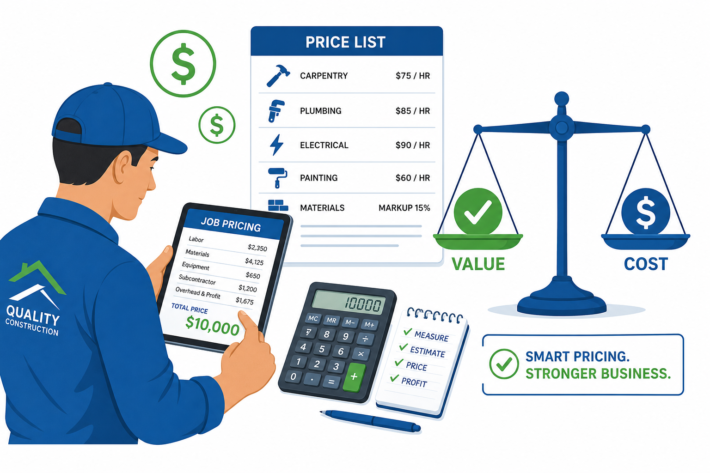
Don’t guess on pricing — calculate your true costs and set rates that ensure profitability.
- Service call / diagnostic fee: $79-$129 (waived if customer proceeds with repair)
- Hourly labor rate: $85-$150/hour (varies by market and specialization)
- Flat rate pricing: Build a pricebook for your top 50 services based on labor time + parts + overhead + profit margin
→ Read our full pricing guide: How to Price Field Service Jobs
Step 6: Market Your Business
You have the skills and the truck — now you need customers. Here’s where to focus first:
Google Business Profile (Free, High Impact)
Set up and fully optimize your Google Business Profile. This is how customers find you when they search “HVAC repair near me.” Include photos, services, hours, and actively collect reviews.
→ Read our guide: How to Get More Google Reviews
Website ($500-$2,000 Setup)
A simple, professional website with your services, service area, phone number, and a “Book Now” button. It doesn’t need to be fancy — it needs to convert searchers into callers.
Referral Network
- Connect with real estate agents (they need HVAC inspections for every sale)
- Partner with plumbers and electricians for cross-referrals
- Join your local home builders association
- Introduce yourself to property management companies
Google Ads ($500-$1,500/month to Start)
Once you have reviews and a website, Google Local Service Ads and Search Ads are the fastest way to generate leads. Target emergency searches like “AC repair [your city]” and “furnace not working.”
Step 7: Build Systems From Day One
The contractors who succeed long-term are the ones who build systems early — not the ones who try to do everything manually and hit a wall at 3 employees.
- Use field service software from day one — Even if you’re a one-person operation, digital scheduling, invoicing, and customer records will save you 10+ hours per week and make scaling painless
- Set up accounting — QuickBooks or similar, connected to your FSM software
- Create standard operating procedures — Document how you want every job handled
- Track your KPIs — Revenue, expenses, close rate, average ticket, customer satisfaction
→ Read more: 12 Field Service KPIs Every Contractor Should Track
Startup Cost Summary
| Category | Low Estimate | High Estimate |
|---|---|---|
| Licensing & registration | $500 | $1,500 |
| LLC formation & legal | $500 | $1,500 |
| Insurance (first year) | $5,000 | $12,000 |
| Vehicle | $25,000 | $50,000 |
| Tools & equipment | $5,000 | $15,000 |
| Parts inventory | $2,000 | $5,000 |
| Marketing (first 3 months) | $2,000 | $5,000 |
| Software & tech | $500 | $1,000 |
| Total | $40,500 | $91,000 |
Ready to Launch?
Starting an HVAC business in Texas is a proven path to building a profitable, in-demand trade business. Set yourself up for success by getting your licensing, insurance, and systems in place from day one.
TackOn FSM helps new HVAC businesses look established from the start — with professional scheduling, invoicing, customer management, and more.