
Field Service KPIs: 12 Metrics Every Contractor Should Track
Why Tracking KPIs Matters for Field Service Businesses
You can’t improve what you don’t measure. Yet most small contractors run their business on gut feelings — they know when things feel busy or slow, but can’t pinpoint exactly what’s working, what’s broken, or where they’re leaving money on the table.
Key Performance Indicators (KPIs) give you the numbers behind the feelings. They tell you which technicians are crushing it, which services are most profitable, where you’re losing customers, and how to grow without just working harder.
Here are the 12 KPIs every field service contractor should track — and what to do when the numbers aren’t where they should be.
Revenue & Profitability KPIs
1. Revenue Per Technician
What it measures: Total revenue divided by number of field technicians.
Why it matters: This is your top-level productivity metric. If one technician generates $15,000/month and another generates $8,000/month, you need to understand why — is it scheduling, skills, upselling, or route efficiency?
Benchmark: $150,000-$250,000 per technician per year for HVAC/plumbing contractors.
2. Average Ticket Size
What it measures: Average revenue per completed service call.
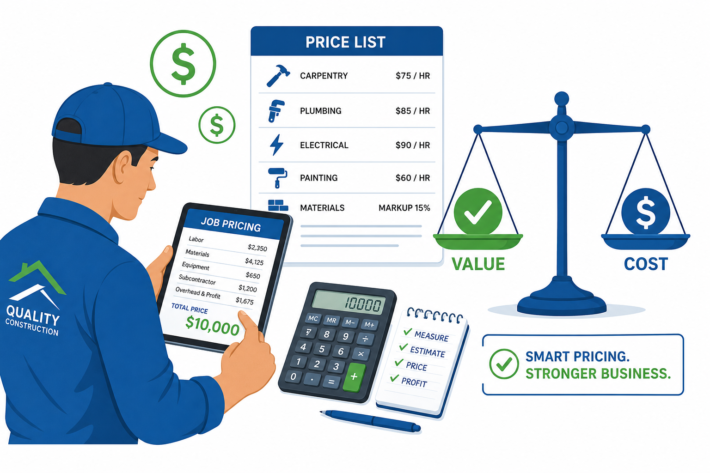
Why it matters: A declining ticket size means technicians aren’t capturing all billable work, aren’t upselling maintenance agreements, or your pricing hasn’t kept up with costs.
How to improve: Train technicians to present options (good/better/best), recommend preventive maintenance, and identify additional issues during every visit.
3. Gross Profit Margin Per Job
What it measures: (Revenue – direct costs) ÷ Revenue × 100 for each job.
Why it matters: Revenue means nothing if your margins are thin. Track this by service type — you might find that your most popular service has the worst margins, while a less-common specialty job is highly profitable.
Benchmark: 50-65% gross margin for service work, 35-45% for installation projects.
Operational Efficiency KPIs
4. First-Time Fix Rate
What it measures: Percentage of jobs completed on the first visit.
Why it matters: Every return trip costs you a full labor slot with zero additional revenue. A low FTFR signals issues with truck stocking, dispatching, or technician training.
Benchmark: 75-85% is good; top performers hit 90%+.
→ Read our full guide: How to Improve First-Time Fix Rate
5. Jobs Completed Per Technician Per Day
What it measures: Average number of completed service calls per tech per day.
Why it matters: This reflects your scheduling efficiency, route optimization, and job complexity mix. If your team averages 3 jobs/day but could handle 5 with better routing, you’re leaving 40% of capacity unused.
Benchmark: 4-6 service calls per technician per day (varies by service type and drive distances).
6. Technician Utilization Rate
What it measures: Percentage of available work hours spent on billable jobs (vs. driving, waiting, admin, or idle time).
Why it matters: A technician working 8 hours but only billing for 4 of them has a 50% utilization rate. The other 4 hours are drive time, lunch, paperwork, or gaps between jobs. Smart dispatch and route optimization push this number higher.
Benchmark: 65-80% utilization rate.
Customer Experience KPIs
7. Customer Satisfaction Score (CSAT)
What it measures: Post-service survey rating, typically on a 1-5 or 1-10 scale.
Why it matters: Happy customers refer friends, renew service agreements, and leave Google reviews. Unhappy customers tell 10 people about their bad experience. Tracking CSAT by technician lets you identify who needs coaching.
How to track: Send an automated survey via text after every service call. Even a simple “How did we do? Rate 1-5” gives you usable data.
8. No-Show Rate
What it measures: Percentage of scheduled appointments where the customer wasn’t available.
Why it matters: Each no-show is a wasted truck roll — fuel, labor, and a slot that could have served a paying customer. Industry average is 5-15%, but with automated reminders you can push this below 3%.
→ Read our full guide: How to Reduce No-Shows in Field Service
9. Customer Retention Rate
What it measures: Percentage of customers who return for service within 12 months.
Why it matters: Acquiring a new customer costs 5-7x more than keeping an existing one. If your retention rate is below 60%, you’re on a treadmill — constantly marketing for new customers just to replace the ones you’re losing.
How to improve: Service agreements, follow-up calls, seasonal maintenance reminders, and excellent communication.
Financial Health KPIs
10. Days Sales Outstanding (DSO)
What it measures: Average number of days between invoicing and payment.
Why it matters: If your DSO is 30+ days, you’re financing your customers’ cash flow with yours. High DSO creates cash crunches — you have payroll and material costs now, but payment arrives next month.
Benchmark: Under 14 days with digital invoicing and on-site payment collection. Under 7 days is achievable with field payment processing.
11. Service Agreement Revenue Percentage
What it measures: Percentage of total revenue from recurring service agreements.
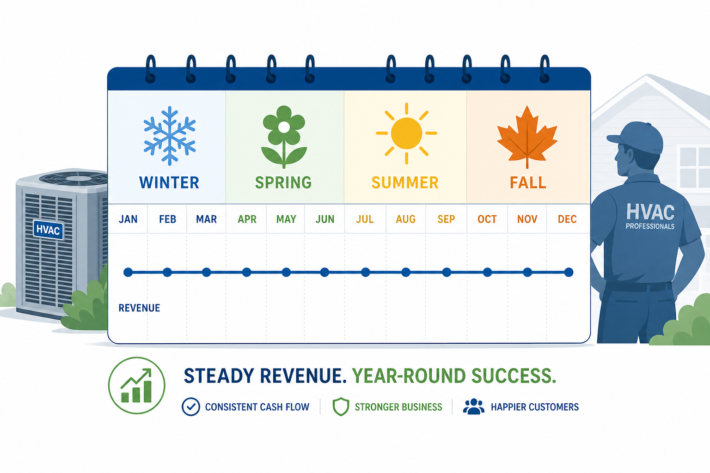
Why it matters: Service agreements are predictable, recurring revenue that smooth out seasonal swings. Top-performing HVAC companies generate 30-50% of revenue from agreements.
→ Read our guide: HVAC Service Agreement Templates
12. Cost Per Lead / Cost Per Acquisition
What it measures: How much you spend (marketing, advertising, referral fees) to generate a lead and convert them into a paying customer.
Why it matters: If it costs $200 to acquire a customer whose average lifetime value is $500, you’re in good shape. If it costs $200 to acquire a customer who books one $150 job and never returns, you’re losing money on growth.
How to Start Tracking These KPIs
You don’t need all 12 on day one. Start with the four that have the most immediate impact:
- Revenue per technician — highlights your biggest productivity opportunities
- First-time fix rate — identifies hidden cost drains
- Average ticket size — reveals pricing and upselling gaps
- DSO — shows your cash flow health
Field service software with built-in reporting makes this easy. TackOn FSM tracks all of these automatically — no spreadsheets needed. Use our FSM Savings Calculator to see how improving these metrics would impact your bottom line.
Ready to Run Your Business on Data?
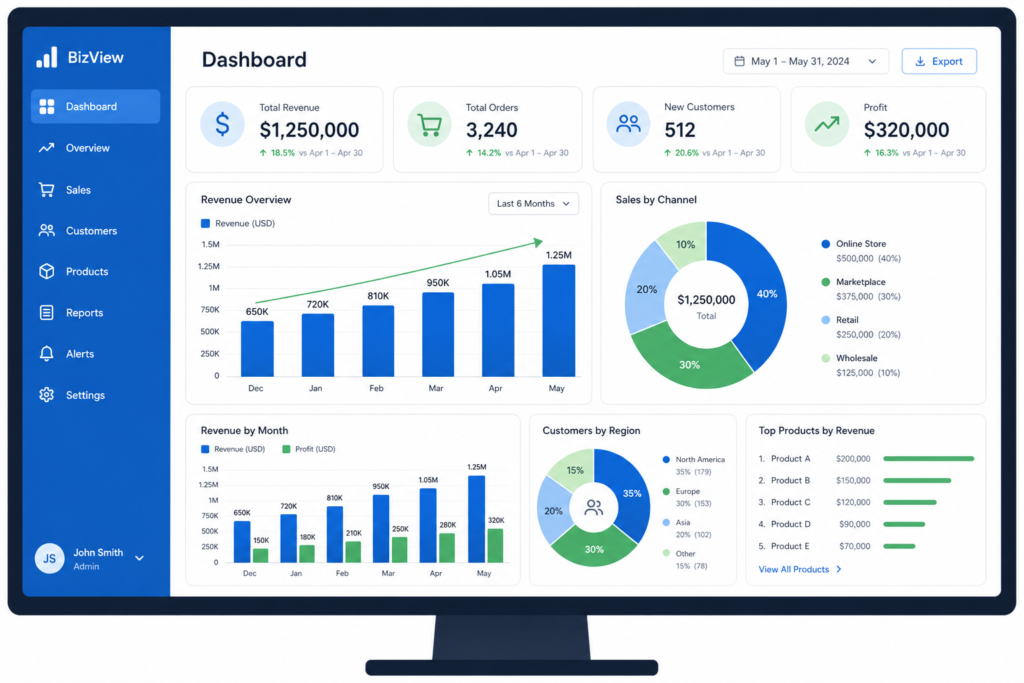
TackOn FSM gives you real-time dashboards for every KPI that matters — revenue, productivity, customer satisfaction, and financial health. Stop guessing and start growing.