
Seasonal Planning for HVAC Contractors: How to Stay Busy Year-Round
The HVAC Revenue Rollercoaster
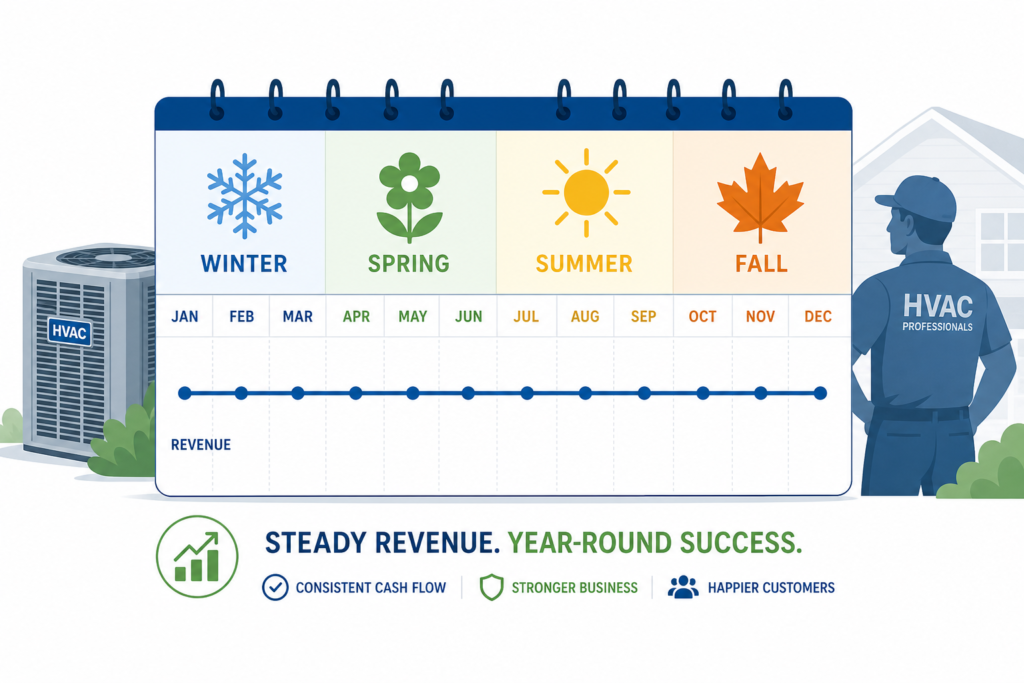
If you run an HVAC business, you know the pattern: summer is chaos (everyone’s AC breaks when it’s 100°F), winter is busy (furnace calls pour in), and spring and fall are dead quiet. Your revenue chart looks like a heart monitor — sharp spikes and deep valleys.
This feast-or-famine cycle creates real problems:
- Cash flow crunches in slow months — but fixed costs (rent, insurance, salaries) don’t care about your seasonal revenue
- Technician turnover — good techs leave for year-round work when you cut their hours in shoulder seasons
- Burnout — 80-hour weeks in summer followed by anxiety in October isn’t sustainable
- Missed opportunities — you’re too slammed in peak season to upsell, and too slow in off-season to generate new business
Here’s how the best HVAC contractors flatten the curve and stay profitable all year.
Quarter-by-Quarter Planning Framework
Q1 (January – March): Pre-Season Preparation
Revenue focus: Heating maintenance, indoor air quality, system replacements
Key actions:
- Run “Spring Tune-Up” early bird campaigns — offer 10-15% off AC maintenance booked before April 1
- Push service agreement signups targeting renewal before cooling season
- Market indoor air quality services (humidifiers, air purifiers, UV lights) — winter is peak indoor air quality season
- Schedule system replacement consultations for customers with aging equipment identified during fall inspections
- Conduct technician training on new equipment models and refrigerant regulations
Q2 (April – June): Ramp-Up Season
Revenue focus: AC tune-ups, system startups, new installations
Key actions:
- Execute spring tune-ups for all service agreement customers (this is your busiest maintenance month)
- Pre-stock trucks with common AC parts (capacitors, contactors, refrigerant)
- Hire and train seasonal technicians before you desperately need them in July
- Run “Don’t wait for the heat” campaigns targeting customers without service agreements
- Schedule new installation projects to fill gaps between service calls
Q3 (July – September): Peak Season Execution
Revenue focus: Emergency AC repairs, replacements, efficiency upgrades
Key actions:
- Maximize dispatch efficiency — every wasted hour is $150+ in lost revenue
- Prioritize service agreement customers (they get same-day/next-day; others get the first available slot)
- Upsell replacements on old systems — “This repair is $800, but your 18-year-old unit will likely need another $1,200+ in repairs this year. A new system is $X with financing.”
- Capture email/phone for every customer — they become your fall marketing list
- Start promoting “Fall Heating Tune-Up” packages in late August
Q4 (October – December): Transition & Recurring Revenue
Revenue focus: Heating tune-ups, service agreement renewals, winterization
Key actions:
- Execute fall heating tune-ups for all service agreement customers
- Run aggressive service agreement sales campaigns — “Lock in your rate before January price increases”
- Market duct cleaning, insulation assessments, and smart thermostat upgrades
- Schedule non-urgent replacements and installations to fill November/December gaps
- Review the year’s data: what services were most profitable? Which marketing channels delivered?
5 Strategies to Fill Slow Months
1. Build a Service Agreement Program
This is the #1 revenue stabilizer. Service agreements create guaranteed work in shoulder seasons (spring tune-ups and fall tune-ups) plus predictable monthly revenue. A contractor with 300 agreements at $20/month has $6,000/month in guaranteed revenue before a single phone call comes in.
→ Read our guide: HVAC Service Agreement Templates
2. Diversify Your Services
HVAC contractors who only do heating and cooling are most vulnerable to seasonal swings. Add complementary services that generate revenue year-round:
- Indoor air quality — Air purifiers, humidifiers/dehumidifiers, UV germicidal lights
- Duct cleaning and sealing — Especially strong in spring and fall
- Smart thermostat installation — Year-round demand, great upsell opportunity
- Insulation assessment and upgrades — High-margin work during slow months
- Plumbing or electrical — Some contractors add trade lines to stay busy year-round
3. Pre-Sell Installations During Peak Season
When a tech diagnoses an aging system in July, don’t just fix the immediate problem. Present a replacement option with financing and offer a “Schedule your installation for October and save $500” incentive. You collect a deposit now and fill a slow-month slot later.
4. Use Slow Months for Growth Activities
Slow seasons aren’t dead time — they’re investment time:
- Train technicians on new equipment and techniques
- Run targeted marketing campaigns for spring/summer bookings
- Clean up your customer database and re-engage lapsed customers
- Optimize your pricing, pricebook, and processes
- Attend industry events and manufacturer trainings
5. Offer Financing for Larger Projects
Many customers delay system replacements because of the upfront cost — not because they don’t need them. Offering financing through third-party lenders converts “I’ll wait until it breaks” into “Let’s schedule it for next month.” This works especially well in shoulder seasons when customers aren’t in emergency-repair mode and can make thoughtful decisions.
Technology That Helps
HVAC management software makes seasonal planning practical by giving you the data to plan ahead:
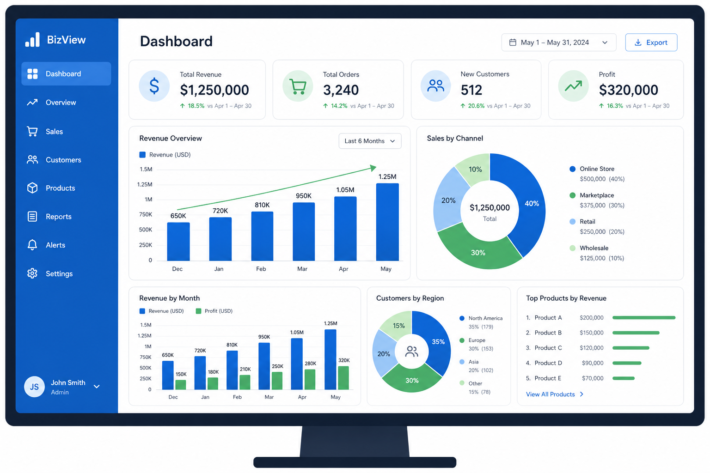
- Revenue trends by month — see your seasonal pattern clearly
- Service agreement tracking — auto-schedule seasonal maintenance
- Customer segmentation — target marketing to the right customers at the right time
- Capacity planning — know how many jobs you can handle per day and plan accordingly
Use the TackOn FSM Cooling Load Calculator to help customers understand their system needs during assessments.
Ready to Flatten the Rollercoaster?
TackOn FSM helps HVAC contractors plan, schedule, and execute year-round — with service agreement automation, smart dispatch, and real-time business analytics.