
Your Essential Sample HVAC Invoice Guide for Contractors

A solid sample HVAC invoice isn't just a request for payment. Think of it as the final handshake—a document that reinforces the quality of your work, builds trust with your client, and keeps your cash flow healthy. We've got a downloadable template ready for you to get started on the right foot.
Your Invoice Is More Than Just a Bill
Let's be honest, for too many HVAC contractors, invoicing is an administrative chore. At the end of a long day or a complex job, you're scrambling to remember every single part you used, trying to calculate labor hours correctly, and hoping you don't forget anything. This rush often leads to costly mistakes. Forget to bill for a small capacitor or miscalculate that overtime? That's profit straight out of your pocket.
It’s time to stop seeing your invoice as a tedious final step. Instead, view it as a direct reflection of your company's professionalism. A clear, detailed, and accurate invoice shows the customer exactly what they paid for, justifying your rates and heading off potential disputes before they even start. It’s your last chance to make a great impression.

The Real Cost of Invoicing Mistakes
Those little invoicing errors? They're not so little when you add them up. The U.S. HVAC industry is massive, valued at $156.2 billion, and small inefficiencies can create big financial drains. Industry benchmarks show that contractors using manual processes and paper timesheets often lose 10-15% of their potential revenue simply due to slow or error-prone billing.
A professional invoice does more than just secure payment; it communicates value. When a client sees a detailed breakdown of parts and labor, it transforms a simple bill into a transparent record of expert service.
This document quietly becomes one of your best marketing tools. A well-crafted bill is more than just a request for money; it can be the invoice that sells for you by cementing your credibility and giving customers a great reason to call you back next time.
From Chore to Business Driver
Getting your invoicing process dialed in is fundamental to running a profitable HVAC business. It protects your cash flow and solidifies the professional reputation you work so hard to build. Think of it this way:
- Clarity Builds Trust: An itemized list of parts and a clear description of the work done leaves no room for confusion or doubt.
- Accuracy Protects Profits: Double-checking that every part, every hour, and every fee is accounted for stops those painful revenue leaks.
- Professionalism Encourages Loyalty: A clean, well-organized, and easy-to-read document leaves a lasting positive impression.
By focusing on this final touchpoint, you turn a simple administrative task into a real strategic advantage. Nailing this one document is a key reason why modern tools are so important, and it’s a perfect example of why field service management software matters for growing your business.
The Anatomy of a Perfect HVAC Invoice
Let's break down what goes into a truly professional HVAC invoice. It’s more than just a bill; it's a final touchpoint with your customer that reinforces your quality of work. A well-crafted invoice prevents confusion, answers questions before they're asked, and ultimately helps you get paid faster.
Think of it as the complete story of the job. It needs a beginning (who you are, who they are), a middle (exactly what you did), and an end (how and when they need to pay). Getting these details right is what separates the pros from the amateurs.

The Foundational Details
First things first, every invoice needs a solid header with all the essential identifying info. This isn't just about looking official; it’s about making the document easy to file, track, and reference later on—both for you and your customer.
Here’s the non-negotiable information you need right at the top:
- Your Company Information: Your business name, address, phone number, and email should be front and center. Don’t forget your logo—it’s a key part of your brand.
- Customer Information: Get the client’s full name, the service address (which might be different from their billing address), and their contact info. Double-checking this for accuracy prevents invoices from getting lost in the shuffle.
- Invoice Number: This is your best friend for bookkeeping. A simple, sequential system like 2024-001, 2024-002 works perfectly. It prevents duplicates and makes finding records a breeze.
- Key Dates: Always include the Invoice Date (when you sent it) and the Service Date(s) (the day you actually did the work).
A logical invoice numbering system is the backbone of your financial records. It ensures every dollar is accounted for and saves you massive headaches during tax season or when a customer calls about a warranty claim.
Clearly Describing the Work Performed
This is where you prove your value. A vague line item like "AC repair" is a recipe for questions and potential payment delays. Specificity is what builds trust.
You want to give the customer a clear picture of what their money paid for. Look at the difference between these two approaches:
- Vague: AC Repair – $450
- Detailed: Diagnosed and replaced faulty 35/5 MFD dual run capacitor (Part #C3355R) on outdoor condenser unit. Cleaned condenser coils and verified system pressures. Recharged 1.5 lbs of R-410A refrigerant to manufacturer specifications.
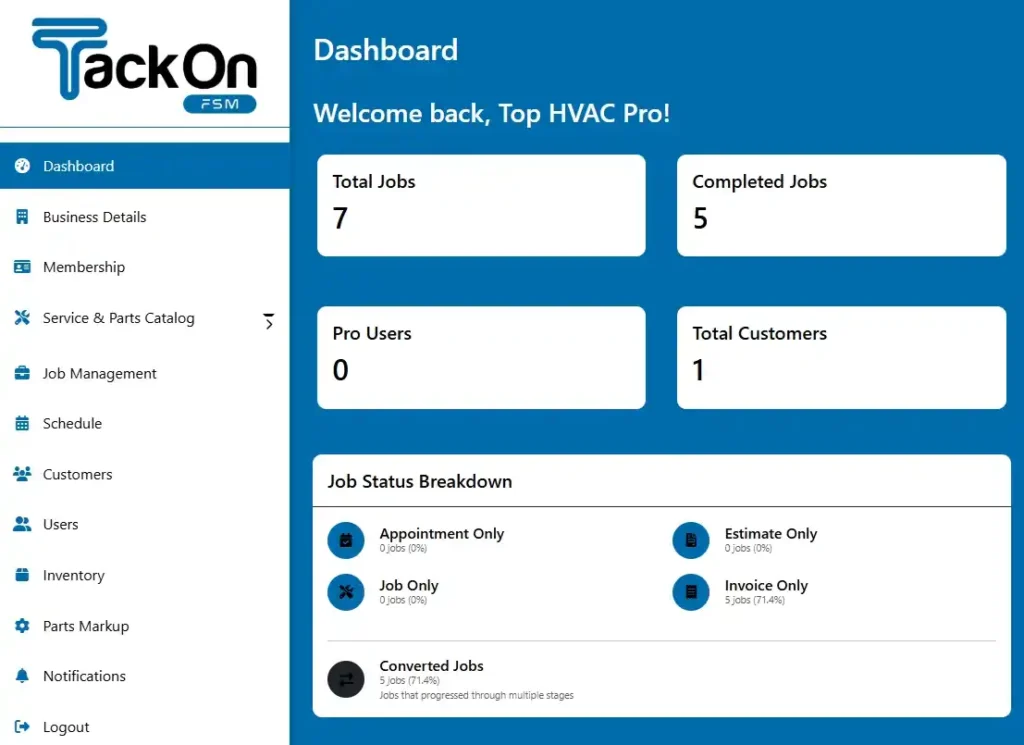
The detailed version instantly justifies the cost and educates the customer. It shows you're a thorough professional, not just a parts-swapper. This level of detail is a signature of a high-quality sample hvac invoice and becomes second nature when you can pull pre-loaded parts from a system like TackonFSM's dashboard. To see how this works in practice, you can learn how an integrated dashboard simplifies estimates, quotes, and invoicing.
This transforms a simple bill into a permanent service record for the homeowner's files. It’s also your best defense if any questions about warranty work or follow-up service calls come up down the line.
Getting Your Line Items Right for Better Profits
The real meat of your invoice—and where your profit is made or lost—is in the line items. This is where you break down the job from a single, intimidating number into a clear, easy-to-understand list. It's how you show the customer exactly what they're paying for.
Think about it: just writing "Parts and Labor" on an invoice is asking for questions. It feels vague and can make a customer wonder if they're getting a fair price. By itemizing everything, you build trust and head off potential disputes before they even start.
How to List Parts and Materials Like a Pro
When it comes to parts, specifics are everything. Don't just put "blower motor." Instead, list the exact part number and a quick description. This isn't just for the customer; it's a huge help for your own records, especially for warranty claims and future service calls.
Let's say you did a straightforward furnace repair. A professional invoice would look something like this:
- Part: Universal Hot Surface Ignitor
- Model/SKU: IG401
- Quantity: 1
- Unit Price: $45.00
- Total: $45.00
See? No guesswork involved. The customer knows precisely what was installed, which justifies the cost and shows you run a tight ship. This level of detail is crucial, especially when you consider the U.S. HVAC aftermarket is projected to reach an incredible $275 billion by 2025. Trying to manage invoicing by hand in such a busy market is just asking for trouble. In fact, studies show that manual billing issues led 22% of contractors to undercharge for their own inventory. If you want to dig deeper into this trend, you can discover more insights about the HVAC services market.
Nailing Down Labor and Smart Markups
Tracking your labor accurately is just as critical as listing parts. Remember, your hourly rate isn't just what you pay your tech. It has to cover all the overhead: insurance, van maintenance, office staff, and, of course, your profit. Make it clear on the invoice.
For example:
- Service: Standard Diagnostic and Repair Labor
- Hours: 1.5
- Rate: $120.00/hr
- Total: $180.00
Once you've got your parts and labor listed, it's time to apply your markup. This is a core part of your pricing strategy. Whether you use a standard percentage markup or a flat fee for certain items, the most important thing is to be consistent and make sure it’s covering your costs and contributing to your profit margin.
Never get caught underpricing a part again. A system like TackonFSM lets you set minimum markups for everything in your inventory. This automatically protects your profit margin on every job, from a quick filter swap to a full system install.
This is where modern field service software really shines. With a platform like TackonFSM, your techs can pull parts from a digital pricebook that already has costs and markups built-in. When they add a part to a sample hvac invoice on their phone or tablet, the system automatically applies the correct pricing. It takes the guesswork out of the equation and ensures you’re not accidentally losing money on parts. It’s a simple step that secures your profitability, one line item at a time.
Connecting Your Workflow From Estimate To Payment
If there’s one change that will fundamentally improve your HVAC business, it’s ditching the disconnected spreadsheets and paper forms. A modern field service management (FSM) system creates a single, unbroken chain from the moment you send an estimate to the second you get paid. This is the secret sauce to eliminating tedious double-entry work and the costly human errors that come with it.
We’ve all seen it happen. A tech jots down a few extra parts on a paper work order. That slip of paper lives in the van for a couple of days, gets a coffee ring on it, and by the time it lands in the office, the details are a mess. That’s a classic recipe for a forgotten line item—and lost profit—on the final bill.
From Digital Estimate to Flawless Invoice
A truly efficient workflow starts long before you send the final bill; it begins with a professional digital estimate. Once a customer gives that estimate the green light with a click, a system like TackonFSM instantly converts it into a work order. All the critical details—customer info, job description, and proposed parts—are already there. No retyping needed.
Your technician in the field then works directly from this digital order on their tablet, adding any extra parts or labor as they go. Because the system is unified, every single item is tracked from the start. Nothing gets lost between the job site and the office. When the work is done, turning that completed work order into a final invoice is just one more click.
The real magic of a connected system is data integrity. When information flows automatically from the estimate right through to the invoice, you all but eliminate the manual errors that quietly eat away at your profit margins.
Smart Invoicing That Protects Your Profits
Think about this: since the 2020 pandemic, HVAC firms have seen a 12% uptick in service calls. For many small shops, that meant invoice volumes doubled. Yet, an alarming 40% of invoices contained errors like missed labor markups. When you rely on disconnected tools, it’s just too easy for a tech to forget to log an upsell, which directly slashes your revenue.
This is where integrating your parts inventory makes a massive difference. With TackonFSM, when a technician adds a part to the job, it’s pulled directly from your digital inventory. That part already has your pre-set cost and markup attached. This simple, automated step ensures every single component is billed correctly, every time.
This visual breaks down how proper itemization and markup directly build your profit on every single job.

This process makes it virtually impossible to accidentally give away parts or undercharge for your hard work.
The difference between a manual, paper-based process and an integrated FSM workflow is night and day. It’s not just about speed; it's about accuracy, professionalism, and ultimately, profitability. Let's look at a side-by-side comparison.
Manual Invoicing vs TackonFSM Integrated Workflow
| Task | Manual Process (Paper/Spreadsheets) | TackonFSM Process |
|---|---|---|
| Data Entry | Manual transfer of info from work order to invoice. High risk of typos and missed items. | One-click conversion from estimate/work order to invoice. Zero re-entry. |
| Parts & Pricing | Technician looks up prices or guesses. Markups calculated by hand, often inconsistently. | Parts pulled from a pre-loaded catalog with set markups. Perfect pricing every time. |
| Time to Send | Can take hours or days, waiting for paperwork to get back to the office for processing. | Invoice generated and sent to the customer via email or text before the tech leaves the driveway. |
| Payment Collection | Relies on mailing checks or calling for card info, delaying cash flow for weeks. | Customer pays instantly on-site via a secure link. Cash is in the bank within 1-2 business days. |
| Accuracy | Prone to errors that lead to customer disputes, write-offs, and lost profit. | Drastically reduces errors, ensuring you get paid the full, correct amount for every job. |
As you can see, the benefits go far beyond simple convenience. An integrated system transforms how you manage your revenue cycle, directly impacting your bottom line and freeing up valuable time.
Accelerate Your Cash Flow
The final piece of the puzzle is actually getting paid. Waiting weeks for a check to arrive in the mail is an old-school model that puts a serious strain on your cash flow. A modern FSM system closes this gap by making it possible to get paid instantly, right on-site.
It’s a simple, powerful process:
- The moment the job is finished, your tech generates the final invoice on their device.
- They send a secure payment link directly to the customer’s phone via text message.
- The customer taps the link, enters their card details, and pays on the spot.
This seamless experience cuts the time it takes to get paid from weeks to mere minutes. Of course, invoicing is just one part of your company's financial health. To keep operations running smoothly, it's also smart to explore options like financing for HVAC contractors.
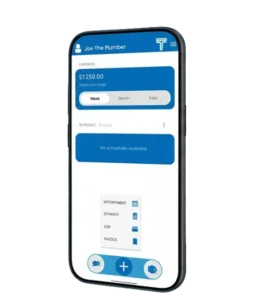
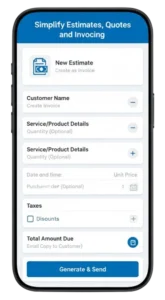
If you want to see how TackonFSM makes this a reality, check out our guide on how we https://tackonfsm.com/wp-content/uploads/2025/11/Simplify-Estimates-Quotes-and-Invoicing-165×300.webp.
Common Invoicing Mistakes That Cost You Money
Even the sharpest HVAC pros can watch their profits evaporate because of a few simple, and totally preventable, invoicing mistakes. Don't think of these as failures—they're opportunities to tighten up your process and lock down your cash flow. A few small fixes can make all the difference in getting paid correctly and on time.
Vague Service Descriptions
One of the biggest money-losers I see is using vague descriptions for your work. A line item that just says “Furnace Repair” doesn't do you any favors. It leaves the door wide open for customer questions and disputes because it doesn't show the value or expertise you delivered. Your price tag ends up looking random instead of justified.
This lack of detail is a direct cause of payment delays. When a customer is confused about what they’re actually paying for, they’re going to pause. In fact, some small-scale studies have shown that invoices with clear, itemized descriptions get paid, on average, 14 days faster than ones with generic entries.
Overlooking Taxes and Fees
Forgetting to add sales tax on parts or other local fees is like literally giving money away. It might seem small on one job, but those amounts add up to a serious number over the course of a year. Your sample hvac invoice absolutely needs a dedicated spot for taxes that gets calculated automatically and accurately.
Doing this by hand is just asking for trouble. Different parts might have different tax rates, and one simple mistake can mean you under-bill the client. Worse, it could lead to compliance headaches later on. This is exactly the kind of problem that a good software system eliminates completely.
Your invoice is the last story you tell a customer. If the details are fuzzy or the ending is confusing, you can't be surprised when they don't want to pay right away. Every line should build confidence, not create doubt.
Inconsistent Formatting and Unclear Terms
Another common pitfall is sending out invoices that look different every time. Inconsistent branding and sloppy formatting just look unprofessional, and that can chip away at a customer's trust in your business. A clean, branded template reinforces that you're a legitimate, professional operation.
Even more critical are fuzzy payment terms. If you don’t spell out when the payment is due or how they can pay you, you’re creating ambiguity. You're basically giving customers an excuse to wait while they "figure it out."
Make your expectations impossible to miss. Your terms should include:
- Due Date: Be specific. Use clear language like "Due on Receipt" or "Net 15."
- Accepted Payments: List every option you take, like Credit Card, Check, or ACH.
- Late Fees: If you have them, state any penalties for overdue payments clearly.
Putting these details front and center on every sample hvac invoice you create sets a professional tone, gets rid of confusion, and will absolutely speed up how quickly you get paid.
Your HVAC Invoicing Questions Answered
Even with a great template, you're bound to run into questions. Let's walk through some of the most common things HVAC pros ask about invoicing so you can fine-tune your billing and get paid without the headaches.
Getting these small details right turns your sample hvac invoice from a simple bill into a powerful tool that speeds up payments, keeps your books clean, and makes your business look sharp.
What Is the Best Way to Number My HVAC Invoices?
Keep it simple and sequential. This is one of the easiest ways to maintain clean records for bookkeeping and tax time. A lot of pros find a year-based prefix works perfectly, like 24-001, 24-002, and so on. Come next January, you just flip it to 25-001. This system makes it a breeze to find a specific job record months or even years later.
Of course, using a field service management tool like TackonFSM takes care of this for you. The software automatically assigns a unique, sequential number to every single invoice, so you never have to worry about duplicates or gaps in your records.
Should I Itemize Parts and Labor Separately?
Yes, one hundred percent. Breaking out parts and labor on your invoice is all about transparency. When a customer can clearly see what they’re paying for—the specific capacitor, the refrigerant, and the hours your tech spent on-site—it builds a massive amount of trust. It answers their questions before they even have to ask and justifies the final price tag.
But separating line items isn't just for the customer—it's for you. It forces you to double-check that your labor rates are actually covering your overhead and that your part markups are consistently hitting your profit targets.
This small step acts as a final sanity check on the job's profitability. You can see at a glance if every part was marked up correctly and every billable hour was captured.
How Quickly Should I Send an Invoice After a Job?
Send it immediately. The goal should be to get that invoice in the customer's hands before your technician’s truck has even left their driveway. Think about it: every day you wait to send an invoice is another day you're essentially giving away an interest-free loan.
This is where modern software really shines. Your tech can generate the final invoice on their tablet, show it to the customer for approval, and then email or text it right on the spot. This single change can shrink your payment cycle from weeks down to days, or in many cases, minutes. It's a game-changer for cash flow. In fact, a study by FreshBooks found that businesses that get paid faster have 5% higher growth rates.
What Are Standard Payment Terms for HVAC Work?
For the vast majority of residential service calls and repairs, "Due upon receipt" is the gold standard. It’s what customers expect, and it’s what’s best for your company's cash flow. Don't give them 30 days to pay for a simple furnace tune-up.
When it comes to bigger jobs like system installations, it’s common practice to require a deposit to cover equipment costs, with the final balance due the moment the work is finished and the customer signs off.
Whatever your terms are, make sure they are printed clearly on both the initial estimate and the final invoice. No ambiguity, no confusion. You'll also get paid faster by making it easy for them to pay, whether that's with a credit card swiper on-site or a secure online payment link in the invoice email.
Ready to stop wrestling with spreadsheets and get paid faster? TackonFSM converts your estimates into professional invoices with one click, tracks every part, and lets you collect payment on-site. Start your free 14-day trial today.