Choosing the Best Plumbing Business Management Software
If your office is buried in a mountain of paperwork and your scheduling system is a whiteboard full of scribbles and arrows, you’re not alone. Many plumbing businesses run this way, but it’s a constant battle. Technicians call in for their next job address, invoices get delayed, and revenue gets lost somewhere in the shuffle. This operational drag isn't just stressful; it holds your business back.
This is where plumbing business management software comes in to clean up the chaos. It’s not just another complicated tech tool; think of it as the central hub for your entire operation. It connects your office team, your plumbers in the field, and your customers in a single, easy-to-use system, making sure everyone is on the same page.
Instead of juggling a spreadsheet for scheduling, a separate app for invoicing, and endless text messages for dispatching, an all-in-one platform brings everything together. This stops double-entry errors cold, cuts down on administrative work by an estimated 20-30%, and finally gives you a clear, real-time picture of your business's health.
Your Digital Command Center
A solid software platform doesn't just digitize your old processes; it connects them. Scheduling, dispatching, inventory, and billing stop being separate chores and start working together seamlessly.
- Scheduling and Dispatching: The messy whiteboard gets replaced with a clean, digital drag-and-drop board. This lets your dispatcher see everyone's availability at a glance, assign jobs instantly, and even optimize routes to save on fuel and time.
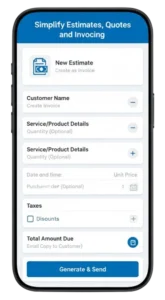
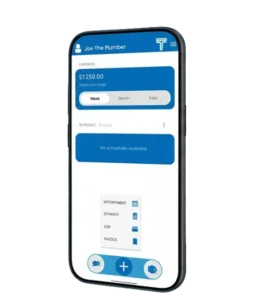
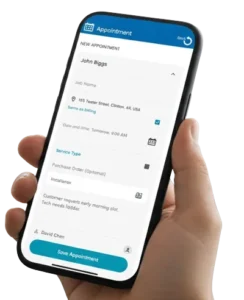
- Mobile Field App: Your technicians get everything they need on their phone or tablet—job details, customer history, and even the ability to create professional quotes and invoices right on site. It’s a key feature that helps simplify estimates, quotes, and invoicing on the spot.
- Invoicing and Payments: Forget waiting weeks to get paid. Plumbers can generate and send an invoice the moment a job is done and even take payment right there. This drastically improves cash flow.
- Parts and Inventory: No more wasted trips to the supply house. You get a real-time view of what parts are on each truck, ensuring your team has what they need to finish the job on the first visit.
The table below gives you a quick side-by-side look at how much of a difference this shift can make.
Manual vs Software-Powered Plumbing Operations
| Business Function | Manual Method (Paper and Spreadsheets) | With Plumbing Management Software |
|---|---|---|
| Scheduling | Whiteboards, phone calls, sticky notes. Prone to errors and double-bookings. | Centralized digital calendar with drag-and-drop assignments and optimized routes. |
| Dispatching | Constant phone calls and text messages to technicians with job details. | Instant job notifications sent to a mobile app with all necessary information. |
| Invoicing | Handwritten invoices, manual data entry back at the office, delayed sending. | Instant invoice generation in the field, sent to the customer via email or text. |
| Payments | Waiting for checks in the mail, manual processing, slow cash flow. | On-the-spot credit card payments, automated follow-ups, and faster deposits. |
| Customer History | Sifting through old paper files or spreadsheets to find past job info. | Immediate access to complete customer and job history on any device. |
As you can see, the contrast is stark. One method creates bottlenecks and administrative headaches, while the other paves the way for smooth, scalable growth.
For contractors who want to scale without getting bogged down, a platform like TackonFSM provides this unified command center. It’s built to bring order to the natural chaos of a field service business, turning a reactive, fire-fighting operation into a proactive, growth-focused one. It’s not just about getting organized; it's about unlocking the profit that's currently trapped in your processes.
Core Features Every Plumbing Contractor Needs
Picking the right plumbing business management software is a lot like outfitting a new work van. You don't just throw in a random assortment of tools. You hand-pick the specific wrenches, cutters, and diagnostic gear that will make every job faster, safer, and more profitable. The software you choose works the same way, acting as a set of digital tools that directly boost your bottom line.
This isn't just about keeping up with the times; it's a fundamental shift in how the industry operates. The plumbing software market is set to hit USD 989.12 million by 2035. Today, over 72% of plumbing companies worldwide use at least one type of software, and among small to medium-sized businesses in the U.S., 61% have already made the switch to automated business management software systems.
The image below shows the journey from chaotic, paper-shuffling operations to a streamlined, software-driven command center.
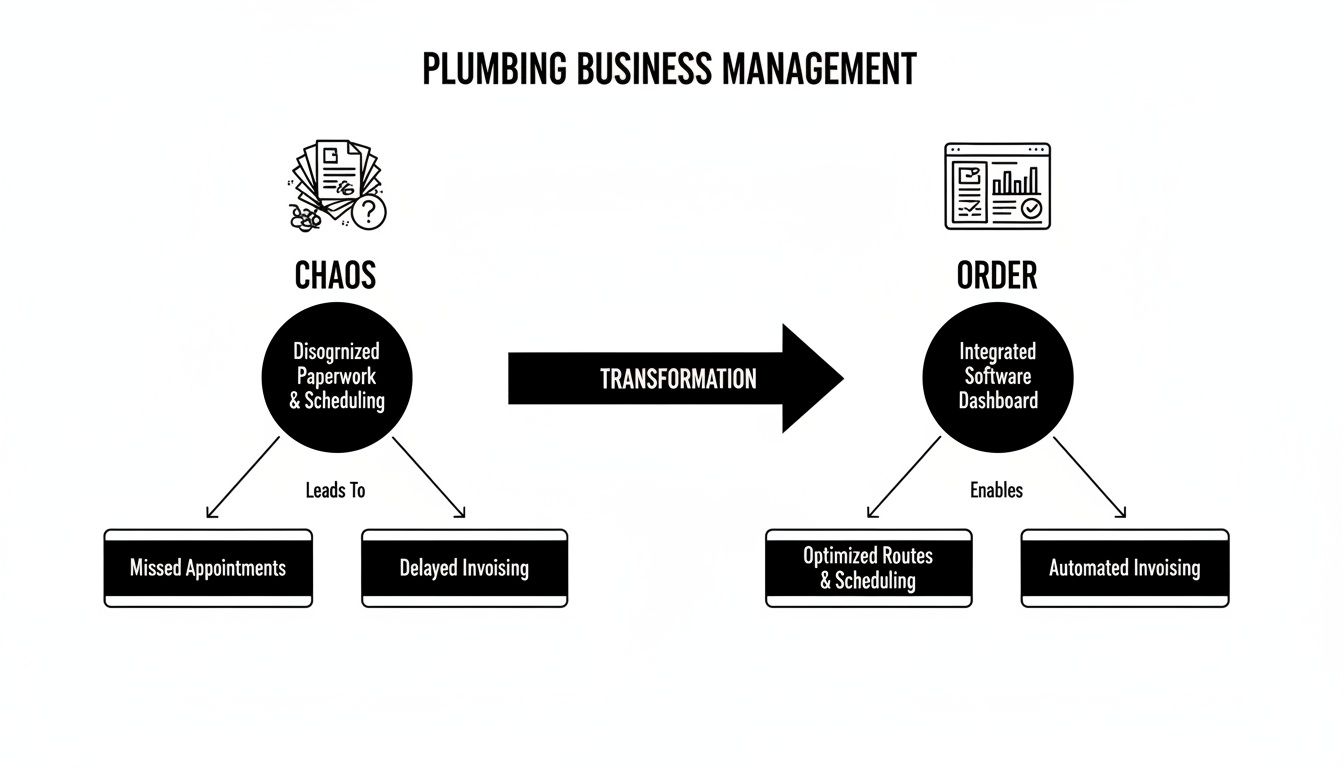
It’s a clear picture of how the right software bridges the gap between disorganized daily tasks and having total control and clarity over your entire operation.
Scheduling and Dispatching as Your Air Traffic Control
Think of your scheduler and dispatcher as air traffic control for your team. When they’re stuck with paper or a basic calendar, it's like they're trying to manage flights with outdated paper maps. This leads to near-misses like double-bookings and techs taking horribly inefficient routes across town.
A good scheduling and dispatching module gives them a single, visual dashboard. It’s a live map showing every tech's location, job status, and availability in real time.
This is more than just a convenience—it's a massive efficiency play. When an emergency call for a burst pipe comes in, your dispatcher doesn’t have to waste time making a dozen phone calls. They can instantly see which technician is closest, has the right skills, and reroute them with a simple drag-and-drop. That saves critical minutes and cuts down on fuel costs.
A Mobile Field App: The Technician’s Digital Toolkit
Out in the field, your technicians are the face of your company. Their efficiency on the job directly hits your profitability. A mobile field service app essentially puts the entire office right in their pocket.
Their smartphone or tablet becomes a powerful tool. Instead of calling the office for a customer’s history or job details, everything they need is right there. With this digital toolkit, they can:
- Pull up the complete customer history, including notes from previous jobs.
- Follow digital checklists to make sure no steps are missed.
- Snap photos and videos to document problems and show completed work.
- Build a professional estimate on the spot and get it approved by the customer.
Having all that information on hand means fewer trips back to the shop and more jobs fixed on the very first visit. You can learn more about why field service management software matters so much for your team in the field.
Estimating and Invoicing to Protect Your Profit Margins
Underbidding is one of the quickest ways to run a plumbing business into the ground. When you're creating estimates manually, it’s easy to guess wrong, forget a part, or miscalculate labor. Suddenly, your profit margin on a big job is gone.
Integrated estimating and invoicing tools act as your financial guardrails. They pull pricing directly from a digital pricebook that contains all your approved parts and labor rates.
When a tech builds a quote, they’re not just guessing—they’re pulling from pricing you’ve already set. Good software even lets you program in minimum profit margins, flagging any estimate that dips below your target before it gets sent out.
This system makes sure every quote you send is both competitive and profitable. Once the customer gives the green light, that estimate converts into an invoice with one click. No more typos, no more delays—just faster cash flow.
Inventory Management for X-Ray Vision
"I could have sworn that part was on the truck." It’s a phrase that costs plumbing businesses thousands a year in wasted time and extra runs to the supply house. Without real-time tracking, your work vans are just black boxes.
Inventory management software gives you x-ray vision into every truck and your warehouse. Every time a technician uses a part, it’s automatically deducted from their van’s stock count in the system. Your office manager can see exactly what’s where, at any given moment.
This feature does more than just track what you have. It powers automated replenishment, creating purchase orders when stock on a van runs low. It’s a proactive system that ensures your techs show up to every job with the parts they need, which means higher first-time fix rates and happier customers.
Your Checklist for Choosing the Right Plumbing Software
Picking new software for your plumbing business isn't just a purchase; it’s like hiring a new operations manager. This one decision touches every part of your company, from the dispatcher juggling calls in the office to the newest apprentice out in the field. To get past the sales pitches and find a tool that actually works for your crew, you need a solid game plan.
Think of it like inspecting a job site before you start a major repipe. You wouldn't just show up and start cutting into walls without knowing what you’re up against. It's the same deal here—doing your homework upfront saves you from massive headaches and wasted money later on.
This checklist isn't about finding some magical, "perfect" system. It's about finding the right system for your specific team, your daily workflow, and where you want your business to be in a few years.
Evaluate the User Experience
The most feature-packed software on the planet is worthless if your team hates using it. A simple, common-sense design is non-negotiable, especially for your plumbers who need to pull up an app, get what they need, and get back to work without fumbling around.
Before you even think about signing a contract, ask yourself this: could my least tech-savvy plumber figure out the mobile app with just a few minutes of training? If the interface is a confusing mess, your team will just go back to their old paper invoices and text message chains, and you'll get zero return on your investment.
The only way to truly know if software will work for your team is to put it in their hands. Don't just sit through a slick demo. Get a free trial and have a couple of your plumbers use it on a real service call. That’s how you’ll find out if the workflow feels natural or clunky. For this exact reason, platforms like TackonFSM offer a 14-day free trial.
All-In-One Platform vs. Piecemeal Solutions
Your next big decision is whether to go with one comprehensive system that does everything or try to stitch together a bunch of separate tools. While using one app for scheduling, another for invoicing, and a third for inventory might seem flexible, it usually just creates data headaches and integrations that are always a step away from breaking.
An all-in-one platform gives you a single source of truth for your entire business.
- Unified Data: When a job is scheduled, parts are pulled, and an invoice is sent all within the same system, you kill the chance of double-entry mistakes.
- Seamless Workflow: Your team isn't bouncing between three different apps just to complete one service call. This saves a ton of time and frustration.
- Clearer Reporting: With all your numbers in one place, you get a much sharper, more accurate picture of how your business is actually performing.
Sure, a piecemeal approach can work for a little while, but a unified platform is almost always the more efficient and scalable choice for a growing plumbing company.
Scrutinize the Mobile App Functionality
For a modern plumbing business, the mobile app is the heart of the whole operation. It’s the main tool your techs will be using all day, every day, so it better be rock-solid.
Look past a simple list of jobs. A great mobile app should make your plumbers’ lives easier and help them do their jobs better, not just track their every move. Here’s what to verify:
- Offline Functionality: Can a tech build a quote or update job notes while in a basement with zero cell signal? The app has to be smart enough to save that work and sync it automatically the second it gets a connection.
- On-Site Payments: The ability to swipe a credit card and close out an invoice right on the spot is a massive win for your cash flow. Make sure the process is smooth and secure.
- Integrated Pricebook: Can your plumbers build multi-option, "good-better-best" estimates using your company's pre-approved parts and labor rates? This is key to protecting your margins and upselling services professionally.
- Customer History Access: Your techs should be able to pull up all the past work orders, notes, and photos for a specific location. That context helps them provide smarter, more informed service every single time.
Assess Support and Pricing Transparency
Finally, take a hard look at the company behind the software. When you run into a critical issue at 3 PM on a busy Friday, you need to know you can get a real human on the phone who can actually help. Check for clear information on their customer support hours, how to reach them (phone, email, chat), and if getting help costs extra.
The pricing should be just as straightforward. Steer clear of platforms with confusing pricing tiers, hidden setup fees, or pressure to sign a long-term contract. You want simple, predictable pricing that’s based on the size of your team, so your costs only grow as your business grows. A clear, upfront pricing model is a great sign that you're dealing with a trustworthy partner.
How to Make a Smooth Transition to New Software
Switching the software that runs your entire business can feel like swapping out an engine while the truck is still moving. It’s a daunting thought. Many plumbing contractors get stuck here, picturing weeks of chaos, frustrated techs, and angry customers. But making the move to a modern plumbing business management platform is less like a risky surgery and more like reorganizing your workshop—with a bit of planning, you end up with a much smarter, more efficient space.
The secret is to see it as a structured process, not just flipping a switch one day. When you have the right partner and a clear roadmap, the transition becomes a manageable, even smooth, evolution for your business. That fear of disruption? It's real, but it's also entirely avoidable.

A successful migration isn’t just about installing something new. It’s about carefully moving your company's entire operational history—every customer, every job, every invoice—into a more powerful home.
Prepare Your Data for the Move
Before you even think about transferring a single file, it's time for a digital spring cleaning. Your customer list, job history, and parts inventory are the lifeblood of your operation. Over the years, though, they get cluttered with duplicate entries, old phone numbers, and inconsistent formatting. Garbage in, garbage out.
Think about it like packing up your old shop. You wouldn't just shovel everything from your shelves and drawers into a random box. You’d sort through it, toss the junk, and organize the important stuff. Do the exact same thing with your data. A clean, accurate dataset is the foundation for getting immediate value from your new software.
Lean on Assisted Onboarding
Here's the good news: you don’t have to do the technical heavy lifting by yourself. The best software providers know that a messy data import is a major roadblock, so they offer hands-on help to make it painless.
This is a big one. Look for a partner that provides assisted data migration as part of their setup. It’s a game-changer. For example, a provider like TackonFSM offers free data migration support from common systems like QuickBooks or Jobber. This service turns what could be a week-long headache into a simple, guided process handled by people who do it every day.
Train Your Team in Phases
Throwing everyone into a massive training session at once is a surefire way to create confusion and resistance. A much smarter approach is to roll out the training in logical phases, starting with your core users.
- Start with the Office Staff: Your dispatchers and office managers are the command center. Get them completely comfortable with the scheduling dashboard, invoicing, and reporting tools first. They’ll become your in-house experts and champions for the new system.
- Move to the Field Technicians: Once the office team has the hang of it, bring in your plumbers. Don't overwhelm them with the entire platform. Focus their training entirely on the mobile app—how to view their schedule, build estimates on-site, and take payments. Keep it grounded in their day-to-day work.
Go Live with a Safety Net
The final step is the "go-live" day. To eliminate any lingering anxiety, try running your old and new systems in parallel for a very short time—maybe just a couple of days. This gives you a crucial safety net.
This brief overlap lets your team confirm that jobs are flowing correctly from dispatch to invoice in the new system, all while knowing the old one is still there as a backup. It builds confidence fast. Once everyone sees the new plumbing software is working like a charm, you can confidently pull the plug on the old way of doing things and fully embrace a more efficient operation.
Calculating the Real ROI of Your Software Investment
So, we've talked features and workflows, but let's get down to the question every owner asks: "What's the real return on this investment?" Thinking about the cost of plumbing business management software isn't guesswork; it’s simple math. When you calculate the Return on Investment (ROI), you can see exactly how the software pays for itself—often many times over.
Don't think of it as another monthly expense. See it for what it is: a high-performance tool that actively generates revenue and cuts hidden costs. Its true value shows up directly on your bottom line.
Calculating Tangible ROI from Efficiency Gains
The clearest way to see your ROI is to look at billable hours. A smooth, efficient operation means more jobs get done with the exact same crew and trucks.
Let’s walk through a quick, conservative scenario. Say you have a team of five technicians. With smarter scheduling and dispatching, each tech manages to squeeze in just one extra job per week. It's a small change, but look at how it scales.
- Extra Jobs: 1 job/tech/week x 5 techs = 5 extra jobs per week
- Weekly Revenue Gain: 5 jobs x $400 average ticket = $2,000 extra per week
- Annual Revenue Gain: $2,000/week x 50 weeks = $100,000 in additional annual revenue
And that’s just from getting one more job on the board each week. This number doesn't even factor in the money saved on gas from better routing or the hours your office staff gets back by ditching manual paperwork. Small efficiencies have a massive ripple effect.
Investing in software is like upgrading from a manual wrench to a power tool. The initial cost is quickly offset by the speed and efficiency it brings to every single job, allowing you to complete more work in the same amount of time.
Boosting Profitability and Cash Flow
Profit leaks are silent killers, and they usually spring from two places: inaccurate estimates and slow collections. Good software plugs both of these holes for good.
First, a digital pricebook makes sure your estimates are consistent and profitable every single time. You stop worrying about a tech accidentally underbidding a complex job and wiping out your margin. If better accuracy adds just 5% to your profit on every job, imagine the cumulative impact over a full year. It’s huge.
Second, think about your cash flow. If it takes you an average of 30 days to get paid, that's a lot of your hard-earned money just sitting out there. Automated invoice reminders and on-site payment processing can completely change this.
- Example: Imagine cutting your average collection time from 30 days down to just 7 days. You’re getting paid three weeks faster. That means less stress making payroll, more working capital, and the freedom to reinvest in your business when you need to.
Uncovering the Intangible Benefits
Of course, not every benefit can be plugged into a spreadsheet, but the intangible returns are just as real. These are the things that build a healthier, more resilient business for the long haul.
Think about the reduced stress for your dispatcher, who can finally ditch the chaotic whiteboard and constant back-and-forth phone calls. Or consider the professional image you present to customers when they get instant quotes, automated appointment reminders, and clean digital invoices.
These "soft" benefits lead to very concrete outcomes:
- Higher Employee Retention: A less chaotic work environment helps you keep your best technicians from burning out.
- Improved Customer Satisfaction: Happy customers leave great online reviews and become your best source of word-of-mouth referrals.
- More Time for Strategy: When you aren't constantly putting out operational fires, you finally have the headspace to think about how to actually grow your business.
Ultimately, the true ROI of your software is a powerful mix of these tangible financial wins and the invaluable stability and scalability it brings to your entire operation.
Advanced Workflows That Drive Business Growth
Once you’ve nailed scheduling and invoicing, your plumbing business management software is ready to do some heavy lifting. It's time to shift from just managing the day-to-day to actively growing your business. This is where you set up smart, automated workflows that bring in new revenue and crank up your efficiency, often without you having to do a thing.
Think of it this way: getting the basics down is like knowing how to use your pipe wrench and torch. Building advanced workflows is like setting up a production line that runs for you 24/7. These systems take all the information you’re already collecting—job histories, customer equipment, parts usage—and spin it into gold.
The Preventative Maintenance Workflow
One of the most valuable workflows you can build is for preventative maintenance. Instead of just reacting when a customer’s water heater finally gives out, you can create a predictable, recurring revenue stream that keeps you busy all year.
Here’s how it works in the real world:
- Your tech installs a new water heater, and the job gets flagged in your system.
- The software automatically creates a reminder for 11 months from now to schedule a routine flush and inspection.
- When the time comes, an automated email or text message goes out to the customer with a friendly reminder and a simple link to book their service.
That one simple automation turns a single big job into a long-term customer relationship. To really get the most out of this, successful plumbing shops use their software to implement the top preventive maintenance best practices and lock in future growth.
The “Good-Better-Best” Estimating Workflow
Another killer workflow is all about boosting your average ticket size right on the spot. You'd be surprised how many customers will choose a better, more permanent fix if you just present the options clearly and professionally. That's what a "Good-Better-Best" quoting system does for you.
When your tech is standing in the customer’s home, the mobile app lets them whip up a tiered estimate in minutes.
- Good: A basic repair to fix the immediate leak or clog.
- Better: The same repair, but with an upgrade to prevent future issues, like replacing old, corroded gate valves with modern ball valves.
- Best: A full replacement of the old fixture with a new, high-efficiency model that comes with a solid warranty.
This isn’t about being pushy; it’s about giving the customer control. You’re the expert, and this approach positions you as a trusted advisor, not just a repairman. It’s also why you need field service scheduling software that saves time and makes you more money.
This isn't just upselling; it's consultative selling. You're providing expert recommendations in a structured format, which builds trust and gives customers control over their decision. Businesses that implement tiered quoting often see a 15-30% increase in average ticket value.
Automated Inventory Replenishment
Finally, let's talk about stopping profit leaks. Nothing kills a day's productivity like wasted trips back to the shop or a supply house for a common part. An intelligent inventory workflow puts an end to that.
Your plumbing software keeps a live tally of every fitting, valve, and part used on a job, automatically deducting it from the tech’s truck stock.
When the count of a part—say, P-traps on Van #3—dips below your set minimum, the system automatically adds it to the next purchase order. This keeps your trucks stocked and ready to go, which means more first-time fixes, less downtime, and happier customers.
Got Questions About Plumbing Software? We've Got Answers.
Switching to a new system is a big deal, and it's smart to have questions. You're talking about the new operational hub for your entire business, after all. Let's break down the common questions plumbing contractors ask when they're looking at making a change.
"Isn't This Stuff Really Expensive?"
That's usually the first thing on everyone's mind, and the answer is: not anymore. The days of giant, clunky enterprise systems with five-figure setup fees are pretty much over. Modern platforms like TackonFSM have straightforward pricing based on your team's size, with simple monthly subscriptions and no hidden surprises.
Think of it as an investment, not just another bill. The right plumbing business management software should start paying for itself almost immediately.
Quick ROI Check: If the software helps each tech fit in just one extra job a month, or if it cuts your average invoice aging in half, the extra revenue and improved cash flow will likely blow the monthly subscription cost out of the water.
"My Team Isn't Super Tech-Savvy. Will They Actually Use It?"
This is a huge, and completely valid, concern. The last thing you want is a fancy tool that no one uses. The good news is that the best platforms are built for plumbers in the field, not software engineers in an office. The goal is to make their jobs easier, not more complicated.
A solid mobile app should feel intuitive and let your techs:
- Pull up job details and a customer's entire service history in seconds.
- Run through digital checklists to make sure nothing gets missed.
- Snap photos and videos to document the work properly.
- Whip up a professional-looking quote and take payment right on their phone or tablet.
Honestly, the only way to know for sure is to let them try it. Don't even consider a platform that doesn't offer a free trial. Let your techs get their hands on it in a real-world setting before you sign anything.
"Does It Play Nice with QuickBooks?"
Yes, it has to. A solid integration with your accounting software, especially QuickBooks, isn't just a "nice-to-have"—it's a deal-breaker. This link is what keeps your financial data accurate without doubling the workload for your office manager.
When it's properly connected, every invoice you create and every payment you collect in your field service software zips right over to your accounting system. No more manual data entry, no more chasing down typos. It saves a ton of administrative time and keeps your books clean.
"How Long Does It Take to Get This Up and Running?"
The timeline has shrunk dramatically. While older, more complex systems could take weeks or even months to get going, you can get up and running on most modern platforms in just a few days.
The key here is the onboarding support. Look for a company that guides you through the process. Some providers offer free onboarding and will help you migrate all your data—customer lists, your price book, job history—from whatever you're using now. With that kind of hands-on help, making the switch from clipboards or an old spreadsheet is a surprisingly smooth ride.
Ready to see how an all-in-one platform can actually work for your plumbing business? TackonFSM gives you a powerful, easy-to-use system to schedule jobs, track inventory, and get paid faster. Give our 14-day free trial a shot and see the difference for yourself.