
Your Guide to a Professional HVAC Invoicing Template
If you're still wrestling with carbon copies or building invoices from scratch in a Word doc, you're not just wasting time—you're letting profit slip through the cracks. A solid HVAC invoicing template is your first line of defense, creating a repeatable, professional system that helps you get paid faster.
Why Your Invoicing Process Is Leaking Profit
Let's get real. After a long day of service calls and installs, the last thing you want to do is spend your evening deciphering handwritten notes and matching them to supplier receipts just to create an invoice. That administrative grind isn't just a headache; it's actively costing you money in ways you might not see.

The hidden costs of doing things the old way go far beyond the hours you lose. It's about the small details that get missed, the payments that get delayed, and the unprofessional impression it leaves with your customers. Every minute you spend cobbling an invoice together is a minute you’re not spending on work that actually makes you money.
The Real Cost of Manual Paperwork
Think about it this way. An owner-operator—let’s call him Mike—knocks out five service calls in a day. That night, he has to create five separate invoices. That means looking up addresses, trying to remember which parts he used on which job, calculating labor, and fumbling with formatting. That whole process can easily chew up two hours of his evening.
What's that time actually worth? If we say Mike's time is worth a conservative $50 an hour, he's losing $100 in potential revenue every single day. That adds up to $2,000 a month.
And that’s just customer invoicing. The average HVAC company also has to process 200 to 500 vendor invoices a month, and each one takes about 10 to 15 minutes of someone's time. That’s another 33 to 125 hours of manual work monthly. This time drain is a major bottleneck that holds your business back.
How Inefficiency Hits Your Bottom Line
The financial bleeding isn't just about lost time. A clunky or slow invoicing system directly hurts your cash flow and profitability. Here's how:
- Delayed Payments: The longer it takes you to send an invoice, the longer the customer takes to pay. It’s that simple. An invoice sent weeks after a job is practically an invitation for payment delays.
- Inaccurate Billing: When you’re tired and rushing, it's all too easy to forget a part, miscalculate labor, or leave off a trip charge. These "small" mistakes add up to a huge revenue loss over the course of a year.
- Poor Customer Perception: A sloppy or inconsistent invoice looks amateur. It makes customers question your professionalism. A clean, clear, and prompt invoice, on the other hand, reinforces the quality of your work and builds trust.
An invoice is more than just a bill. It's your last handshake with the customer and a vital tool for your company's financial health. It should reflect the same high standards you bring to every job site.
For any business serious about stopping these leaks, efficient billable hours tracking is a game-changer, especially if you're still trapped in spreadsheet hell. Creating a well-designed HVAC invoicing template is the most important first step you can take to plug these financial holes, get your evenings back, and build a more profitable company.
Building Your HVAC Invoice From The Ground Up
An invoice is more than just a bill—it's a final handshake, a reflection of your professionalism, and a critical tool for getting paid on time. When you build a solid HVAC invoicing template from scratch, you ensure every document you send out is clear, complete, and professional. Let's walk through the essential pieces that make an invoice work for you, not against you.

A well-crafted invoice leaves no room for questions. Every field has a purpose, from identifying your business to detailing the work performed. To make sure you cover all your bases, here’s a checklist of the absolute must-haves for any professional HVAC invoice.
| Essential Fields for Your HVAC Invoicing Template |
| :— | :— | :— |
| Field Name | Purpose | Example |
| Your Company Logo & Info | Establishes brand identity and provides contact details. | Your Logo, Company Name, Address, Phone, Email |
| "Invoice" Label | Clearly identifies the document's purpose. | INVOICE |
| Customer Information | Ensures the bill reaches the right person at the right address. | John Doe, 123 Main St, Anytown, USA 12345 |
| Unique Invoice Number | Provides a specific reference for tracking and payment. | INV-2024-1051 |
| Invoice Date | Marks the date the bill was officially issued. | 09/15/2024 |
| Payment Due Date | Sets clear expectations for when payment is required. | Due: 09/30/2024 |
| Itemized List | Details all services, parts, and labor for transparency. | See "Itemizing Your Services" section below |
| Subtotal | Shows the total cost before taxes or discounts. | Subtotal: $450.00 |
| Taxes & Fees | Accounts for legally required taxes and other charges. | Sales Tax (6%): $27.00 |
| Grand Total | The final, bolded amount the customer owes. | TOTAL DUE: $477.00 |
| Payment Terms & Methods | Instructs the customer on when and how to pay. | Net 15. We accept checks and credit cards. |
Getting these details right from the start prevents the back-and-forth phone calls that delay payments and frustrate both you and your customers.
The Unmistakable Header
The top of your invoice is prime real estate. It’s the first thing a customer sees, so it needs to immediately identify you and establish credibility.
- Your Company Logo: A clean logo makes your invoice instantly recognizable. It’s a small detail that screams "professional."
- Business Information: Display your full company name, address, phone number, and email address clearly. Don't make customers hunt for ways to contact you.
- The Word "Invoice": It sounds almost too simple, but you'd be surprised. Explicitly labeling the document as an "Invoice" prevents any mix-ups with a quote, estimate, or work order.
Critical Identifying Information
Right below the header, you need the specific details for this particular job. Accuracy here is non-negotiable for your records and your client's.
Every single invoice needs a unique invoice number. A simple sequential system like 2024-001, 2024-002 works perfectly and makes finding a specific transaction a breeze. You'll also need the invoice date (when you're sending it) and, crucially, the payment due date. Being direct about your expectations avoids awkward follow-ups. Finally, list the customer’s full name and the service address—a quick double-check can prevent an invoice from getting lost in the mail.
A well-organized invoice eliminates ambiguity. When a customer can easily find all the necessary details—from the invoice number to the due date—it removes friction from the payment process. Clarity is the key to faster payments.
Itemizing Your Services and Parts
This is the heart of your invoice, where you justify the total cost. A vague line item like "AC Repair" is a recipe for a phone call you don't want to take. The goal is total transparency.
Instead of one generic line, break it down so the customer sees exactly where their money is going. For instance:
- Labor: System Diagnostic & Fault Test (1 hour @ $95/hr) – $95.00
- Part: Universal Run Capacitor (Part #CAP545) – $75.00
- Supplies: R-410A Refrigerant Top-Off (2 lbs @ $50/lb) – $100.00
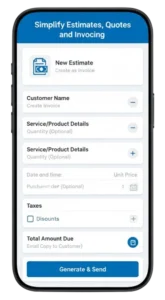
This level of detail builds trust. Always include part numbers if you have them, specify quantities, and list the price for each unit. It proactively answers the question, "What exactly am I paying for here?" Our guide on how to simplify estimates, quotes, and invoicing has more great tips on creating these clear, customer-friendly line items.
The Financial Summary and Payment Terms
Once everything is itemized, the bottom section should neatly wrap it all up. This part needs to be impossible to misread.
Start with a clear subtotal of all parts and labor. Then, add separate lines for any sales tax, trip charges, or discounts. The final grand total should be the most prominent number on the page—make it bold and easy to spot.
Right below that, state your payment terms (e.g., "Due on receipt," "Net 15"). Most importantly, tell them how to pay you!
Accepted Payment Methods Example:
- Credit Card (Visa, MasterCard, Amex)
- Check (Payable to [Your Company Name])
- Online Payment Portal (Link: [yourpaymentlink.com])
Making it easy for customers to pay is the fastest way to improve your cash flow. If you're looking to formalize your documents, you can find a lot of great starting points online. For example, there are many sources for free printable receipt templates that you can adapt for your HVAC business.
Lastly, a personal touch goes a long way. A simple "We appreciate your business!" at the bottom ends the transaction on a high note and strengthens the customer relationship.
Nailing Your Parts Markup and Labor Rates
Profit isn't made when you land a job—it's made, or lost, on each line of the invoice. Getting your parts markup and labor rates right is the absolute core of a healthy HVAC business, yet it’s the place where so many contractors bleed money without realizing it. A well-designed HVAC invoicing template is your front-line defense for setting and protecting these margins on every single job.
The challenge is real, especially with how fast costs are climbing. Since 2020, HVAC equipment prices have shot up by a staggering 40%. This isn't just a small bump; it's a direct hit to your bottom line, driven by supply chain chaos and rising material costs. If you want to dig deeper, you can find great insights about navigating HVAC price increases from industry experts. The key takeaway? Your template has to be flexible enough to keep up.
How to Structure Your Parts Markup
One of the most common mistakes I see is slapping a single, flat markup on every part that goes out the door. It’s simple, sure, but this approach kills your profitability. You end up undercharging for small parts and overcharging for big-ticket items. A much smarter way to go is using a tiered or sliding scale markup.
Here’s how that looks in the real world:
- Low-Cost Parts (Capacitors, Fuses, Contactors): These are your bread-and-butter replacement parts. They can easily handle a higher markup percentage. For a part that costs you $10, a 300% markup brings the customer price to $30—a totally fair price for a quick fix that gets their system running again.
- Mid-Range Parts (Blower Motors, Inducer Fans): For items in the $100-$300 cost range, you'll want to dial back the percentage. A 100-150% markup is a good zone to be in. It keeps the final price from looking outrageous while still ensuring you make a healthy profit.
- High-Cost Equipment (Compressors, Condenser Units): Try putting a 300% markup on a compressor and you'll get laughed out of the house. For these big-ticket items, a lower percentage—think 25-40%—is the standard. Your profit here comes from the high dollar value of the item itself, not a massive percentage.
Your parts markup strategy is a constant balancing act. It has to cover the part's cost, your overhead, and a little extra for warranty risk, all while staying competitive. A tiered system built right into your invoicing template is the best way to hit that sweet spot every time.
The trick is to build these rules directly into your template or, even better, your field service management software. Doing this means every tech prices parts the same way, every time. It removes the guesswork and protects your margins.
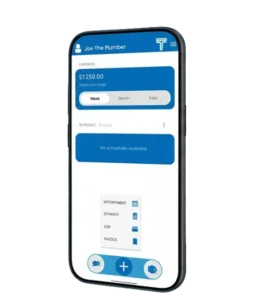
For instance, software like TackonFSM lets you itemize everything, applying your specific markups and rates automatically.
When your parts are pre-loaded with costs and markup rules, you’re basically automating your profitability.
How to Present Labor Rates with Clarity
How you list your labor charges is just as critical as the rate itself. You want to be transparent to build trust, but you also need to get paid for every minute of your expertise. Your invoice template needs to handle a few different scenarios.
Hourly vs. Flat-Rate Billing
The industry has been shifting away from old-school hourly billing and toward a flat-rate pricing model. This is where you pre-determine a set price for a common job (like a "Standard AC Tune-Up" or "Capacitor Replacement") and list it as a single item. It’s a game-changer for customer perception.
| Billing Method | How to Present on an Invoice | Why It Works |
|---|---|---|
| Hourly Rate | Labor: 2 hours @ $120/hr |
Simple and direct, but it can make customers nervous, especially if a job runs long. |
| Flat-Rate Job | Service: Complete Capacitor Replacement |
Gives the customer a firm price upfront. No surprises. It focuses them on the value of the repair, not the hours you spent. |
Don't Eat the Cost of a Trip Charge
Your time, the gas in your truck, and the wear and tear on your vehicle are very real costs. A trip charge or diagnostic fee needs to be a standard line item on every service call invoice. Don’t apologize for it—just present it clearly.
- Example Line:
Service Call & System Diagnostic Fee
This fee covers your cost to show up and diagnose the problem. The best practice is to communicate this fee when the customer first books the appointment. Then, if they approve the repair, you can apply that fee as a credit toward the final bill. It's a small touch that customers really appreciate. By getting these pricing details right in your HVAC invoicing template, you stop leaving money on the table and turn a simple bill into a powerful tool for managing your profits.
Smarter Invoicing for Better Cash Flow
A well-designed HVAC invoice template is a great start, but its real value comes from how you use it. The goal isn't just to bill for your work; it's to get paid faster and stop wasting time chasing down money. Think of your invoice not as a static document, but as an active tool for improving your business's financial health.
The single biggest mistake I see companies make is waiting to send the invoice. The old routine—finishing a job, driving back to the office, maybe typing up the bill a day or two later—is a cash flow killer. That delay is all it takes for a customer to forget the relief you just provided.
Capitalize on Peak Customer Satisfaction
The absolute best time to invoice is the second you finish the job. The AC is humming, the heat is working, and the customer is thrilled with the result. That's when you want to get the bill in their hands.
Sending a digital invoice to their email or phone right then and there, while you’re still standing in their driveway, connects the payment directly to that feeling of satisfaction. This simple change can shrink your payment cycle from weeks to days, sometimes even minutes. It also shows you’re a modern, efficient professional, which customers definitely notice.
Make Paying You Ridiculously Easy
If a customer has to dig out a checkbook, find an envelope, and buy a stamp, you’ve made it hard to pay you. Every bit of friction you create is an excuse for them to put it off. The key is to remove every single obstacle between your invoice and your bank account.
By far, the most effective way to do this is to embed a secure payment link right in the invoice. When they open the email, they see a "Pay Now" button, click it, and can pay with a credit card or bank transfer in less than a minute.
Today's customers expect everything to be convenient. Offering simple, one-click online payment options isn't just a nice perk—it's how people are used to doing business. You're making it easier for them to give you their money.
Here are a few ways to get paid instantly:
- Email Payment Links: Send your invoice with a big, obvious link that takes them straight to a secure payment page.
- Text-to-Pay: Even better, send a quick text message with a secure link. They can pay from their phone before you've even packed up your tools.
- In-Person Card Readers: Use a simple mobile card reader (like a Square or Clover device) to swipe, tap, or dip their card on the spot.
This doesn't just get you paid faster; it eliminates the headache of bounced checks and the manual work of processing them. A solid grasp of modern payment methods is a key part of running a smooth operation, and you can learn more about how technology helps by exploring resources on field service scheduling software that saves time.
Automate Your Follow-Up Process
Let's be honest: nobody likes making those awkward phone calls to chase down late payments. It's uncomfortable, it takes up valuable time, and it can put a strain on your relationship with the customer. The good news is, technology can handle this for you.
Setting up automated payment reminders is a must for any HVAC business today. You can have your system send out a series of polite, professional emails when an invoice is coming due or is already late. A simple, effective sequence could be:
- 3 Days Before Due: A friendly heads-up that Invoice #1234 is due soon.
- On the Due Date: A gentle nudge letting them know the payment is now due.
- 7 Days Past Due: A slightly more direct, but still professional, message noting the invoice is overdue.
This automated process ensures no invoice slips through the cracks, and you don't have to lift a finger. It takes the emotion out of collections, shores up your cash flow, and lets you maintain a positive relationship with every customer.
Bring Your Template to Life with FSM Software
A good HVAC invoice template is a huge step up from scribbling on a carbon copy pad. But if you really want to see your operations run smoother and your cash flow speed up, you need to plug that template into a bigger system. This is where Field Service Management (FSM) software comes in, turning your invoice from a static document into the final, automatic step in a seamless workflow.
The HVAC industry is on a tear. It was valued at $157.71 billion in 2023 and is expected to hit $228.74 billion by 2030. A big part of that growth comes from the constant need for replacements—we're talking up to 3 million heating and cooling systems getting swapped out every year in the U.S. alone. For contractors, this boom means more jobs and a mountain of paperwork. An integrated system isn't a luxury anymore; it's essential for keeping track of every dollar and getting paid on time. You can dig deeper into HVAC industry growth and what it means for contractors to see the full picture.
Automate the Job from Start to Finish
When your invoice is part of a platform like TackonFSM, you stop building invoices from scratch. Instead, the invoice becomes the natural end of a digital trail that began the moment a customer said "yes."
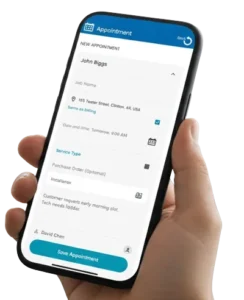
Think about a typical job. A customer approves your digital quote for a new condenser unit. With one click, that quote flips into a scheduled work order, already loaded with all the parts and labor details. Your tech sees the job pop up on their tablet, gets the work done, and taps "complete."
That’s when the magic happens. The system grabs all the data from the work order—every part used, any extra time the tech logged—and instantly creates a draft invoice. No one has to type anything in. No more forgetting to bill for that extra refrigerant. No delays.
Stop Losing Money on Missed Parts and Mistakes
One of the sneakiest ways HVAC businesses lose profit is by not billing for every single part that comes off the truck. It's so easy for a tech to grab an extra capacitor or a few feet of wire and forget to write it down. Those small items feel insignificant, but over hundreds of jobs, they add up to thousands of dollars in lost revenue.
FSM software closes this gap by tying your invoicing directly to your inventory.
- If it's used, it's billed. When a tech pulls a part from their van stock and adds it to the work order, the system automatically bills it out at the correct markup.
- Accuracy in real-time. The invoice is updated the second the part is logged, meaning what the customer sees is a perfect reflection of the job.
- Know what you have. This direct link also gives you a clear audit trail, helping you track parts and cut down on that mysterious "shrinkage."
This diagram shows just how much cleaner the process becomes when it's all connected.

As you can see, sending digital invoices with online payment options and automated follow-ups is a simple formula for getting paid faster.
Get a Clear View of Job Profitability
A standalone invoice tells you what you charged, but it doesn't tell you what you made. An integrated system connects all the financial dots for you.
By linking the schedule, parts, labor, and invoice in one place, you stop just billing and start managing. You’re making decisions based on real-time profitability data, and your invoice becomes a powerful report card for every job.
You can instantly see your total parts cost right next to your labor cost and the final invoice total. This is how you spot which types of jobs make you the most money and which ones are barely breaking even. Understanding why field service management software matters is the first step toward getting that kind of powerful insight.
Ultimately, integration takes your invoicing template from a simple piece of paper to the final, critical piece of your business management puzzle.
Common Questions About HVAC Invoicing
When you're running an HVAC business, a good invoice template is your best friend. But even with a great template, real-world situations pop up that can leave you scratching your head. Let's dig into some of the most common invoicing questions we hear from HVAC pros out in the field.
How Should I Handle Deposits on Large Installation Jobs?
Big installation projects mean big upfront costs for equipment. You shouldn't have to carry that financial burden yourself. This is where a smart deposit structure comes in—it’s absolutely essential for keeping your cash flow healthy and protecting your business.
Instead of just asking for a lump "deposit," break the project down into milestone payments. This approach ties payments to actual progress, which feels fair to the customer and keeps your finances on track.
Here's a payment schedule that works well for most large jobs:
- Payment 1 (The Deposit): 50% due when the customer signs the contract. This initial payment should cover the cost of all the major equipment and officially gets their project locked into your schedule. You'll want to send a specific invoice just for this deposit.
- Payment 2 (Progress Payment): 40% becomes due once you hit a major milestone, like when the primary equipment is installed and the system is running.
- Payment 3 (Final Balance): The last 10% is due after the system passes its final inspection and you’ve walked the customer through how everything works.
Following a structure like this means you’re never out of pocket for major expenses, and the client sees exactly what they're paying for at each stage.
What Is the Best Way to Show a Discount on an Invoice?
Everybody loves getting a good deal. Whether it's a senior discount, a seasonal special, or a little something extra for a loyal customer, how you present it on the invoice matters. Just knocking a few bucks off the total is a missed opportunity.
You should always list the discount as its own separate, negative line item just before the subtotal.
Here’s how that looks in practice:
| Item | Amount |
|---|---|
| Labor: Full AC System Tune-Up | $199.00 |
| Part: Replacement Air Filter | $25.00 |
| Subtotal | $224.00 |
| Spring Tune-Up Promotion | -$25.00 |
| Sales Tax (6%) | $11.94 |
| Total Due | $210.94 |
This method is smart for two reasons. First, it clearly communicates the full value of your work and highlights the exact amount the customer saved. It reinforces that they got a great deal. Second, for your own books, it makes it much easier to track how effective your promotions actually are.
Can I Charge a Late Fee for Overdue Invoices?
Yes, you can—and in many cases, you probably should. But you have to go about it the right way. You can't just spring a late fee on a customer after their payment is overdue. The secret is being completely transparent from day one.
Your right to charge a late fee is established long before an invoice is ever sent. It must be clearly stated in your initial service agreement or contract that the customer signs before any work begins.
Make sure your payment terms, including any potential late fees, are spelled out in that initial agreement. Detail the grace period (e.g., 15 days past the due date) and the fee itself (like a flat rate or a percentage of the outstanding balance).
Then, reinforce this on every HVAC invoicing template you issue. A simple line like, "A late fee of 1.5% per month will be applied to all balances over 30 days past due," is all you need. Just be sure to check your local and state laws first, as some areas have limits on how much you can charge.
Ready to stop building invoices from scratch and get paid faster? TackonFSM integrates your estimates, work orders, and invoicing into one seamless system, so you can generate accurate, professional invoices in seconds and collect payments right from the field. Learn how to automate your billing process with TackonFSM.