How to Start an HVAC Company: A Practical Guide to Launching Your Business
You’ve got the technical skills down cold, but turning that expertise into a successful HVAC company takes a whole different set of tools. It’s about building a solid business from the ground up—getting the legal stuff right, lining up your licenses and insurance, and figuring out exactly what it’ll cost to open your doors. Nailing these first steps is what separates a profitable business from a hobby.
Why Launching Your HVAC Business Now Makes Sense
If you're a seasoned tech on the fence about going out on your own, let me tell you: the timing has never been better. The industry isn't just holding steady; it's growing, and that creates a huge opening for sharp, small businesses to grab a piece of the pie from the big, slow-moving players.
The demand for good HVAC work is through the roof for a couple of big reasons. We're about to see a massive wave of system replacements. Think about it: all those units installed during the building boom in the mid-2000s are hitting their expiration dates, which means a steady stream of high-ticket installation jobs for years to come.
A Market Ripe for Opportunity
The numbers don't lie. The HVAC industry is projected to expand by 9% between 2021 and 2033—that's way faster than most other jobs. The replacement cycle is a huge part of that. Experts are forecasting that around 3.5 million HVAC units will need to be swapped out in 2026 alone. That’s a staggering amount of work waiting for qualified contractors. You can dig into these HVAC industry trends to see the full picture.
On top of replacements, new construction keeps humming along. But where a new company can really shine is by offering a modern, professional experience. Homeowners today want more than just a working AC. They want clear communication, easy scheduling, and digital convenience—things a lot of the old guard just aren't delivering.
Today's opportunity isn't just about fixing air conditioners. It's about building a smarter, more customer-focused service business that uses technology to run smoothly and create a great experience, from the first call to the final payment.
Your HVAC Business Launch Checklist
Here is a high-level overview of the journey from technician to owner. This checklist provides a clear roadmap of the essential phases we'll cover in this guide.
| Phase | Key Actions | Primary Focus |
|---|---|---|
| Foundation | Legal setup, licensing, insurance, business plan, financing. | Building a legitimate and financially sound company. |
| Operations | Acquiring tools, vehicle, inventory, and hiring first techs. | Equipping your team for high-quality service delivery. |
| Growth | Marketing, sales, customer service, and implementing systems. | Attracting and retaining a loyal customer base. |
This roadmap shows that success really comes down to mastering three distinct but connected areas. This guide will walk you through each one, giving you the practical steps to turn your skills into a thriving business.
This simple process flow chart gives you a bird's-eye view of the core pillars: building your foundation, getting the right equipment, and then going out and finding customers.
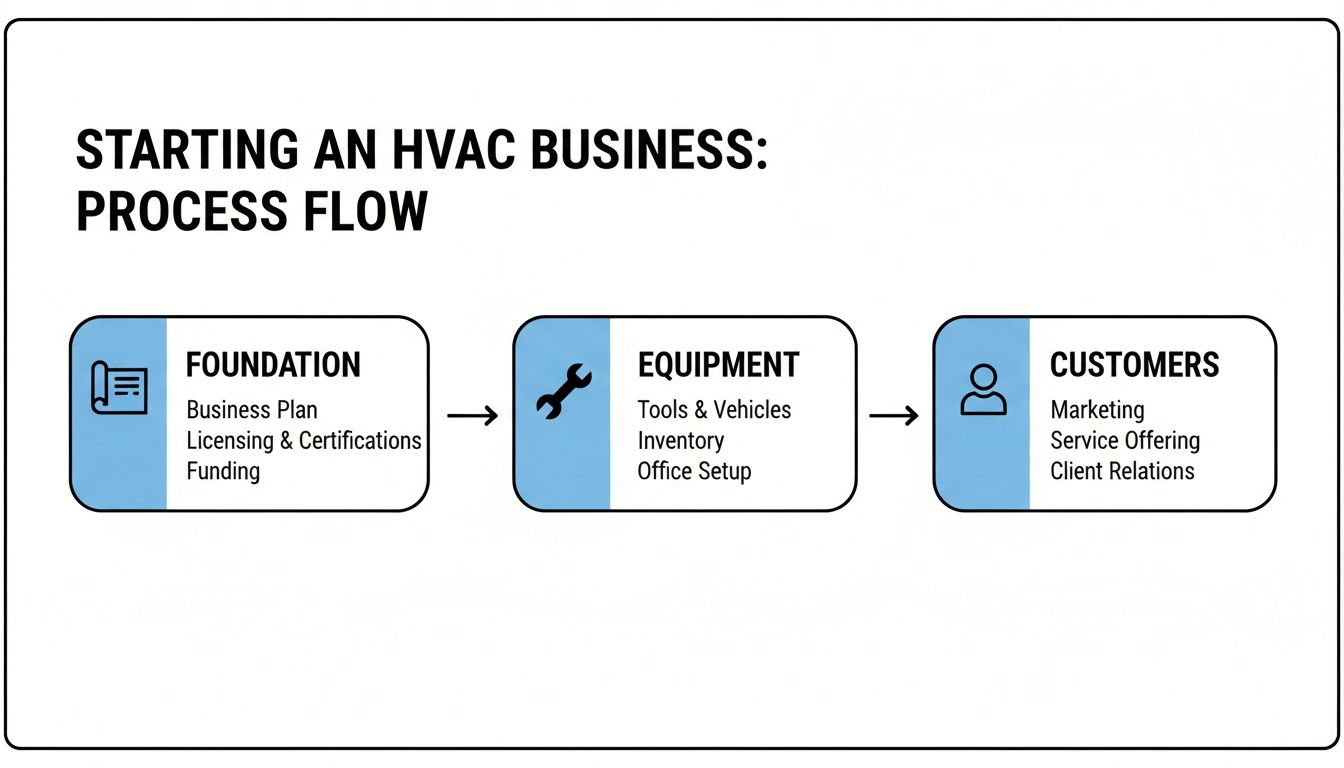
This visual really drives home that your success hinges on getting these three phases right. By focusing on a strong foundation, smart equipment choices, and a solid plan to bring in customers, you’re setting yourself up for real, sustainable growth.
Laying the Groundwork: Your Business Foundation
So, you’ve decided to take the leap. Turning your years of technical skill into a real business is a huge step, and getting the foundation right from the start is what separates the companies that thrive from those that fold. This isn't about brazing copper or wiring a thermostat; this is about building a business that’s built to last—one that protects you, your family, and your future.
Choosing Your Business Structure
First things first, you need to decide how the government sees your company. For most guys starting out, it really comes down to two choices: a Sole Proprietorship or an LLC.
A Sole Proprietorship is the quick and dirty way to get started. It's cheap, there's hardly any paperwork, and you and the business are one and the same in the eyes of the law. The big catch? That "one and the same" part means if a customer sues you or the business racks up debt, they can come after your personal truck, your house, your savings—everything. It’s a huge risk.
That's why I almost always recommend forming an LLC (Limited Liability Company). It creates a legal wall between your business and your personal life. Think of it as a "corporate veil" that protects your family's assets. Sure, it costs a bit to file and there's more paperwork, but that's nothing compared to the potential downside. Imagine a newly installed furnace malfunctions and causes a fire. With an LLC, the lawsuit is aimed at the business, not your life savings.
For almost every new HVAC owner, forming an LLC is the smartest play you can make. The upfront hassle is a tiny price for the peace of mind you get knowing your personal assets are safe.
Getting Your Licenses and Certifications in Order
You can’t legally touch a customer’s system without the right credentials. The specific requirements can change from state to state, and even city to city, so your first call should be to your local contractor licensing board. But a few things are non-negotiable no matter where you are.
- State Contractor's License: This is the big one. Getting it usually involves proving your experience, passing exams on trade knowledge and business law, and showing you have the right insurance.
- EPA Section 608 Certification: This is an absolute must-have. You can't buy or handle refrigerant without it. Make sure your card is current and you have it on you.
- Local Business Permits: Your town or county will want their piece, too. This is typically a general business license that allows you to operate locally.
Don't even think about cutting corners here. Getting caught without the right licenses can lead to massive fines and stop-work orders that will shut you down before you even get your first real customer.
The Right Insurance: Your Financial Safety Net
Running an HVAC business without insurance is like driving your work van with your eyes closed. You’re just one unlucky incident away from financial ruin. A single on-the-job accident could easily bankrupt an uninsured startup.
Here are the essential policies you’ll need from day one:
- General Liability Insurance: This covers you if you accidentally cause property damage or injure someone. Drop a tool on a customer's brand-new hardwood floor? This is what pays for it. You should aim for a policy with at least $1 million in coverage, as many commercial clients won't even talk to you without it.
- Workers' Compensation: As soon as you hire your first employee, you'll need this. It’s required by law in most states and covers medical bills and lost wages if one of your techs gets hurt on the job.
- Commercial Auto Insurance: That personal auto policy on your truck or van? It won't cover you if you get in an accident while on a service call. You need a dedicated commercial auto policy for your work vehicles.
Sketching Out a Simple Business Plan
You don't need to write a 100-page novel, but you absolutely need a roadmap. A simple business plan forces you to think through your goals and is a must-have if you're trying to get a loan from a bank. Just focus on the basics.
While you're laying this groundwork, don't forget about how you'll actually get customers. Thinking about developing an HVAC companies marketing plan right from the start will put you way ahead of the game. It’s one thing to have the skills, but you need a plan to get the phone to ring.
Your plan also needs a serious look at your startup costs. Make a list of everything: the van, the essential tools, your software subscriptions, and your first marketing push. Tallying this up isn't just for you; a detailed budget shows lenders that you've done the homework and have a realistic grasp of the money it takes to get an HVAC company off the ground. That kind of clarity is what turns a good idea into a business someone is willing to fund.
Gearing Up: Getting Your Van, Tools, and Inventory Right
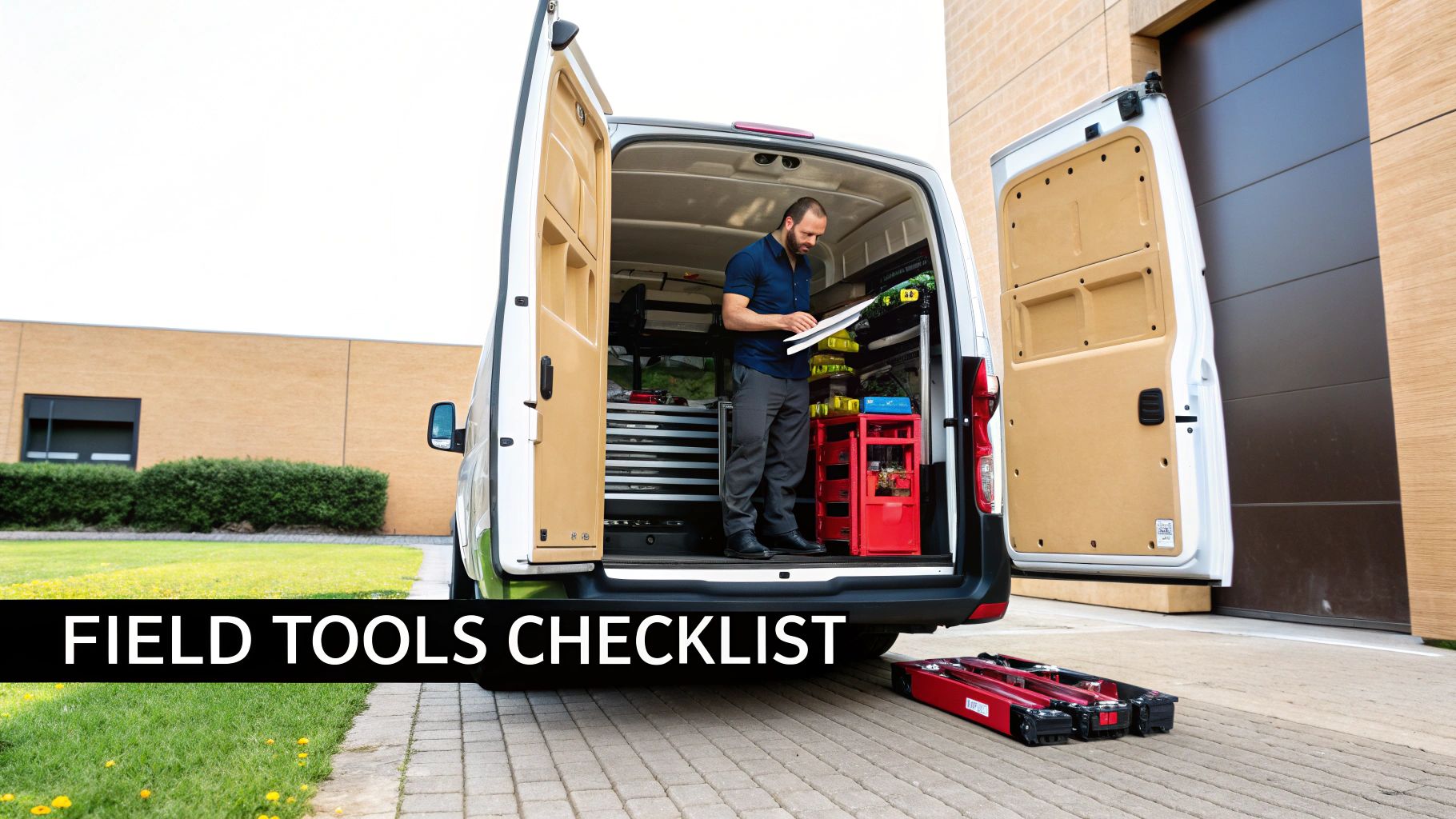
Alright, you’ve sorted out the paperwork and have a solid plan. Now it’s time for the fun part: buying the gear that actually lets you do the work. Don't underestimate this step. Smart decisions here on your tools, van, and parts inventory are what separate the pros from the amateurs. Get this right, and you’ll show up to every job ready to impress.
Your service van is so much more than just a way to get from A to B. It's your workshop on wheels and a rolling billboard for your business. When a homeowner sees a clean, organized van with professional lettering pull up, they instantly feel more confident in their choice.
You don’t need a brand-new, top-of-the-line van to get started. Reliability and space are what matter most. A well-maintained used cargo van can save you thousands. Look for one with good service records and enough room for proper shelving. A cluttered van isn't just unprofessional; it’s a time-waster that costs you money every time you have to dig around for a tool or part.
Building Your Tool Arsenal
The sheer number of tools you need can be intimidating, especially when you're watching every dollar. The trick is to be strategic. Some tools are worth the investment brand new, while you can save a ton by picking up others secondhand.
What to Buy New vs. Used
Invest in New:
- Refrigerant Recovery Machine: This isn't just a tool; it's an EPA compliance machine. A fast, reliable new unit will save you countless hours on the job.
- Vacuum Pump: You can’t cut corners here. A high-quality pump is essential for doing a proper system evacuation and avoiding frustrating callbacks.
- Digital Manifold Gauges: The accuracy of modern digital gauges blows old analog sets out of the water. They help you pinpoint tricky problems much faster.
Save Money on Used:
- Ladders: You can often find extension and step ladders in great shape on local marketplaces. Just check them for safety.
- Heavy-Duty Hand Tools: Good old wrenches, pipe cutters, and screwdrivers were built to last forever.
- Brazing Torch Kit: As long as the regulators and hoses are in good condition, a used torch set performs just like a new one.
Of course, you’ll also need a full lineup of diagnostic tools and hand tools to tackle day-to-day calls. Make sure you have these essentials from day one:
- Diagnostic Tools: Multimeter, clamp-on ammeter, combustion analyzer, and a solid leak detector.
- Hand Tools: Full sets of nut drivers and screwdrivers, a few good adjustable wrenches, and insulated pliers.
- Safety Gear: This is non-negotiable. Get good safety glasses, gloves, a respirator, and a fall-protection harness.
Smart Inventory Management from Day One
Few things crater your profit on a service call faster than having to leave the job to run to the supply house for a common part. That second trip kills your time, wastes fuel, and can even shake a customer's confidence.
Your goal isn’t to stock every part under the sun. It's about applying the 80/20 rule: carry the 20% of parts that you use on 80% of your jobs. Think common capacitors, contactors, fuses, and ignitors.
This is where a good system makes all the difference. Relying on memory or a messy spreadsheet is a recipe for disaster. This is exactly why we built features for this into TackonFSM. Our software lets you track parts on each truck in real-time. You can see what you have, get alerts when stock is low, and assign parts directly to work orders so everything gets billed correctly. It’s a simple way to stop losing money on misplaced inventory.
By thinking strategically about your van, tools, and parts, you're not just buying equipment. You're building a foundation for efficiency and professionalism that will help you win over customers and turn a profit from your very first job.
How to Price Your HVAC Services for Profit
Let’s be honest: figuring out what to charge is one of the most stressful parts of starting an HVAC company. If you aim too high, you risk scaring off those crucial first customers. But if you price too low, you'll burn yourself out working for pennies and wonder why you can't get ahead.
Nailing your pricing strategy from day one is the single most important thing you can do for the long-term health of your business.
A classic rookie mistake is peeking at a competitor's website and just matching their rates. The problem? You have no idea what their costs are. Your pricing has to cover your unique expenses, pay you a decent wage, and still leave enough profit to actually grow the company.
Let's break down how to build a pricing model that actually works.
Choosing Your Pricing Model
When it comes to pricing jobs, you've really got two main options: Time and Materials (T&M) or Flat-Rate. Both have their pros and cons, and a smart business owner knows when to use each.
Time and Materials (T&M): This is the old-school method. You bill for the technician's time on the job, plus the cost of any parts you install. It’s simple and totally transparent, which can be great for tricky diagnostic work where you genuinely don’t know how long it will take. The flip side is that customers get nervous watching the meter run, making it tough to give a solid quote before you start.
Flat-Rate Pricing: This is where you offer one upfront price for a specific task, no matter how long it takes. For example, a "Furnace Ignitor Replacement" might always be $285, parts and labor included. Customers love this because it removes all the uncertainty. It also gives your techs an incentive to be efficient—when they finish a job faster, the company’s profit margin on that task goes up.
Flat-rate pricing is taking over the industry for a reason. It shifts the customer's focus from "how long is this taking?" to "what is the value I'm getting?" When homeowners know the final cost before you even pick up a tool, they feel in control. This builds incredible trust and makes them far more likely to approve your recommendations.
Calculating Your True Hourly Rate
Even if you go with a flat-rate system, you absolutely must know your "fully loaded" hourly rate to build those prices correctly. This isn’t just your wage; it’s the magic number that covers every single cost of being in business.
First, you need to add up all your annual overhead costs. This is everything except the direct cost of parts and your technicians' paychecks.
- Vehicle Costs: Truck payments, insurance, gas, and all those oil changes.
- Business Insurance: Don't forget general liability and workers' comp.
- Software & Phones: Your field service software, cell phone bills.
- Marketing: Website fees, Google Ads, door hangers.
- Shop/Office Rent: Even if it's just a corner of your garage, account for it.
- Your Salary: Pay yourself first! This is non-negotiable.
Once you have that big number, divide it by the total number of billable hours you realistically expect from a technician in a year. A good target for one tech is around 1,500 billable hours. (That’s 40 hours a week x 50 weeks = 2,000 total hours, minus all the non-billable time like driving, training, and callbacks).
Let's run a quick example:
- Annual Overhead: $75,000
- Billable Hours: 1,500
- Overhead Cost Per Hour: $75,000 / 1,500 = $50/hour
That $50 an hour is just what it costs to open your doors each morning. Now, you have to add what the tech needs to earn (say, $40/hour) and your target profit margin (let's use 20%). All in, you're looking at a final billable rate of $110-$120 per hour. This becomes the foundation for every price in your flat-rate book.
Creating and Managing Your Pricebook
Your pricebook is your business's financial bible. For pricing to be consistent and profitable, especially as you add techs, that bible needs to be digital.
Modern software like TackonFSM is built for this. You can create a digital pricebook loaded with all your common services—each one pre-configured with the right parts, markups, and labor times. When your technician is standing in a customer's home, they can pull up the right repair on a tablet and generate a perfect, professional quote in seconds.
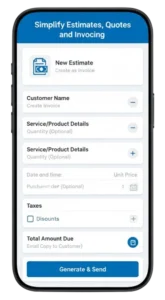
This approach eliminates the "uh…let me call the office" guesswork and ensures every single job is priced for profit. You can learn more about how to simplify your estimates and invoicing process to make sure your cash flow stays healthy from day one.
Winning Your First Customers
You've got the van, the tools, and the licenses are on the wall. So, how do you actually make the phone ring? This is the moment of truth for every new HVAC business owner. Without customers, all you’ve got is a very expensive hobby. A smart, grounded marketing plan is the engine that will get your business off the ground.
Don’t even think about flashy billboards or radio ads right now. Every dollar is precious when you're starting out. Your first marketing moves should be a practical blend of quick-win digital tactics and good old-fashioned networking. The goal is simple: get some leads coming in now while building a foundation for steady work down the road.
Building Your Digital Foundation
In this day and age, your online presence is your storefront. Even if a neighbor gives a glowing recommendation, you can bet that homeowner is still going to look you up online. In fact, nearly 80% of customers will check you out online before they even think about calling. A professional, trustworthy digital footprint isn't a "nice-to-have"—it's essential.
Get these two things right from the very beginning:
- A Clean, Professional Website: This doesn't need to be fancy or cost a fortune. Your site just needs to clearly state who you are, what you do (repairs, installs, maintenance), the towns you serve, and how to get in touch. Most importantly, it must look good and be easy to use on a smartphone, because that's where most of your customers will find you.
- A Dialed-In Google Business Profile (GBP): This is, without a doubt, the most powerful free marketing tool you have at your disposal. When someone’s AC dies and they search "AC repair near me," Google’s map results are driven by these profiles. Fill out every single field. Add photos of your clean van, your team, and your best work. List every service you offer. Double-check that your phone number and hours are perfect. If you want to get serious about getting found, you can learn a lot about SEO for your business website on RankMath.
The very day you get your business license, claim and build out your Google Business Profile. Don't be shy about asking your first happy customers for a review. Those initial five-star ratings are pure gold and will immediately help you stand out from the competition.
Low-Cost, High-Impact Marketing Tactics
While your website and GBP start gaining traction, you can't just sit back and wait. You’ve got to pound the pavement—both literally and figuratively—to land those first critical jobs. The smartest new owners I know focus on people who are responsible for multiple properties and are always looking for reliable tradespeople.
- Network with Real Estate Agents: Agents are constantly scrambling to find good HVAC techs for pre-sale inspections or last-minute repairs to close a deal. Introduce yourself, drop off some business cards, and prove you're the one who will answer the phone and show up. One solid relationship with a busy agent can turn into a steady stream of referrals.
- Connect with Property Managers: Property managers for apartment complexes and rental homes are always putting out fires. An HVAC pro who solves their problems quickly and professionally is a lifesaver. This kind of work is your bread and butter—steady, predictable service calls that keep the cash flowing.
Once you have some revenue coming in, you can start thinking about paid ads. Taking the time to understand the process of choosing an HVAC PPC company can be a game-changer once you're ready to scale.
The Power of a Professional First Impression
Remember, every single thing you do is a marketing opportunity.
The clean wrap on your van, the professional way you answer the phone, the clean uniform you wear—it all builds trust. Showing up with shoe covers and clearly explaining the problem tells the customer you respect their home and take pride in your work.
At the end of the day, the best marketing in the world is doing a damn good job. A happy customer who feels they were treated right is your most powerful salesperson. They’ll tell their friends, post in the neighborhood Facebook group, and leave the glowing online reviews that convince total strangers to give you a call. Focus on quality, and the business will follow.
Running Your Operations Smoothly From Day One
You can be the best technician in the state, but that won't save your business if your operations are a mess. I've seen countless new HVAC companies with incredible technical talent go under, and it's almost never because of poor workmanship. It’s the silent killers—chaotic scheduling, missed appointments, and invoicing delays—that bleed cash and drive customers away.
The secret isn’t working harder; it’s working smarter right from your very first service call.
Most of us start with what we know: a paper calendar hanging in the office, a spiral notebook for job notes, and maybe a spreadsheet to track who owes what. That system might hold up for a week or two. But it quickly becomes a bottleneck. One missed call while you’re up on a ladder, a misplaced invoice, or an accidental double-booking can cost you hundreds of dollars and stain your reputation before you even get a foothold.

This is where a solid field service management (FSM) software becomes your most valuable tool. It’s the central hub for your entire business, transforming the potential for chaos into a smooth, professional process that lets you compete with the big guys from day one.
The Power of a Centralized System
Instead of juggling sticky notes, text threads, and spreadsheets, a dedicated platform pulls every piece of your operation into one place. For anyone figuring out how to start an HVAC company and build it to last, this foundation is non-negotiable.
Modern FSM software like TackonFSM is built by people who understand the trades. It’s not some generic business software; it’s designed for the realities of field service. It combines several crucial functions into a single system you can run from your truck:
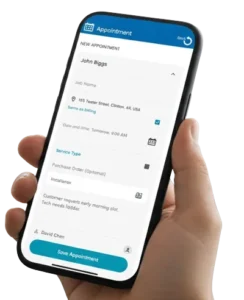
- Drag-and-Drop Scheduling: Get a bird's-eye view of your entire week on one visual calendar. Need to reschedule a job? Just drag it to a new time slot. The tech gets an instant notification. No more frantic phone calls.
- Mobile App for Techs: Your team has everything they need on their phone—job details, customer history, checklists, you name it. They can snap photos, build an invoice, and take a credit card payment right on the spot. Goodbye, messy paperwork.
- Automated Customer Communication: The system can automatically send appointment reminders and "on-the-way" texts. This one simple feature drastically cuts down on no-shows and makes your small shop feel as buttoned-up as a national brand.
Your goal from day one should be to build a business that doesn't require you to touch every single piece of paper. FSM software creates a repeatable, professional process for everything from quoting to getting paid, freeing you up to focus on the work that actually makes you money.
When you adopt a system like this from the beginning, you build good habits into your company's DNA—habits that will scale as you grow. You can see how a good field service scheduling software saves time and stops the operational headaches that sink so many startups. It’s an investment in your own sanity that pays for itself almost immediately.
Got Questions About Starting an HVAC Business? We've Got Answers
So, you're thinking about branching out on your own. It's a big step, and you probably have a million questions running through your head. Let's tackle a few of the most common ones we hear from techs making the leap to owner.
What's the Real Startup Cost?
You can get an HVAC business off the ground for less than you might think. A lean, smart launch can realistically be done for $10,000 to $20,000.
This isn't for a fleet of brand-new, wrapped trucks, of course. That budget covers the absolute must-haves: getting your LLC registered, making the down payment on your insurance, buying a dependable used van, and securing the core tools you'll need for service calls. The idea is to start smart and avoid crippling debt right out of the gate.
Can I Really Do This by Myself?
You bet. Plenty of successful HVAC companies started with just one person in a van. Going solo means you wear all the hats—tech, dispatcher, bookkeeper, and marketer.
The trick is staying organized. You can't afford to let the business side of things slip while you're busy in attics and crawlspaces. This is where technology becomes your best employee, helping you manage your schedule, fire off invoices from the job site, and keep track of customer history without getting buried in paperwork.
The toughest part of being a one-person shop isn't fixing the AC unit; it's running the actual business. Getting a solid field service management system in place from the very beginning is non-negotiable if you want to keep your head above water.
Where's the Best Money in HVAC?
Big installation jobs look great on paper, and they definitely bring in chunks of revenue. But the real secret to long-term profitability? Recurring service and maintenance agreements.
These service plans are the lifeblood of a healthy HVAC business. They create consistent, predictable cash flow year-round, which helps you smooth out the seasonal slumps. More importantly, they build lasting relationships with customers who trust you, and that trust almost always leads to profitable repair jobs and the eventual, high-ticket system replacement down the road.
Ready to manage your new business like a seasoned pro from day one? See how TackonFSM simplifies everything from scheduling and inventory to invoicing and payments. Explore the tools that will help your HVAC company grow at https://www.tackonfsm.com.