How to Start a Contractor Business in 2026

So you've decided to go out on your own. You've got the skills, the drive, and you're tired of working for someone else. That's the first step. But turning your expertise in HVAC, plumbing, or electrical work into a real, profitable business takes more than just being great at your trade.
It really comes down to getting four key areas right from the very beginning: nailing your legal structure, getting your business finances in order, building smooth field operations, and crafting a plan to get and keep clients.
Your Blueprint for a Thriving Contractor Business
Making the leap from top-tier tech to business owner is a huge shift. You're no longer just solving a customer's problem on-site; you're building an entire company. It’s a path filled with challenges—fierce competition and the constant struggle to find good help are two of the biggest. But the opportunity right now is massive.
The construction market is on fire, with projections showing it could hit USD 9.8 trillion globally by 2026. That explosive growth means huge demand for skilled tradesmen like you. At the same time, the industry is grappling with a severe labor shortage. According to U.S. Census Bureau data, we'll need an estimated 499,000 new workers in 2026 just to keep up.
What does that mean for you? It means doing more with less is the name of the game. Efficiency isn't just a nice-to-have; it's essential for survival and growth from day one.
The Four Pillars of a Contractor Business
To build a business that lasts, you need a strong foundation. I've seen too many talented contractors fail because they ignored the business side of things. Think of your new company as having four core pillars. Get these right, and you'll save yourself a world of pain later.
This flowchart breaks it down visually, showing the logical flow from an idea to a fully functioning business.

Each pillar supports the next. You can't run operations without a financial plan, and you can't get clients without having your operations sorted out. It all works together.
Having a solid plan is your roadmap. As you start sketching out your own business blueprint, looking at a comprehensive guide like this one on Starting a Business in Connecticut can offer valuable insights, even if you're located elsewhere.
Key Insight: The most common mistake I see is new owners focusing only on the fieldwork they love. Real, long-term success comes from balancing your technical skills with smart business management across all four of these areas.
To help you get started, here’s a high-level checklist that summarizes the journey ahead.
Contractor Business Launch Checklist
This table breaks down the entire launch process into manageable phases, outlining the specific actions you'll need to take and the ultimate goal for each one.
| Phase | Key Actions | Primary Goal |
|---|---|---|
| Legal & Compliance | Register business name, choose legal entity (LLC, etc.), get EIN, open business bank account, obtain licenses & insurance. | Establish a legitimate, protected business entity that is compliant with all state and local regulations. |
| Finance & Pricing | Secure startup funding, create a budget, set up accounting software, develop a pricing strategy, establish estimating process. | Ensure financial stability, manage cash flow effectively, and price your services for profitability from the first job. |
| Operations & Staffing | Set up office/shop, purchase tools & vehicles, hire initial staff, establish dispatching protocol, manage parts inventory. | Build the core operational infrastructure needed to deliver high-quality service efficiently and consistently. |
| Clients & Growth | Develop a brand, build a website, set up online profiles, create a marketing plan, define a sales process. | Generate a steady stream of leads and convert them into paying customers to fuel business growth. |
This guide is built to walk you through every item on that checklist. We'll give you practical, actionable advice to help you launch, grow, and build a business you can be proud of. Think of this as the playbook I wish I had when I was starting out. Let's get to it.
Getting Your Legal and Financial House in Order

Alright, this is where the rubber meets the road. All the planning and late-night dreaming finally starts turning into a real, legitimate business. Getting your legal and financial foundation right from the jump isn't just bureaucratic busywork—it's what protects you, your family, and your future profits.
A lot of new contractors get intimidated by the paperwork, but it’s more straightforward than you might think. Let’s walk through what you actually need to do.
Choosing Your Business Structure
Your first big decision is how to legally structure the company. This isn't just a box to check; it directly impacts your personal liability, how you're taxed, and what you can do down the road.
For most new trades businesses—whether you're in HVAC, plumbing, or electrical—it usually comes down to an LLC or an S-Corp. You could just be a sole proprietor, but that's a risky game. It means there’s no difference between you and the business, so if something goes wrong, your personal assets are fair game.
- Limited Liability Company (LLC): This is the go-to for a reason. It creates a legal separation between you and your business. If a job goes sideways and a lawsuit happens, they sue the company—your personal savings, home, and vehicle are protected.
- S Corporation (S-Corp): This is a tax status, not a formal business structure. You can set up an LLC and then tell the IRS you want to be taxed as an S-Corp. This can save you a good chunk of money on taxes once you're profitable enough to pay yourself a regular, formal salary.
My advice? Start as an LLC. It gives you the protection you need with less complexity. You can always make the S-Corp election later when your accountant says it’s time.
Real-World Tip: Think of an LLC as a protective wall. A customer's leaky pipe floods their basement after a repair? If you're an LLC, they sue the business, not you personally. That wall is what protects your family's finances from a business disaster.
Setting Up Your Business Identity
Once you've picked a structure, you need to make it official. This involves a few key moves to get your business recognized by the government and your customers.
First, register your business name with the state. If you’re going to be "Precision Plumbing" instead of just your own name, you'll probably need to file for a "Doing Business As" (DBA) name.
Next, get an Employer Identification Number (EIN) from the IRS. It’s free and you can get it instantly online. This is basically a Social Security number for your business. You'll need it for almost everything: opening a bank account, hiring help, and filing your taxes.
Finally, and this is a big one: open a dedicated business bank account. Do not, under any circumstances, mix your personal and business money. When you co-mingle funds, you can lose the liability protection your LLC provides (it’s called "piercing the corporate veil"). All customer payments go in, and all business expenses—tools, fuel, materials—come out. This simple discipline will save you massive headaches at tax time.
Securing Licenses, Insurance, and Startup Capital
With your legal entity in place, it’s time to get the licenses you need, protect your new business with insurance, and secure the cash to get started.
Every single contractor needs specific licenses to work legally. These requirements change depending on your state, county, and trade. Don't guess—check with your local licensing board to see exactly what you need. This is a non-negotiable step.
Insurance is just as critical. General liability insurance is the absolute minimum, as it covers you for property damage and accidents on a job site. Laying the groundwork for your contractor business means knowing exactly what coverage you need. For a solid overview, I'd recommend reading What Insurance Do I Need As A Contractor?
The last piece of the puzzle is funding. The U.S. Small Business Administration (SBA) has loan programs specifically for new businesses like yours.
The SBA website is your best starting point for exploring the different loan programs available to small business owners.
This is where you can compare options like the popular 7(a) and 504 loan programs to see which one makes the most sense for your startup costs.
Startup capital is flowing, with the SBA’s record $45 billion in 7(a)/504 loans reaching 85,000 small businesses in 2025. For a new contractor, this means your competition might be scaling up quickly. You can get ahead by managing your finances with modern tools from day one, which will also make you a much stronger candidate for securing some of that available capital. You can dig into more trends in the SBA’s 2025 annual report.
4. Nail Your Pricing and Master Profitability
Profit isn’t an accident; it’s a plan. A lot of great technicians go into business for themselves thinking their skills alone will guarantee success. But here's the hard truth: you can be the best tech in town and still go broke if you don’t get your numbers right. Pricing is the engine of your business, so let's get under the hood.
It all starts with job costing. You absolutely have to know what it costs you to show up and complete a job, down to the last wire nut and minute on the clock. Quoting a price without knowing your costs is just guessing, and you can't build a sustainable business on guesswork.
Figure Out Your Actual Break-Even Point
Before you can price for profit, you need to know what it costs to just keep the lights on. This means getting a handle on three critical numbers: your overhead, your true labor cost, and your material costs. Getting this right from day one is a game-changer.
First, your overhead covers all the non-negotiable expenses you pay whether you're running calls or not.
- Rent for your office or shop.
- Utilities like power, water, and internet.
- Insurance—liability, auto, and workers' comp are the big ones.
- Vehicle expenses, from payments and fuel to routine maintenance.
- Software for things like accounting and scheduling.
- Marketing, advertising, and other administrative costs.
Next up is your labor burden, and this is where many new owners get tripped up. It’s not just the hourly wage you pay a tech. It's every single cost associated with having that person on your team.
You’re not just paying an employee's wage. Your actual labor cost, or "burden," is typically 25-40% higher once you add in payroll taxes, workers' compensation, health insurance, and retirement benefits. If you ignore this, you're losing money on labor on every single call.
Finally, you've got your material costs. This seems straightforward, but it requires discipline. It’s easy to remember the furnace or the water heater, but what about all the small stuff? The fittings, sealant, tape, and screws all add up. Track everything.
Choose a Pricing Model That Works for You
Once you know your true costs, you can build a pricing strategy that actually makes you money. In the trades, this usually comes down to two main approaches: time and materials (T&M) or flat-rate pricing.
A Time and Materials model is simple on its face: you charge the customer for the hours you work and the parts you use. It's transparent, but it can also open the door to arguments with customers who think a job "took too long."
Flat-rate pricing, on the other hand, means you charge one fixed, upfront price for a service. This gives the customer peace of mind and, when you know your costs inside and out, it almost always leads to better margins. It shifts the focus from time to value.
Create Professional Estimates That Sell the Job
Your estimate is more than just a price; it's a sales tool. A number scribbled on the back of a business card doesn't exactly scream "professional." This is your first real chance to build trust and show the customer you're a serious business.
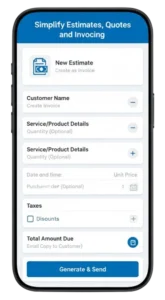
Here's where a little tech can make a huge difference. Using field service software to build your estimates from a pre-loaded price book keeps everything consistent and accurate. You can set your markups for parts and labor, protecting your profit margins automatically. This also helps you simplify estimates, quotes, and invoicing by connecting the entire process, from the initial quote all the way to getting paid.
Imagine quoting a water heater replacement. Instead of guessing, your software can instantly pull the unit cost, add the standard labor hours, and tack on all the necessary fittings from your digital inventory. With your profit margin already built-in, you can send a clean, professional quote to the customer in minutes, knowing with full confidence that every cost is covered.
Assembling Your Crew and Optimizing Field Operations

With the legal paperwork and financial planning behind you, it’s time to focus on what actually gets the work done. Your reputation as a new contractor isn’t built in an office—it’s built by the people you send into customers' homes and the efficiency of your day-to-day operations.
Let's be honest: finding skilled help is one of the toughest parts of this business, and you can't just throw money at the problem. The best techs aren't just looking for a good paycheck. They're looking for an organized, professional company that respects their skills and their time.
How to Attract and Keep Great Technicians
Finding and holding onto top-tier HVAC, plumbing, or electrical talent is notoriously difficult. The current labor market makes it even tougher, but this is also a golden opportunity for new owners to stand out from the old-school shops.
The skilled labor shortage isn't going away anytime soon. Projections show the U.S. will need another 499,000 construction workers by 2026, and over 80% of companies are already struggling to fill jobs. You can read more in the 2026 construction outlook.
This is where smart business owners get an edge. Instead of just trying to hire more people, they make the team they do have more productive with better systems. A central platform for dispatching, scheduling, and communication allows a small crew to handle more work, more efficiently.
So, how do you compete for the best people? You build a place they actually want to work.
- Give Them Modern Tools: No one likes chaos. Equip your team with a mobile app that clearly shows their schedule, job details, customer history, and parts info. It makes their job drastically less frustrating.
- Invest in Their Skills: Show them you care about their career, not just the hours they bill. Offer to pay for new certifications or advanced training. This builds the kind of loyalty that a few extra dollars an hour can't buy.
- Build a Real Team Culture: Don’t just create a workplace; build a team. Celebrate big wins, recognize a job well done, and be open with your crew. A positive culture is your most powerful tool for keeping good people around.
A tech who isn’t scrambling to read a messy work order or calling the office every five minutes is a happier, more efficient employee. This focus on making their job easier is your secret weapon.
Ditch the Whiteboard for Smart Dispatching
You know the one—that old whiteboard in the back of the shop, covered in scribbled names, addresses, and frantic notes. It's a recipe for disaster. It’s chaotic, full of errors, and simply can't scale as you grow.
The day you hire your first technician is the day you need a real dispatch and scheduling system.
Imagine a clean, visual calendar on your screen where you can drag and drop jobs. You see every tech’s schedule at a glance. When a service call comes in, you instantly spot who is closest and has the right skills. You assign the job, and the work order pops up on their phone. That’s the power of modern field service management (FSM) software. It turns dispatching from a reactive mess into a proactive strategy.
Real-World Scenario: A customer calls at 10 AM to reschedule their 2 PM appointment. On a whiteboard, that means erasing, rewriting, and calling both the tech and maybe other customers to shuffle the day. It’s a 15-minute fire drill. With a digital dispatch board, you just drag the job to a new day. The tech gets an automatic notification. The entire disruption is fixed in 15 seconds.
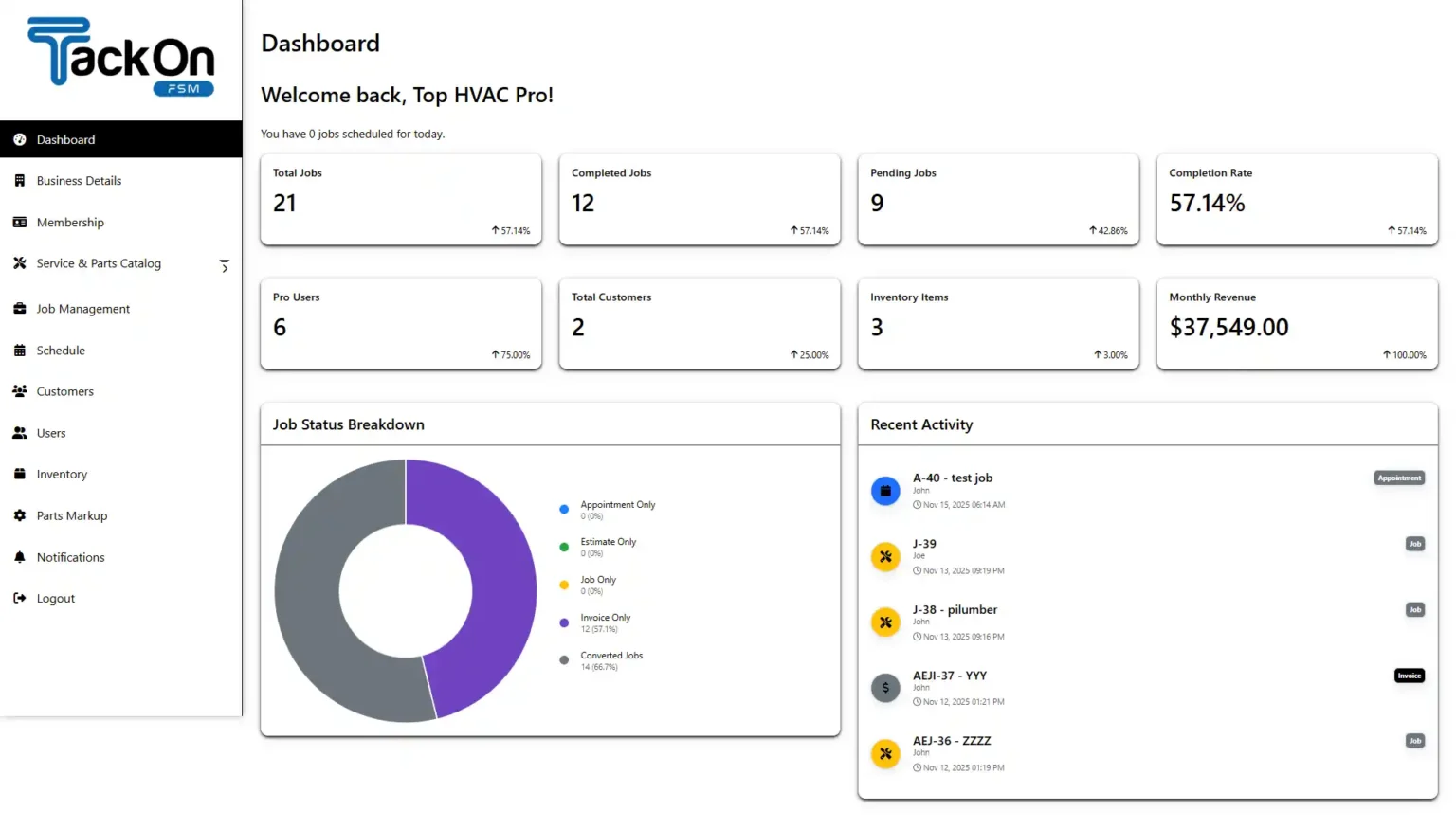
This level of organization does more than just prevent headaches. It helps you squeeze more jobs into each day, cut down on drive time, and boost your team's productivity without having to hire more people. This is what a modern company dashboard looks like in action, giving you a central command center for your entire operation.
A Better Experience for Everyone
Smooth operations lead directly to happier customers. When your dispatching is on point, you can give customers tight arrival windows and actually hit them. The right tech can take this even further.
Key features that will set you apart:
- Automated Customer Notifications: Set up automatic texts to confirm appointments, send "on-the-way" alerts with a picture of the tech, and follow up for a review after the job. This simple touch eliminates "where are you?" calls and makes your business look incredibly professional.
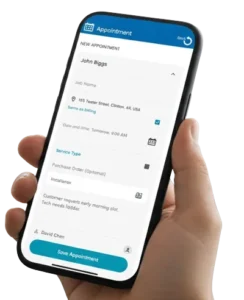
- A Powerful Technician App: A good mobile app is a tech's best friend. It lets them see a customer's entire job history, use digital checklists to ensure quality, upload photos of their work, build estimates on-site, and take payment right then and there. No more extra trips back to the shop for paperwork.
When you assemble a great team and give them the tools to succeed, you create a powerful cycle. Your techs are more effective, your customers are more satisfied, and your new business is built on a foundation for growth.
Choosing the Right Tech to Streamline Your Business
Look, your skills on the job are what get you started, but they won’t keep you in business. The real secret to scaling up without pulling your hair out is the back-office system you build from day one. Thinking about software right from the start isn't just another expense; it’s a critical investment in your future sanity and profitability.
I’ve seen so many new contractors try to juggle everything with a Google Sheet for quotes, a paper calendar taped to the dash, and a shoebox full of receipts. It works for a week, maybe a month. Then the chaos hits: lost paperwork, missed appointments, and profits that seem to vanish into thin air. There's a much better way.
Beyond Spreadsheets and Paper Invoices
The solution that separates the struggling businesses from the thriving ones is a Field Service Management (FSM) platform. Think of it as the central nervous system for your entire operation, connecting every single task from the moment a customer calls to the second their payment hits your account.
Instead of fighting with a messy collection of different tools, an FSM gives you one unified system. Information gets entered once, and it flows everywhere it needs to go automatically. This simple shift is a game-changer—it kills costly data-entry errors and gives you back hours of your day.
Key Takeaway: The goal isn't just to "go digital"—it's to get integrated. A solid FSM platform ensures your schedule, dispatch board, inventory, estimates, and invoices are all perfectly in sync. This is how you build a business that can actually grow without breaking.
To really see the difference, let's compare the old-school manual approach to running your business with a modern FSM platform.
Manual Methods vs FSM Software
The table below breaks down the day-to-day reality of each method. One path is a constant struggle, while the other paves the way for a smooth, professional operation that customers and technicians love.
| Business Function | Manual Method (Paper & Spreadsheets) | FSM Software |
|---|---|---|
| Inventory & Parts | Guesswork, over-ordering, lost parts, and constant last-minute trips to the supply house. | Real-time tracking of parts on vans and in the warehouse, preventing loss and ensuring job profitability. |
| Estimating & Invoicing | Scribbled notes, inconsistent pricing, and taking days to send invoices out. | Professional digital estimates sent in minutes, automated markups, and instant conversion to invoices. |
| Scheduling & Dispatch | A chaotic whiteboard, missed calls, inefficient routes, and leaving customers in the dark. | Drag-and-drop scheduling, optimized routes, and automated customer notifications for a better experience. |
| Payments | Chasing down checks, suffering from slow cash flow, and struggling to track who has paid. | On-site credit card processing, secure online payment links, and instant payment reconciliation. |
As you can see, the right software doesn't just make things a little easier; it fundamentally changes how you operate for the better.
Smart Inventory Management Stops Profit Leaks
One of the biggest, quietest money pits for any new contractor is parts and inventory. When you don't have a system, it's practically impossible to know what you have, where it is, or if you're even billing for it correctly.
Imagine your tech uses a specific capacitor on a late-night emergency call. Without a digital inventory system, that part might never get recorded, never get billed, and you just ate the cost. FSM software solves this by tying parts directly to jobs. When a technician uses a part, it’s automatically taken out of their van’s digital stock and added to the customer’s final invoice.
This level of control gives you a huge advantage:
- Prevent Shrinkage: You know exactly where every part is, from your main warehouse to each service van. This drastically reduces loss and theft.
- Avoid Double-Ordering: Stop wasting money on parts you already have just because you couldn't find them.
- Ensure Accurate Job Costing: Guarantee every single component used on a job is included in the final bill, protecting your margins on every call.
Accelerate Your Cash Flow from Day One
For a new business, cash flow isn't just important—it's oxygen. You can be profitable on paper but still go out of business waiting for customers to mail you a check. FSM software directly attacks this problem by connecting your entire financial workflow. Exploring how to use field service scheduling software that saves time can show you just how much efficiency you can gain.
The whole process becomes seamless. An estimate you build in the system is approved by the customer with a quick digital signature. Once the job is done, that estimate converts into an invoice with a single click. Your technician can then take payment right there with a card reader, or the system can automatically text the customer a secure payment link.
This simple, connected process means you get paid in hours or days, not weeks or months. That faster cash flow gives you the working capital you need to buy materials, make payroll, and keep growing your business without stress.
Winning Your First Customers and Building a Strong Brand

Alright, your truck is wrapped, your tools are ready, and your paperwork is in order. Now for the most important part: making the phone ring. Without customers, you’ve just got a very expensive hobby.
Forget about splashy, expensive advertising. When you’re just starting out, your marketing focus should be laser-sharp. We’re talking about smart, ground-level tactics that build real momentum and get local homeowners to call you first.
The goal isn't just to get one job; it's to become the trusted, go-to name in your service area. That process starts online and is cemented through real-world relationships. Let’s break down the strategies that actually work on a startup budget.
Master Your Local Online Presence
Let’s be honest—before anyone trusts you with their plumbing or electrical panel, they’re going to Google you. What they find (or don’t find) is often the deciding factor. Getting your local online footprint right is your first marketing mission.
You need a simple, clean website. It doesn't have to be fancy or cost a fortune. It just needs to quickly and clearly tell people three things: who you are, what you do, and how to get in touch. Think of it as your digital business card that’s working for you 24/7.
Next up is something that is absolutely non-negotiable: your Google Business Profile. This free listing is probably the most powerful tool you have for showing up when a local customer searches "plumber near me."
- Be thorough. Fill out every single field: services, business hours, your exact service area, and upload photos of your clean truck, you in uniform, and some of your best work.
- Get reviews, starting now. After every job, ask your happy customer to leave you a review on Google. Those stars are pure gold—they’re proof to others that you’re the real deal.
Key Insight: For a new contractor, a well-managed Google Business Profile with even a few genuine 5-star reviews can be more powerful than a slick website. It builds instant credibility with people who need your help right now.
Build a Powerful Referral Pipeline
While your online presence will catch new customers, nothing beats the long-term, sustainable growth that comes from referrals. The best jobs often come from people who already know, like, and trust you. This is a fundamental part of building a contractor business that lasts for decades.
Start building a network of other local professionals who serve the same homeowners you do but aren’t your competitors. These relationships can become an incredible source of pre-qualified leads that just land in your lap.
Who should be in your network?
- Real estate agents: They are always scrambling to find reliable tradespeople for home inspections, quick fixes, and closing repairs.
- Property managers: One good relationship here can be a game-changer. They manage dozens or hundreds of units and always have a running list of maintenance needs.
- Other trade contractors: Make friends with good roofers, painters, and landscapers. A roofer finding a fried furnace blower motor can send that job your way, and you can do the same for them.
Don't just drop off a business card and hope for the best. Take them for coffee. Follow up. Show them you're professional and will make them look good for recommending you. A single, solid relationship with a busy property manager can be enough to keep you busy all month. This is how you go from being just another contractor to a cornerstone of your local community.
Your Top Questions Answered
Once you've wrestled with the big setup tasks like your business plan and legal structure, a whole new set of questions usually pops up. Let's tackle some of the most common ones I hear from new owners who are ready to get to work.
How Much Cash Do I Really Need to Start?
This is the million-dollar question, isn't it? The honest answer is it varies wildly depending on your trade and where you operate. That said, a realistic starting budget will fall somewhere between $10,000 and $50,000.
Your biggest cash outlays right out of the gate will be your first service vehicle, the essential tools of your trade, and those initial insurance premium payments.
But don't get caught off guard by the other costs that can sneak up on you. You'll need to account for:
- Licenses and Permits: These fees can quickly add up, sometimes costing several hundred or even thousands of dollars depending on your local requirements.
- Initial Marketing Push: At a minimum, budget for a professional-looking website, some quality business cards, and getting your truck wrapped. That wrap is a mobile billboard—don't skip it.
- Working Capital: This is critical. You need enough cash in the bank to cover all your expenses for at least three months. This buffer will keep you afloat before jobs start bringing in consistent money.
Is a Separate Business Bank Account Really a Big Deal?
Yes. It's not just a big deal; it's a non-negotiable first step. Open a dedicated business bank account the same day your LLC or corporation is official. Do not pass Go, do not collect $200, and definitely don't run a single transaction through your personal account.
Mixing personal and business funds is a recipe for disaster. It creates a massive headache for bookkeeping and can give the IRS a reason to scrutinize you. Even worse, it can lead to what's called "piercing the corporate veil," which could make your personal assets vulnerable in a lawsuit, completely defeating the purpose of setting up an LLC in the first place.
Keeping your finances separate is the bedrock of a professionally run business. It makes tax time simpler, proves you’re serious, and protects the legal shield between your company and your personal life.
What's the First Software I Should Buy?
When you're just launching, don't overcomplicate things. You really only need to focus on two core pieces of software: a solid accounting software (like QuickBooks) and a good field service management (FSM) platform.
Think of it this way: your accounting software is for tracking the financial health of the entire business. Your FSM, on the other hand, is the tool you'll use to run your daily operations—it's for managing the work itself.
A powerful FSM will become the command center for your business, handling everything from scheduling and dispatching techs to building estimates and sending invoices. By adopting one from day one, you'll avoid falling into the trap of using messy spreadsheets, paper work orders, and sticky notes, which just don't scale as you grow.
Ready to run your new business with the efficiency of an established pro? TackonFSM provides the all-in-one platform you need for scheduling, inventory, estimates, and payments, helping you get organized and profitable from your very first job. Start your free trial today at https://www.tackonfsm.com.