
A Contractor’s Guide to the Perfect Heating and Cooling Invoice
A professional heating and cooling invoice is more than just a bill—it’s the final, official record of the critical work you've done. Getting this document right is the key to building client trust, heading off potential disputes, and, most importantly, getting paid on time for your expertise.
The Anatomy of a Professional Heating and Cooling Invoice
Think of your invoice as the final handshake on a job well done. A clear, well-organized document quietly communicates the quality of your work and leaves zero room for confusion. Every single invoice you send, whether for a quick furnace tune-up or a full system replacement, needs a solid foundation of essential information.
Nailing these core elements gives your clients peace of mind and makes your own bookkeeping a breeze. If you skip them, you're setting yourself up for late payments and spending valuable time fielding questions about vague charges. Let's break down what every great invoice needs.

What Every HVAC Invoice Must Include
Let’s start with the non-negotiables. These are the details that form the backbone of your invoice, ensuring everything is clear, official, and easy to track for both you and your customer.
This table breaks down the must-have fields, what they do, and how to get them right every time.
| Invoice Element | What It Does | Pro Tip for Success |
|---|---|---|
| Your Business Info | Clearly identifies you as the service provider with your name, address, phone, and email. | Make your logo prominent. It's a small touch that reinforces your brand and professionalism. |
| Customer Info | Specifies who is being billed and the location where work was performed. | Always confirm the service address is correct, especially for landlords or property managers. |
| Invoice Number | Provides a unique tracking number for every single transaction. | Use a sequential system (e.g., INV-1001, INV-1002). It makes finding old records simple. |
| Invoice & Due Dates | Sets clear expectations by stating when the bill was issued and when payment is due. | Be consistent with your payment terms (e.g., "Due on receipt" or "Net 15") to train clients. |
These details might seem basic, but you’d be surprised how often a simple typo in an address or a missing invoice number can hold up a payment. A quick double-check before you hit "send" is a habit that will save you countless headaches.
A study found that clear and detailed invoices are paid, on average, two times faster than those with vague or missing information. Ambiguity is the enemy of prompt payment.
Why Detailed Job Descriptions Matter So Much
Now we get to the heart of the invoice: the breakdown of the work you actually did. This is your chance to really show your value and justify every dollar you're charging.
Don't just write "AC Repair." That’s a recipe for a follow-up call.
Instead, get specific. Something like, "Diagnosed refrigerant leak, repaired cracked copper line set, performed pressure test, and recharged system with 4 lbs of R-410A" tells the whole story. This level of detail answers questions before they're even asked and shows the customer exactly what their money paid for. It turns a simple bill into a valuable service record they can keep, cementing your status as a true professional.
How to Itemize Services for Clarity and Profit
The line items on your heating and cooling invoice are where profitability is won or lost. I’ve seen countless contractors leave money on the table by being too generic. Moving beyond a simple list of "parts and labor" to a detailed, strategic breakdown is what separates the pros. It not only builds immense customer trust but also protects your margins on every single job.
Think about it: vague descriptions invite questions and disputes, while crystal-clear details get you paid faster.
This is your chance to really show off the value of your expertise. Instead of a generic line like "AC System Tune-Up," break down what that actually means. A much stronger entry would be: "Performed 21-point AC system inspection, cleaned condenser coils, checked refrigerant levels, and tested capacitor performance." This level of detail educates the customer and justifies the cost, turning your invoice from a simple bill into a comprehensive service record.

The image above really gets to the heart of strategic itemization—every part, every action is accounted for to build a final bill that's both profitable and transparent. You have to see the bigger picture beyond just the components you installed.
Detailing Parts with Precision
Listing the exact parts you used is non-negotiable for a professional invoice. It gets rid of any guesswork and gives the customer a clear record for future service calls or potential warranty claims.
Here’s a classic example of what not to do versus what you should do:
- Wrong Way: "Replaced capacitor… $150"
- Right Way: "Replaced one (1) Titan PRO™ TRCFD455 Dual Run Capacitor, 45+5 MFD, 440/370V… $150"
See the difference? The second example is specific, listing the brand, model, and specs. This instantly shows the customer you're using quality components, not just some generic part you had rolling around in the van. This same principle applies when you're mastering HVAC unit installation—detailing every stage and component is key to transparent billing on those bigger, more complex projects.
Calculating Labor and Parts Markup for Profit
Your labor rate isn't just what you pay your tech per hour. A common mistake I see is forgetting that this rate must cover your entire business overhead—truck maintenance, insurance, tools, office staff, marketing, you name it. Under-calculating this "loaded" labor rate quietly eats away at your profit margin.
To get it right, calculate your total overhead costs and divide that number by your total billable hours. That gives you your true cost. Then, you can add your desired profit margin on top.
Likewise, parts need a smart markup strategy to actually be profitable. A standard keystone markup (doubling your cost) is a decent starting point, but a tiered approach works much better in the real world:
- Low-Cost Parts (<$50): Use a higher multiplier, like 2.5x to 3x. This helps cover the time and hassle of sourcing and handling small-ticket items.
- Mid-Range Parts ($50-$200): A 1.5x to 2x markup is often the sweet spot here.
- High-Cost Components (>$200): A lower multiplier or even a fixed-dollar markup keeps you competitive while still ensuring a healthy profit.
Your heating and cooling invoice shouldn't just break even—it must be a profit center. Every line item, from a single screw to an hour of labor, must contribute to your bottom line and the long-term health of your business.
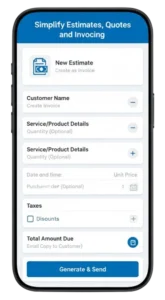
This is more important than ever with current market trends. Energy efficiency mandates are driving a huge wave of system upgrades. The global HVAC market, valued at $157.71 billion in 2023, is on track to hit $228.74 billion by 2030. Since upgrading to a high-efficiency system can cut a homeowner's energy use by 20-50%, these profitable jobs are a massive opportunity. Properly itemizing these complex installations is absolutely crucial for capturing this growing demand. You might also find our guide on how to simplify your quotes and invoicing process helpful: https://tackonfsm.com/wp-content/uploads/2025/11/Simplify-Estimates-Quotes-and-Invoicing-165×300.webp
Nailing the Fine Print: Taxes, Warranties, and Payment Terms
This is where a simple bill becomes a professional, legally-sound document. Getting the final details right—taxes, warranties, and payment terms—is absolutely critical. It’s what manages your customer’s expectations, protects your business, and, most importantly, makes sure you get paid on time. If you get this part wrong, you’re just asking for disputes, late payments, and headaches you don’t need.
Let’s be real: taxes are a pain. The rules for sales tax in the service industry are all over the map, changing from one state, county, or even city to the next. Some places tax parts but not labor, some tax both, and others have their own quirky rules about what’s a "capital improvement" versus a simple "repair." Just assuming the rules are the same everywhere you work is a recipe for a compliance nightmare.
The biggest mistake I see technicians make is just slapping a flat tax rate on the grand total. This can mean you're overcharging your customer (if labor is exempt) or shorting the government—which eventually catches up with you in penalties. Always, always separate your parts from your labor on the invoice. If you're not 100% sure, a quick call to your accountant or a check on your local tax authority's website will give you the right rates.
Put Your Warranty in Writing
Your invoice is the official record of the job, making it the perfect place to clearly spell out the warranty coverage. Being upfront and transparent right on the bill manages customer expectations from the get-go and heads off potential arguments later. A promise you made verbally on-site is easy to forget or misinterpret.
Make sure you include the specifics:
- Parts Warranty: Note the duration of the manufacturer's warranty for any components you installed. For example, "10-year manufacturer's warranty on compressor."
- Labor Warranty: State your company's guarantee on the actual work you did. Something like, "1-year warranty on all labor" is common.
Putting warranty terms in writing on the invoice protects everyone. It creates an official record of your commitment to quality work and clearly defines where your responsibility begins and ends. It’s a simple way to prevent a lot of future misunderstandings.
Taking this one small step builds a massive amount of trust. It shows you're a pro who stands behind your work and sets you apart from the competition.
Define How You Get Paid
Don't ever leave payment up to interpretation. Clear, direct payment terms are your single best tool for getting paid faster. If your terms are fuzzy, clients will naturally take their time. Your invoice needs to spell out your policies so there's zero room for confusion.
Be direct and include these key things:
- The Due Date: Use straightforward language. "Due upon receipt" or "Payment due within 15 days" works perfectly. I’d steer clear of industry jargon like "Net 30," as most residential customers won’t know what that means.
- Accepted Payment Methods: List every single way a customer can pay you. Cash, check, credit/debit cards (Visa, Mastercard, etc.), and online payment links. The easier you make it for them to pay, the faster that money hits your account.
- Late Fee Policy: It's smart to include a polite but firm note about overdue payments. For example, "A late fee of 1.5% per month may be applied to balances over 30 days past due." This nudges people to pay on time without sounding hostile.
Automating Invoicing with Field Service Software
Let’s be honest: manual invoicing is a drag. It’s a slow, tedious grind that’s begging for costly mistakes to happen. Chasing down paperwork from your techs, trying to make sense of messy handwriting, and then keying everything into a spreadsheet or accounting software… it all eats up precious hours. This administrative bottleneck doesn't just stall your cash flow; it pulls you away from what really matters—growing your heating and cooling business.
This is where modern field service management (FSM) software completely changes the game. Tools like TackonFSM are built to handle the entire invoicing workflow automatically, transforming a multi-step headache into a smooth, error-free process. The aim is simple: kill the redundant data entry and get a professional invoice to your customer the moment the job is done.
From Jobsite to Paid Instantly
Picture this: your tech just wrapped up a furnace repair. Instead of fumbling with a paper form, they pull out their tablet. All the critical job details are right there—customer info, parts pulled from their van inventory, and labor hours are already logged.
With a single tap, that approved estimate becomes the final heating and cooling invoice. No double-entry, and zero chance of forgetting to bill for a small part. This digital invoice can be instantly emailed or texted to the customer, complete with a secure payment link. Your customer can pay by credit card on their phone before your truck has even left the driveway. This is the new standard for professional service.
To truly get your billing process dialed in with field service solutions, mastering how to automate invoice processing is the key to unlocking major gains in efficiency and accuracy.
Field service automation isn't just about speed—it's about accuracy and professionalism. When an invoice is generated straight from the digital work order, you wipe out the billing errors that cause most payment delays and customer arguments.
The future of HVAC billing is all about technology. With the smart HVAC controls market expected to jump from USD 10.56 billion in 2023 to USD 26.80 billion by 2032, contractors need serious software to manage increasingly complex jobs. Automation is what makes it possible, allowing for real-time updates and instant invoicing that can keep up with this growth.
Beyond the Invoice Itself
A great FSM system does more than just spit out a PDF. It becomes the central nervous system for your whole operation, making sure every part of the job talks to the others. This flow chart shows how all the moving parts—taxes, warranties, and payment info—come together in one clean document.
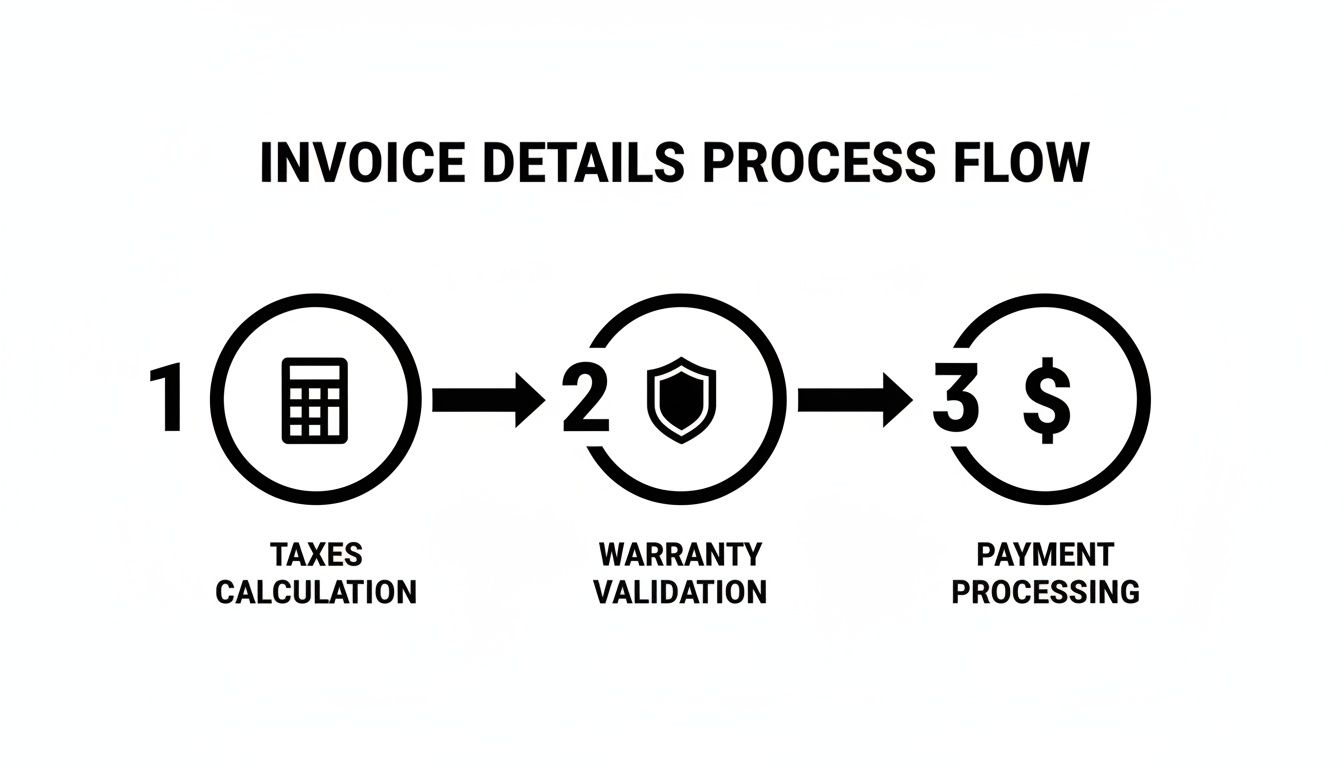
As you can see, a modern invoice isn't just a bill; it's the result of accurate tax calculations, clear warranty terms, and easy payment options, all managed from one place. Getting a system like this is a big deal, and understanding why https://tackonfsm.com/wp-content/uploads/2025/11/Field_Service_Management_Software_Matters-removebg-preview-255×300.webp is the first step toward a much more profitable business. When you connect what happens in the field with what happens in the office, you create a powerful, efficient machine that wows customers and seriously improves your cash flow.
Best Practices for Getting Paid Faster
Building the perfect invoice is only half the battle. The real win is getting that invoice paid—fast. Nothing kills cash flow and creates more headaches for a growing HVAC business than waiting on money you’ve already earned. The secret isn't aggressive collection calls; it's about making the entire payment process so smooth and simple for your customers that they want to pay you right away.
The single biggest change you can make is to close the gap between finishing the work and sending the bill. Don't let invoices pile up for "the end of the day" or, even worse, "the end of the week." The best time to send a heating and cooling invoice is the moment the job is done, ideally before your technician’s truck has even pulled out of the driveway. This immediately connects the great work you just did with the payment, while the value is still fresh in the customer's mind.
Make Paying Effortless
If paying your invoice is a chore, it’s going straight to the bottom of the customer's to-do list. In a world where people buy things with a single click, asking them to dig out a checkbook, find an envelope, and buy a stamp is just adding friction. You need to remove every possible barrier.
To get paid on time, give your clients plenty of easy ways to do it. Think convenience.
- Online Payment Portals: Put a secure payment link right in the invoice email. Let them pay with a credit or debit card in seconds.
- Mobile Payments: Accept payments through apps people already have on their phones, like Apple Pay or Google Pay.
- ACH Bank Transfers: This is a great, often low-fee option for clients who prefer direct bank payments.
The bottom line is this: when you give customers multiple, convenient ways to pay, they can settle up the moment they get the invoice. This simple shift can slash your collection time from weeks to just a few days.
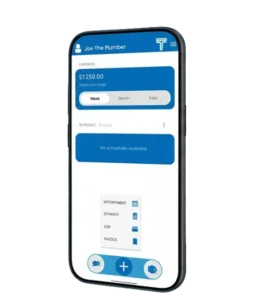
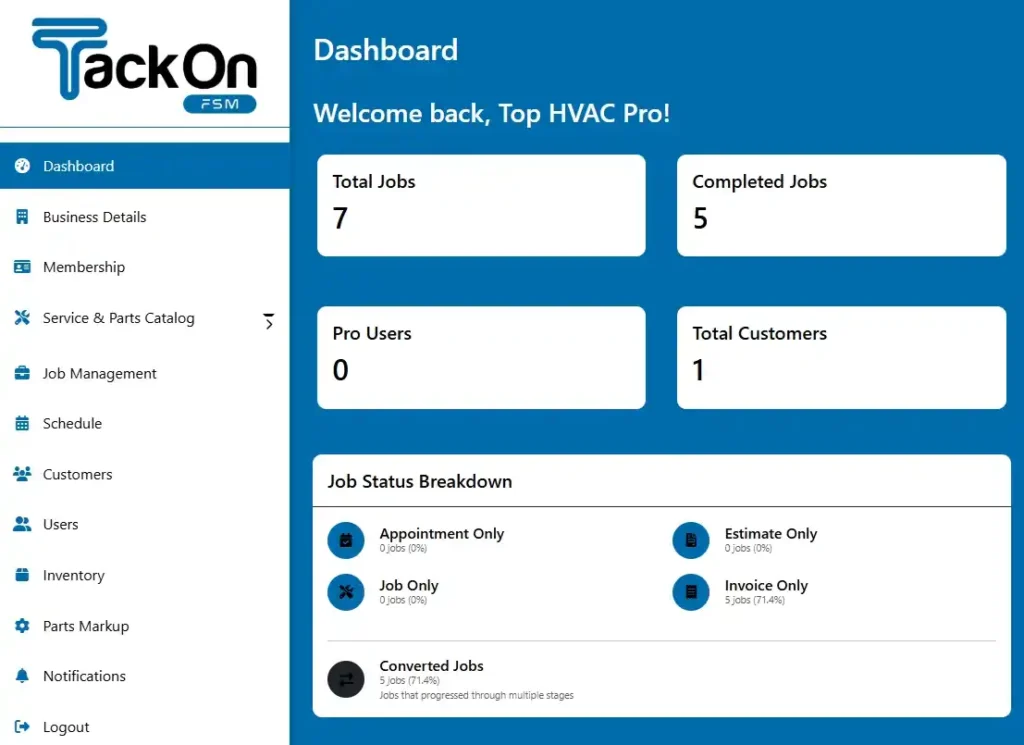
It really is that simple. The easier you make it, the faster you get paid. Modern tools, like the TackonFSM dashboard, can even send these payment links automatically, turning every completed job into an instant payment opportunity.
Use Proactive Communication
Waiting until an invoice is overdue to start chasing it is a reactive game that costs you time and money. A much smarter strategy is to send out friendly, automated reminders before the due date even hits. These aren’t aggressive demands; they're professional, helpful nudges.
A quick automated email sent a few days before the invoice is due—with a polite message and another convenient payment link—can prevent a huge number of late payments before they ever happen. It keeps your invoice top of mind and gives the customer another easy chance to pay.
This professional follow-up is more critical than ever. The global HVAC market, which is where all your heating and cooling invoices come from, ballooned to an estimated USD 328.6 billion in 2025 and is expected to climb to USD 577.5 billion by 2035. You can see more on this growth at Future Market Insights. This explosive growth means more jobs and bigger invoices, making an efficient collection process absolutely essential if you want to scale your business successfully.
Common Invoicing Questions Answered
Even with the best systems, invoicing questions are going to pop up. Tackling these common concerns head-on doesn't just clear things up for your customers; it helps you dodge the usual pitfalls that slow down payments and create friction. Getting this stuff right is what makes you look like a pro.
We’ve gathered some of the most common questions we hear from HVAC owners about their billing. Think of it as your cheat sheet for smoother invoicing, happier customers, and getting paid for your hard work without the runaround.
What Is the Most Common Invoice Mistake?
By far, the single biggest mistake I see on a heating and cooling invoice is a vague or incomplete description of the work. Slapping a generic term like "AC Repair" or just listing "Parts" on a line is a surefire way to confuse customers and invite payment disputes.
Your customer has no idea what "AC Repair" actually means. Was it a five-minute fix or a two-hour diagnostic puzzle? A great invoice spells it out: "Replaced 50/5 MFD dual run capacitor and tightened loose electrical connections at condenser." That level of detail shows exactly where their money is going and justifies the cost, answering questions before they even have a chance to ask.
How Do I Charge Enough for Labor?
To make sure you're charging enough for labor, you have to look beyond just your tech's hourly wage. You need to calculate your true hourly cost. This "loaded" rate has to cover all the things that keep your business running: van maintenance, insurance, tools, office staff, marketing—everything.
A straightforward way to figure this out is to divide your total monthly overhead by the total billable hours your techs work that month. That number is your break-even rate. From there, you add your profit margin (a healthy target is 20-30%) to get your final billable labor rate.
The key is to apply this rate consistently to every single job. This is where field service management software becomes a lifesaver. It lets you set these rates once and automatically applies them to every invoice, protecting your profit margins without you having to crunch the numbers every time.
Should I Invoice Immediately or Wait?
Always, always, always send the invoice the second the job is done. Ideally, your technician should be handing it over before they even pull out of the driveway. Every day you wait to send an invoice adds days—sometimes weeks—to how long it takes to get paid. Waiting gives that invoice a chance to get buried in an email inbox or just completely forgotten.
Modern FSM software gives your techs the power to generate the final invoice on-site, capture a digital signature for approval, and even take payment on the spot. This kind of immediate transaction is a game-changer for your cash flow and makes you look like a sharp, efficient operation.
Ready to stop chasing payments and eliminate invoicing errors? With TackonFSM, you can create, send, and get paid on professional invoices right from the job site. See how our all-in-one platform helps you manage jobs, track inventory, and improve your cash flow. Start your free trial of TackonFSM today!