
Flat Rate Payment: Boost Profits for HVAC, Plumbing & Electrical Pros

Think about the last time you went to get an oil change. You knew the price before you handed over the keys, right? That’s the core idea behind flat rate payment: giving your customers a single, all-in price for a job before the work even starts.
What Is Flat Rate Payment for Contractors

A flat rate payment is simply a fixed price you charge for a specific task. It doesn't matter if the job takes your tech two hours or four—the price for the customer remains the same.
This is a world away from the old-school time and materials (T&M) model, where the final bill is a moving target based on hourly labor and the cost of parts. For trade contractors in HVAC, plumbing, or electrical, making this shift is about more than just billing. It’s a completely different way of doing business that changes both the customer conversation and how you run your operations.
Why It Matters for Your Business
Adopting a flat rate system gets rid of the dreaded "clock-watching." Customers aren't nervously glancing at their watch, wondering how much each minute is costing them. They’ve already agreed to the price, so the anxiety is gone.
This builds trust right from the get-go. And it's not just a niche strategy anymore; flat rate pricing is quickly becoming the standard. Roughly 35% of HVAC and plumbing businesses now use it for their service work, signaling a major industry shift away from hourly billing. You can dive deeper into this trend and see how it's shaping the industry over at build-folio.com.
By giving a firm, upfront price, you put the power back in the customer's hands. They can say "yes" or "no" with full confidence, knowing there won't be any nasty surprises on the final invoice. It instantly makes your company look more professional and trustworthy than competitors still quoting vague hourly rates.
Ultimately, this lets your technicians focus on what they do best: solving the problem efficiently and correctly. Instead of just logging hours, their goal is to do a great job. When your team is rewarded for efficiency, not just time spent, you’ll often see job profitability and team morale go way up.
Weighing the Pros and Cons of a Flat Rate Model
Switching to a flat-rate payment system is a huge move for any trade business. It’s not just a small tweak; it changes the core of how you bid on jobs, talk to customers, and even track your own success. Like any big change, it comes with some serious upsides and a few potential headaches you need to be ready for.
So, what's the biggest draw? The direct line it creates between your team's efficiency and your company's profit. With flat-rate pricing, your sharpest, most experienced technicians become your biggest money-makers. When they wrap up a job ahead of schedule, that leftover labor time isn't just a win for the customer—it’s pure profit for your business.
The Upsides of Upfront Pricing
This approach also completely changes the conversation with your customers. Giving them one clear price right from the start takes away all the anxiety of a running meter. They stop watching the clock and start trusting you, which almost always helps them say "yes" to the job faster.
- Better Cash Flow: When a customer knows the final cost upfront, they approve the work more quickly and are prepared to pay the moment the invoice arrives. This is a game-changer for keeping your business financially healthy.
- A More Professional Image: Handing over a detailed, all-in quote makes your company look organized and trustworthy. It's a stark contrast to a competitor who just throws out a vague hourly rate.
- Happier Customers: It's no secret that transparency is what customers want. They overwhelmingly prefer knowing the full price before work begins, which leads to better reviews and more repeat business.
A solid flat-rate system becomes a core part of your business health, giving you the stability to focus on improving customer retention and boosting profits.
Potential Challenges to Consider
Of course, a flat-rate model isn't a silver bullet. The single biggest risk is getting a quote wrong. If a seemingly simple job suddenly spirals into a complex mess with unexpected problems, you're stuck with the price you gave. A job you thought was profitable can flip into a loss in a hurry.
Then there's the setup. Building a good, accurate pricebook is a ton of work. You have to nail down your true labor costs, figure out your parts markups, and track how long different tasks actually take your team. If you rush this part, you're setting yourself up for failure.
The success of flat-rate pricing hinges entirely on the accuracy of your pricebook. It's the foundation of the entire system, and any cracks in that foundation will put your profit margins at risk.
Finally, you have to get your technicians to buy in. Some techs might not like the change, especially if they’re comfortable with the predictable rhythm of hourly pay. You'll need to train them properly and be crystal clear about how the new system benefits everyone—the company and them—to get the whole team on board.
How to Calculate Profitable Flat Rate Prices
Setting profitable flat rate prices isn't about plucking a number out of thin air. It’s a science, and it all starts with knowing exactly what it costs you to run your business. To build a solid flat rate system, you have to nail down what it truly costs to have one of your technicians on the clock for an hour.
This boils down to one crucial number: your fully-loaded hourly labor rate. This isn't just what you pay your tech per hour. It’s the all-in cost that includes every hidden expense required to keep your team working and your business afloat.
Start with Your Fully-Loaded Labor Rate
To figure out this rate, you need to add up every single cost associated with an employee. Think of it as painting a complete financial picture for just one hour of their time on the job.
Here’s what you need to roll into your calculation:
- Base Wages: What the technician earns per hour.
- Labor Burden: This covers everything from payroll taxes and workers' comp to health insurance and retirement contributions.
- Overhead Costs: A slice of your shop's rent, utilities, software subscriptions, office staff salaries, and marketing spend.
- Vehicle & Tool Costs: Don't forget fuel, insurance, maintenance, and depreciation for the van, plus an allowance for tools.
Once you’ve tallied up all those expenses, you have your true hourly cost. Now, you add your profit. For example, if your total cost per hour comes to $85 and you’re aiming for a 20% profit margin, you’ll add $17. That brings your fully-loaded hourly rate to $102. This is the rock-solid foundation for every flat rate price you build.
Getting this fully-loaded rate right is everything. If you underestimate it, you’ll slowly bleed profit with every single job. If you overestimate, you might price yourself right out of the market. It takes a serious look at your books, but it’s the most critical step in creating a flat rate system that actually works.
Factor in Parts and Task Time
With your labor rate locked in, the next step is pricing your parts. A smart way to do this is with a tiered markup. For smaller, less expensive parts, you can apply a higher markup, maybe 200-300%. For pricier components, a lower markup of 30-50% keeps the final price fair and competitive for the customer.
The final piece of the puzzle is the average task completion time. This is where your job history is gold. How long does it actually take your crew to swap out a furnace ignitor or install a new sink? You need to track this data to find a realistic average—not just the best-case scenario. This gives you a buffer for those small, unexpected hiccups that always seem to pop up.
This diagram shows how these pieces come together, balancing the potential rewards with the inherent risks.

As you can see, a well-calculated system boosts profit and builds customer trust. Get the numbers wrong, though, and you introduce some serious financial risk. As you’re dialing in your finances, remember that you may be able to claim flat rate expenses for work clothing and tools, which can also impact your overall profitability.
Once you have these three components—fully-loaded labor, parts markup, and average task time—you can start building a price book with confidence. Managing all this data becomes much easier with the right tools, so it's worth taking a look at some common field service management software features.
Building Your Digital Flat Rate Pricebook
While a spreadsheet is a decent place to start, let's be honest—it’s a static tool in a fast-moving industry. To really make flat-rate pricing work and scale your business, you need a living, breathing digital pricebook. This is where modern field service management (FSM) software makes all the difference, turning your pricing strategy into a powerful, on-the-go tool for your entire team.
Think of it as the central nervous system for your company's pricing. Instead of being locked away on a single computer in the office, your pricebook lives in the cloud. This means you can manage every part, task, and labor cost in one place that’s accessible from anywhere.
This immediately solves a huge headache: guesswork in the field. Your technicians no longer need to call the office for prices or try to remember what to charge. They just pull up the digital pricebook on their tablet and build a professional, consistent quote every single time.
From Manual Calculations to Automated Quoting
A good digital pricebook does more than just hold numbers; it actively builds profitable estimates for you. You can pre-load all your common jobs, connecting them to the specific parts and labor times required. The system then does the heavy lifting, automatically calculating the final flat-rate price based on the rules you set.
- Centralized Parts and Labor: Every single part, from a tiny capacitor to a full HVAC unit, is stored with its cost and your markup. Labor rates are automatically factored into every task.
- Pre-Built Flat Rate Tasks: You can create templates for your bread-and-butter jobs, like a "Furnace Tune-Up" or "Water Heater Replacement," that bundle all the necessary parts and labor together.
- Instant Price Updates: When a supplier hikes up the cost of a part, you just update it once in your digital pricebook. That new price is instantly reflected in every future quote across the company. No more hunting down and updating old spreadsheets.
A digital pricebook is all about consistency. It ensures that a quote for a specific job is identical, whether it's put together by your most seasoned technician or a brand-new hire. This protects your brand's reputation and, just as importantly, your profit margins.
For example, here’s how a pricebook can look inside an FSM platform. Notice how it clearly organizes items, costs, and final prices.
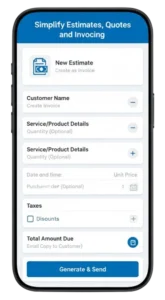
This clean interface makes it simple for anyone on your crew to find the right service and price it correctly. This kind of centralized control prevents the costly mistakes and under-billing that come from using outdated paper price lists or messy spreadsheets. As you can see, a well-organized system is the key to simplify estimates, quotes, and invoicing.
At the end of the day, a dynamic pricebook creates a reliable system that empowers your team to sell confidently and protects your bottom line on every single job. It’s the engine that truly powers a successful flat-rate pricing model.
Putting Flat Rate Payments to Work in Your Daily Flow

Once you've built out your digital pricebook, the real test is how it performs in the field. So, what does a flat rate payment system actually look like during a service call? It changes the game from the moment your tech walks in the door to the minute you get paid.
Picture this: your technician arrives at a job and diagnoses the problem—a busted thermostat. Instead of fumbling with a binder, guessing at a price, or calling the office, they just pull out their tablet.
Building the Quote and Getting the Nod
With the pricebook ready to go, your tech can build a professional, multi-option quote right there on the spot. This is the perfect time to offer a "Good, Better, Best" choice, which puts the customer in the driver's seat.
- Good: A simple, direct replacement of the faulty thermostat, pulled from your pre-loaded task list.
- Better: An upgrade to a programmable smart thermostat, another pre-built flat rate task.
- Best: The smart thermostat installation bundled with a full system tune-up to boost efficiency.
The technician emails or texts the quote directly to the customer. They can see the clear, upfront cost for each option and approve their choice with a quick digital signature. This simple step removes all the awkwardness and sales pressure from the quoting process.
This digital approval is a game-changer. It creates a time-stamped record of the agreed-upon work and price, practically wiping out any chance of a payment dispute down the road. The customer knows exactly what they’re paying before a single tool comes out of the bag.
From Approved Work to Getting Paid
As soon as the customer taps "approve," the quote instantly becomes a work order. No one has to re-enter data, and there’s zero risk of a typo throwing things off. Your tech knows exactly what was approved and which parts to grab from the truck. This clean handoff is crucial, as good field service scheduling software saves time and prevents expensive mistakes.
When the work is finished, creating the final invoice is just as simple. The system pulls all the details from the approved work order, so the invoice perfectly matches the price the customer agreed to. This is the core of a successful flat rate payment system: no surprises on the final bill.
This whole process does more than just make you look professional. It dramatically reduces the administrative load on your field and office staff, freeing up hours every week. More importantly, it speeds up your cash flow by making it incredibly easy for customers to pay on the spot, locking in your profit on every job.
Common Questions About Flat Rate Payment Systems
Switching to a flat rate system is a big move, and it's bound to stir up some questions. After all, you're leaving behind the familiar time-and-materials model. Let's walk through some of the most common things contractors ask when they're thinking about making the change.
The first question is almost always about fairness. "Is it right to charge the book price if my tech finishes in half the time?" Absolutely. Your customer isn't paying for a stopwatch; they're paying for a guaranteed solution and peace of mind. They love knowing the exact cost upfront, which removes the anxiety of watching the clock.
On the flip side, what happens when a simple-looking job goes sideways and takes way longer than you planned? That's the risk you take with flat rate, but you can manage it. A well-built price book already has a buffer baked in for small hiccups. For the big surprises—like discovering rotted-out joists when you go to replace a toilet—you need a rock-solid change order process to get the customer's sign-off on the extra work and cost.
Handling Non-Repair Work and Downtime
Another big one is how to pay your technicians for everything they do outside of a specific repair. What about cleaning the van, stocking parts, attending team meetings, or driving to the supply house?
You need a clear-cut policy for this "non-billable" time. Most shops go one of two ways:
- Build it into your labor rate: This is the most common method. You figure out the cost of this "non-productive" time and fold it into your overall labor rate. That way, every billable hour is already helping to cover the cost of those other essential activities.
- Pay a separate hourly rate: Some owners pay their techs the standard flat rate for repair jobs but switch to a lower, base hourly wage for things like shop meetings or cleaning duties.
Whichever path you choose, make sure it’s crystal clear to your team. They need to know exactly how they get paid for all their time, not just the hours they’re actively turning a wrench.
Is Flat Rate Legal and Fair for Overtime?
Overtime is another area that trips people up. The short answer is yes, you absolutely must pay overtime. According to the U.S. Department of Labor, technicians paid via flat rate are still entitled to overtime pay for any hours worked over 40 in a week under the Fair Labor Standards Act.
Calculating overtime for a flat rate employee can feel complicated, but it's a legal must-do. For each workweek, you have to determine their "regular rate of pay" and then pay them time-and-a-half on that rate for any overtime hours. Always run your payroll plan by an HR professional to make sure you're compliant.
At the end of the day, a flat rate payment system is all about creating predictability for you and your customers. It isn't about winning big on one job and losing on the next. It’s about building a professional, transparent system that drives consistent profits across hundreds of jobs.
Ready to stop the guesswork and build a profitable, professional pricing system? TackonFSM gives you the tools to create a digital pricebook, build multi-option quotes in the field, and get paid faster. See how TackonFSM can transform your business.