Your Guide to Field Service Mobile Software
Ever feel like you’re running your entire trade business from a pile of messy paperwork on your dashboard? What if you could swap that chaos for a single app on your phone? That’s the reality with field service mobile software. It’s your command center, replacing the frantic phone calls, misplaced job notes, and disconnected spreadsheets with one reliable source of truth for every job, customer, and part.
Your Business Command Center in the Field

At its core, this software is the digital bridge connecting your office—the dispatchers and managers—to your technicians out on the road. Forget the whiteboard scheduling that's outdated the second you write on it. Instead, everyone sees the same real-time information on a unified platform. No more calling a tech just to ask, "Where are you at?"
This kind of tech is quickly moving from a "nice-to-have" to a "can't-live-without." With a major shortage of skilled technicians, the field service market is booming and expected to hit $3.1 billion in the U.S. by 2026. As HVAC, plumbing, and electrical shops increasingly rely on a mix of full-time employees and subcontractors, a central tool to keep everyone coordinated is no longer optional. This is a huge industry trend, and you can see what it means for contractors like you.
Solving Everyday Contractor Headaches
The real magic of this software is how it tackles the daily frustrations that chip away at your profits. It's built specifically to solve the recurring problems every trade contractor knows all too well.
Scheduling Nightmares: Your dispatcher sees exactly who’s available and can assign a job with a quick drag-and-drop. The tech instantly gets a notification on their phone with the customer's address, job history, and notes. No more phone tag.
Lost Inventory and Parts: When a tech uses a part, they log it in the app right then and there. This gives you a live view of what’s on every truck, stopping those last-minute, profit-killing trips to the supply house.
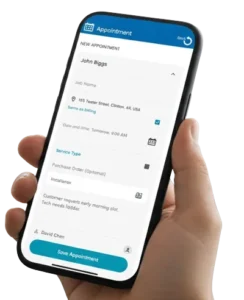
Delayed Payments and Poor Cash Flow: Why wait days to send an invoice from the office? Your tech can create one on-site, capture the customer's signature on their tablet, and take a credit card payment on the spot.
In short, field service mobile software becomes your single source of truth. It makes sure the info your dispatcher sees is the exact same info your technician has in their hand. That alone eliminates so many costly mistakes and guesswork.
This approach transforms your team's phones and tablets from simple communication devices into powerful business tools. It’s not just about getting rid of paper; it's about running a tighter, more profitable operation from anywhere. For any contractor trying to manage multiple crews and jobs, this kind of system is the key to finally getting organized and scaling your business the right way. A strong software foundation is truly what helps a business grow effectively.
Essential Features of a Modern FSM App
A great field service mobile software isn't just a fancy digital clipboard. Think of it as the central nervous system for your entire operation—a set of connected tools that makes everything from the first customer call to the final payment run smoother. Let’s walk through the core features that really make a difference and turn a simple app into a genuine powerhouse for your business.

To really get a feel for the impact, let's look at how these tools handle everyday situations compared to the old way of doing things.
H3 Subheadings for Organization
To better illustrate the value, the following table breaks down the most critical features and connects them to tangible business outcomes.
| Mobile Feature | What It Does for Your Team | Direct Business Benefit |
|---|---|---|
| Digital Scheduling | Provides a real-time, drag-and-drop view of all technicians' schedules and locations. | Reduces technician downtime, enables faster response to emergency calls, and minimizes scheduling errors. |
| On-Site Estimates | Allows techs to build professional, itemized quotes on a tablet using pre-set pricing. | Increases quote accuracy, improves professionalism, and accelerates the sales cycle by getting approvals on the spot. |
| Mobile Invoicing | Converts approved quotes or job cards into invoices instantly upon job completion. | Eliminates manual data entry back at the office and ensures billing is immediate and accurate. |
| Inventory Tracking | Tracks parts on each van, automatically deducting them as they are used on jobs. | Prevents part stockouts, reduces unnecessary trips to the supply house, and improves first-time fix rates. |
| Mobile Payments | Enables technicians to accept credit card payments directly from the customer on-site. | Slashes the time it takes to get paid from weeks to minutes, dramatically improving company cash flow. |
| Automated Notifications | Sends automatic appointment confirmations and "on my way" alerts to customers via text or email. | Enhances the customer experience, reduces no-shows, and frees up office staff from making constant update calls. |
| Offline Capability | Allows the app to function fully without an internet connection, syncing data later. | Ensures technicians can work effectively in basements, rural areas, or new construction sites without interruption. |
Each of these features is designed to solve a specific, common headache that contractors face every single day. Together, they create a system that’s far more efficient and profitable.
Digital Scheduling and Dispatch
We’ve all seen it: the giant whiteboard in the office covered in scribbles, arrows, and eraser marks. A single last-minute cancellation throws the entire day into chaos, with your dispatcher scrambling on the phone to reroute technicians who are sitting idle in their trucks.
Now, picture this instead. Your dispatcher looks at a clean, digital calendar on their screen. They see everyone’s location and schedule in real-time. When an emergency call comes in, they simply find the nearest tech, drag the job onto their timeline, and the tech instantly gets a notification on their phone with the address and all the job details. No frantic calls, no wasted time.
It's a huge deal. Studies show that almost half of all appointments don't happen as planned because of logistical hiccups. Good scheduling software tackles that problem head-on. You can explore more on how scheduling software can save valuable time.
On-Site Quoting and Invoicing
Handwritten estimates on a carbon-copy pad are a recipe for trouble. They can be hard to read, look unprofessional, and create a bottleneck when someone back at the office has to manually type it all up to send an invoice. That process alone can delay payment by weeks.
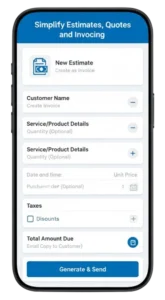
With a mobile app, your technician can build a polished, itemized quote right on their tablet. They pull from a pre-loaded list of your services and parts, so the pricing is always accurate. The customer sees a clear breakdown, signs for approval right on the screen, and that estimate becomes a live job or a final invoice with one tap. It’s faster, cleaner, and looks a whole lot more professional.
Real-Time Inventory Tracking
Managing your parts inventory is one of the trickiest parts of the job. Not knowing what’s on each truck is a surefire way to send a tech to a job unprepared, leading to wasted trips to the supply house and frustrated customers.
Modern field service mobile software gives you a firm grip on your inventory. It allows you to:
- Track Parts Per Van: Get a live look at the stock on every single vehicle in your fleet.
- Automate Part Consumption: When a tech uses a part, it’s automatically removed from the van’s inventory and added to the customer’s invoice.
- Set Low-Stock Alerts: Get an automatic heads-up when a truck or the main shop is running low on something important, so you can restock before it becomes a problem.
This kind of control practically eliminates parts shrinkage, cuts down on expensive emergency supply runs, and empowers your team to fix the problem on the first visit.
Mobile Payments and Instant Invoicing
There's nothing worse for a small business's cash flow than waiting for checks to come in the mail. The ability to get paid the moment a job is finished is, without a doubt, one of the biggest game-changers a mobile FSM app offers.
As soon as your technician is done, they can generate the final invoice on their device and hand it to the customer. The customer can pay right there with a credit card. This simple change shrinks the payment cycle from weeks or even months down to just a few minutes.
Automated Customer Communications
Those constant "Where is my technician?" calls are a major time-sink for your office staff and a distraction for your techs in the field. Automated notifications are a simple and incredibly effective fix.
A good FSM system can automatically send texts or emails to your customers for key events:
- Appointment Confirmations: To make sure everyone is on the same page and reduce no-shows.
- Technician "On My Way" Alerts: A professional touch that customers really appreciate.
- Follow-up Requests: To ask for a review or feedback after the work is complete.
These small, automated messages dramatically improve the customer experience and let your team concentrate on the work that actually makes you money. This focus on a smooth customer journey is a big reason the field service market is booming, with projections showing growth from $6.14 billion in 2026 to $13.79 billion by 2034. You can discover more insights about this growth in the full FSM market analysis.
Critical Offline Functionality
Let’s be realistic—your technicians don't always have a great signal. They work in basements, rural areas, and new construction zones where cell service is spotty at best. If your app needs a constant internet connection to work, it’s going to fail them when they need it most.
This is why offline functionality is non-negotiable. It allows a tech to download all their job information for the day before they even leave the shop. They can view customer history, add notes, take photos, and even build an invoice while completely offline. As soon as their device finds a connection again, the app automatically syncs all that new data back to the office. Nothing gets lost, and the work never stops.
How Mobile Software Transforms Your Business
It’s one thing to look at a list of features, but what does **field service mobile software** *actually* do for your bottom line? This isn’t just about making things a little easier. We’re talking about fundamental improvements to the way you operate and earn money.Let's get real and look at the tangible results you can expect in the areas that matter most to every contractor out there.
Boost Productivity and Fit More Jobs In
Every contractor lives by the clock. We all know that time is money. Wasted minutes driving across town, sitting idle between jobs, or making last-minute supply house runs—it all eats directly into your revenue. Mobile software tackles this problem head-on.
Just picture it: your dispatcher sees a live map of every technician in the field. An emergency call comes in. Instead of guessing who is closest, they can see a tech’s exact location and assign the job with a single click. This isn't magic; it's smart dispatching that cuts down travel time, saves on fuel, and gets rid of the downtime that absolutely kills productivity. Squeezing in just one extra job per tech, per day? The financial impact is huge.
Protect Your Profitability
Margins in the trades are often razor-thin, and they get worn down by a thousand tiny leaks. Think about inaccurate estimates, parts forgotten on an invoice, or inconsistent pricing from one tech to the next. These are the common culprits, and digital tools put a hard stop to the guesswork.
By using software to build estimates, you enforce your desired profit margins. Parts and labor rates are pre-loaded, ensuring every quote automatically includes the correct markups and protects your profitability on every single job.
When your technician builds a quote on-site, they’re not just winging it. They are pulling from your company’s approved, pre-loaded price book. No more "guesstimating" material costs or forgetting to add a specific charge. This consistency ensures you capture every single dollar you've earned and stops profits from slipping through the cracks. For an easy way to simplify your estimates and quotes, integrated tools are essential.
Gain Control Over Your Inventory
For so many service businesses, inventory feels like a black hole. Parts get used but not invoiced. Items seem to vanish from vans. And nobody has a clear picture of what’s in stock until you run out of something critical on a job. That lack of control is incredibly expensive.
A mobile FSM system gives you a live, real-time view of inventory levels on every single truck and in the warehouse.
- Real-Time Tracking: When a tech uses a part, they log it in the app. It's immediately deducted from their van’s stock count. Simple as that.
- Accurate Job Costing: Every part used is tied directly to the job, making sure it gets billed to the customer every time.
- Prevents Shrinkage: Knowing exactly what's on each truck makes it easy to spot when things don't add up and stop parts from walking away.
A plumbing company, for instance, can save thousands of dollars a year just by finally tracking all those small fittings that used to disappear without a trace. This level of control turns your inventory from a constant headache into a well-managed asset.
Improve Cash Flow and Get Paid Faster
Nothing cripples a small business faster than waiting 30, 60, or even 90 days to get paid. Let’s be honest: the single biggest financial win from field service mobile software is how dramatically it shortens that payment cycle. Your technicians can create an invoice and collect payment right on the spot, the moment the work is done.
This completely changes the cash flow game. Instead of spending your time chasing down unpaid invoices, you have money hitting your bank account almost immediately. This means you can pay your suppliers on time, make payroll without sweating it, and actually reinvest in growing your business. In fact, solid operations are key to modern digital marketing strategies for home services because a happy, efficiently served customer is your best marketing tool.
The entire industry is also shifting toward smarter, more proactive solutions. One of the biggest trends is predictive maintenance, which is helping push the FSM software market toward an expected growth of USD 2.50 billion between 2026 and 2030. This move from reactive "break-fix" calls to proactive service is transforming trades like HVAC and plumbing. You can read the full research about this significant market growth.
How to Choose the Right FSM Software
Picking the right field service mobile software can feel overwhelming. With so many options out there, it’s easy to get lost in feature lists and sales pitches. But the best way to tackle this is to step back and create a simple blueprint of what you actually need. Before you even start looking at demos, you have to know what a "win" looks like for your business.
This isn't about finding the software with a million bells and whistles. It's about finding the one with the right tools for your crew. To do that, you need to ask some tough questions and really vet your options. Here’s a checklist to make sure you land on a tool that will actually help you grow.
Core Mobile Functionality
Let's be blunt: the software lives or dies by its mobile app. If your techs in the field hate using it, you’ve wasted your money. Usability out on the job site is everything.
Is it technician-proof? The app needs to be so simple that your crew can pick it up and run with it. Can they see job notes, snap a few photos, build an invoice, and take a payment, all without reaching for a manual? If not, it's a non-starter.
Does it work in the real world? Your techs are in basements, rural areas, and new construction sites where cell service is a myth. Solid offline capability isn't a bonus feature; it's a requirement. The app must let them do their work without a connection and then sync everything up the second they're back online.
Ease of Use and Team Adoption
Even the most powerful software is worthless if your team won’t use it. A new system should feel like a helping hand, not another headache. A recent survey highlighted that scheduling mix-ups and poor communication are huge roadblocks for techs, with nearly half of all appointments hitting a snag. A system that’s genuinely easy to use solves that problem head-on.
At the end of the day, the real test is how fast your team starts using the new software without being told. If it makes their day smoother by killing off paperwork and constant "where are you?" phone calls, they’ll be all for it. If it adds more clicks and confusion, they’ll find a way to work around it.
Think about the learning curve. Weeks of training and frustration can kill your momentum and profitability. Look for platforms that were obviously built with a technician's workflow in mind, not just for someone sitting behind a desk.
Inventory and Parts Management
For most trade businesses, your inventory is where profit goes to die. Between missing parts, last-minute supply runs, and just not knowing what’s on the truck, you’re losing money. Your software has to give you a tight grip on your parts.
- Can you track stock on each van? You need to know, right now, what parts are on every single vehicle. This is how you stop wasting time at the supply house and make sure your team shows up ready to finish the job.
- Is the pricing and costing ironclad? The system must let you load your entire parts catalog with your costs and markup rules. This ensures every estimate you send and every invoice you create is actually profitable.
Pricing Structure and Scalability
Nothing sours a new software deal faster than hidden fees. The price you see should be the price you pay. Be wary of surprise costs for adding users, storing data, or unlocking "premium" features that should have been included from the start.
Get straight answers from vendors:
- What's the all-in cost? Ask them to break down any setup fees, per-user charges, and potential add-ons.
- Can this grow with me? Make sure the pricing plan can scale as you add techs. You don't want to get forced into a pricey enterprise plan just because you hired one more person.
Onboarding and Ongoing Support
Finally, look at the human side of the equation. Getting all your customer data, job histories, and parts lists moved over is a huge lift. A vendor who just sells you a license and disappears is setting you up for failure.
Look for a real partner—someone who offers hands-on help with onboarding and has a support team you can actually reach. A smooth rollout is what turns a software purchase into a smart investment, making sure you see a return from day one.
Thinking about switching your core business software can be daunting. Let's be honest, it feels like performing open-heart surgery on your company while it's still running. But moving to a proper field service mobile software doesn't have to be a nightmare. With a smart plan, the transition can be smooth and, believe it or not, surprisingly painless.
It’s not about flipping a switch and hoping for the best. It’s a step-by-step process designed to get your team comfortable, keep your data safe, and start delivering wins from day one.
The journey starts with your most critical asset: your data. Pulling years of customer lists, job histories, and pricing from systems like QuickBooks, Jobber, or ServiceTitan requires a delicate touch. Many contractors stall right here, terrified of losing valuable history. A structured migration plan is the key to getting past that fear.
You need a partner who offers assisted data migration. Forget about spending your nights and weekends wrestling with messy spreadsheets. The right provider will have a specialist who helps map your old data to their new system. This means when your techs log in for the first time, they'll see the customer names they recognize and the service history they need to do their jobs right.
Planning Your Data Migration
A great transition is all about the prep work. Before you even think about moving data, you have to clean house. This is your chance to archive those customers you haven't heard from in five years and finally standardize your messy parts and services list.
Think of it like moving to a new house. You wouldn't just dump everything from your old, cluttered garage into boxes and hope for the best. You'd sort through it, toss the junk, and label everything. It's the exact same principle with your business data.
Migrating to a New Field Service Platform
Switching software always comes with a few common headaches, especially when you're moving from a platform you know well. But when you have a dedicated specialist guiding you through the process, those headaches disappear. Here’s a look at the challenges contractors face and how a structured onboarding process helps, whether you're coming from a dedicated FSM or just a collection of spreadsheets.
| Migration Challenge | The Typical Experience | The Assisted Solution |
|---|---|---|
| Customer Data | You import a clunky spreadsheet, only to find duplicate entries and weird formatting issues everywhere. | A dedicated onboarding specialist helps clean, map, and import your customer list, ensuring everything is accurate from day one. |
| Price Books & Parts | You spend days manually re-entering thousands of parts, labor rates, and pricing rules, hoping you didn't miss a decimal point. | Your existing price book is mapped and imported for you, preserving your exact markups and protecting your profitability. |
| Job History | You lose years of valuable service history, leaving your technicians blind about what was done on previous visits. | Historical job data is migrated and linked directly to customer profiles, giving your team the field-level context they need. |
Ultimately, a guided process ensures your new system starts with clean, reliable data, setting you up for success instead of a months-long cleanup project.
Getting Your Team On Board and Excited
Here's the absolute truth: the biggest obstacle to new software isn't the technology—it's the people. If your technicians don't buy in, your investment is worthless. The secret is to frame the new software not as another administrative task, but as a tool that makes their daily grind easier.
Ditch the long, boring training meetings. Instead, focus on the "What's in it for me?" angle. Show them exactly how the app solves their biggest frustrations.
- No More Paperwork: "You'll never have to fill out a paper invoice or try to read your own handwriting again."
- Less Phone Tag: "The address, customer notes, and job history are right here. No more calling the office to ask for details."
- Get Paid Faster: "You can capture a signature and take payment right on your phone. No more chasing down checks."
When your team sees the software as a solution to their headaches, they'll become its biggest champions. The right selection process, one that starts with your actual needs, is the first step to choosing a tool your team will actually want to use.
This simple flowchart shows how a good decision process works. It all starts with defining what you truly need.

As you can see, a successful rollout begins long before you sign a contract. It starts with a clear-eyed look at your business.
Case Study: Apex HVAC's Smooth Switch
Apex HVAC, a solid team of twelve technicians, was hitting a wall. They were juggling spreadsheets and a basic invoicing tool, which led to scheduling chaos and money left on the table. When they decided to switch to a real field service mobile software, their biggest fear was the transition itself.
Their new provider, TackonFSM, started them with an assisted data import. In a single afternoon, they moved over 2,000 customers and their entire flat-rate price book. The next step was a team training session focused completely on what the mobile app could do for the techs—like uploading job photos straight from the site and building a customer-facing quote in minutes.
The result? Within a week, the techs were all using the app without any prompting from the office. They loved having all the notes and job history on their phones. The office loved the real-time updates from the field. Because of tighter scheduling and less dead time, Apex HVAC saw a 15% increase in completed jobs in the very first month. Their story is proof that with the right partner and a smart plan, moving to a better system is not only possible but profitable right away.
Why Your Business Cannot Afford to Wait
At this point, the question isn’t if you should adopt field service mobile software, but how much longer you can afford to put it off. Sticking with paper-based systems is like showing up to a car race on a bicycle. You might be pedaling as hard as you can, but the competition is pulling away, and the gap widens every single day.
Take a second and picture your business a year from today. One path is more of the same—more lost paperwork, more scheduling headaches, razor-thin margins, and countless hours spent chasing down payments. The other path leads to an operation that runs smoothly, efficiently, and far more profitably. It’s a future where technology handles the tedious work, freeing you up to focus on the skills that actually make you money.
The Two Futures for Your Business
Think about the daily reality of each path. The future without modern software is defined by friction. Every simple task, from finding a customer's address to figuring out if a part is in stock, eats away at your time and your profits.
The choice is pretty stark: keep patching together a broken system with paper invoices and spreadsheets, or move to a single platform that puts you in complete control. Sticking with the old way has a real cost, and you can measure it in lost jobs, wasted materials, and cash flow stuck in 30-day payment cycles.
The alternative is a business that runs like a well-oiled machine. Your team is knocking out more jobs per week, your profit is protected on every single estimate, and your cash flow is strong because you’re getting paid the second the work is finished. This isn't some far-off fantasy; it's the direct result of putting the right tools in your crew's hands.
A Risk-Free Step Forward
Making this switch doesn't have to feel like a gamble. The results are real, and they’re completely achievable. Here’s what you can expect:
- Complete More Jobs: Tighter scheduling and smarter dispatching mean more billable hours packed into every week.
- Protect Profit Margins: Digital estimates lock in your pricing and stop the small profit leaks that add up over time.
- Master Your Inventory: Get a real-time handle on your parts, cutting down on waste and shrinkage.
- Accelerate Your Payments: Stop waiting 30 days or more to get paid. Collect payment on the spot.
You can see these benefits for yourself without any commitment. The best way to understand the impact is to see it in action in your own business. A free trial is the simplest, no-risk way to start building a more resilient and profitable future.
Frequently Asked Questions
Bringing in new software is a big decision that always raises some practical questions. You're not just buying a new tool; you're changing a core part of how you run your business. Here are some straight answers to the most common things we hear from contractors thinking about making the switch to field service mobile software.
Is Field Service Mobile Software Hard for Techs to Learn?
That’s a huge, valid concern for any owner. The last thing you want is to invest in something your team fights you on. The short answer? Not at all.
Think about it: your technicians already use apps on their personal phones every single day. The best FSM software is built with that exact same user-friendliness in mind. We're talking large buttons, clear forms, and workflows that just make sense.
Because the app gets rid of frustrating paperwork and puts everything they need—customer history, parts lists, you name it—right in their pocket, techs usually get on board fast. They quickly see it as a tool that makes their day easier, not more complicated.
What Is the Typical ROI for This Software?
The return you see is usually fast and hits in a few different areas right away. For most contractors, the payback isn't a long, drawn-out process.
- Productivity: Smarter scheduling and routing alone often mean you can fit more jobs into a week without burning out your team.
- Profitability: When you can track parts accurately, you can cut down on waste by 15-20%. Plus, digital estimates and job sheets mean you never forget to bill for a part or an extra bit of labor again.
- Cash Flow: Taking payments right on the spot with a mobile device is a game-changer. It slashes the time you spend waiting for checks to come in.
For a small crew, these wins add up to thousands of dollars a month. It doesn't take long for the software to pay for itself and then start making you money.
Can This Software Handle My Trade's Specific Inventory?
Absolutely, and that’s precisely where a purpose-built FSM platform pulls away from generic tools. A simple spreadsheet can't tell you what's in a specific service van, but a good field service app is designed to do exactly that.
This means you get a real-time view of your inventory, not just in the shop, but on every single truck. That visibility alone stops countless last-minute trips to the supply house and helps your team get the job done on the first visit—a massive factor in keeping customers happy.
Many of the best systems even offer pre-loaded parts lists for trades like HVAC, plumbing, or electrical. It gives you a huge head start on getting your inventory organized and under control, which is a core function of any effective field service mobile software.
Ready to see how a modern, all-in-one platform can replace your paperwork and spreadsheets? TackonFSM is a single system that helps you schedule smarter, protect your profits, and get paid faster. Start your 14-day free trial today.