Drag and drop scheduling software: Transform Field Service in 2026
At its core, drag-and-drop scheduling software is a visual way for dispatchers to manage jobs by simply clicking and moving them onto a digital calendar. It's designed to replace the chaotic whiteboards and clunky spreadsheets that so many service businesses are all too familiar with.
What Is Drag and Drop Scheduling Software
Think of your daily dispatch board as a game of Tetris. New service calls are the blocks dropping in, and your technicians' schedules are the board you need to fill. With drag-and-drop scheduling software, you get to be the one strategically placing each job into the perfect slot, creating a neat, efficient, and perfectly organized day.
But this is so much more than just a digital calendar. It's the central command center for your entire field service operation. Instead of juggling spreadsheets, sticky notes, and a constant stream of phone calls, your dispatcher can see and manage the whole team's day on a single screen, all in real time. This interactive approach turns scheduling from a tedious administrative task into a powerful strategic advantage.
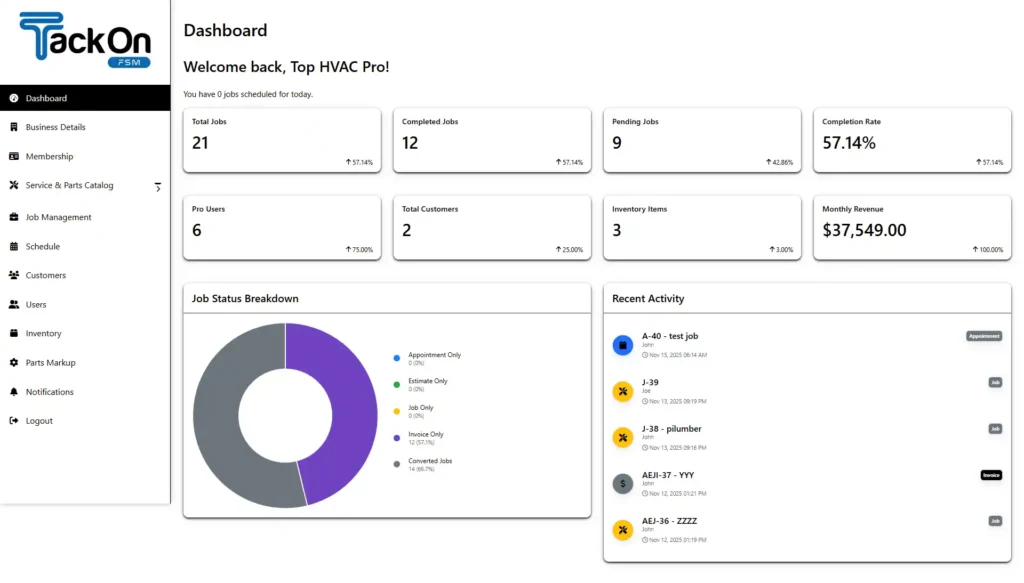
Here’s a glimpse of what a typical drag-and-drop schedule board looks like, showing technician timelines packed with assigned jobs:
You can immediately see how jobs are color-coded and organized, giving your dispatcher an instant snapshot of who’s busy, who has availability, and where everyone is located.
Beyond the Calendar View
The real magic happens when you realize this software connects your office, your techs in the field, and your customers.
- Instant Job Assignment: The moment you drag a job onto a technician's schedule, the system pushes all the critical details—customer name, address, job notes, service history—straight to their mobile app. No more back-and-forth.
- Real-Time Updates: When a technician marks a job as "in progress" or "complete" on their device, the status instantly updates on the main schedule board. This eliminates the endless "where are you now?" phone calls.
- Dynamic Rescheduling: An emergency call just came in? No problem. A customer needs to cancel last minute? Easy. The dispatcher can just drag and drop jobs to reshuffle the day, and the system automatically notifies everyone affected by the change.
This shift to visual, interactive tools isn't just a niche trend; it's quickly becoming the industry standard. The global scheduling apps market was valued at USD 663.1 million in 2025 and is on track to hit USD 749.3 million in 2026, which shows just how fast businesses are ditching old-school methods. This kind of powerful overview is the foundation of a modern company dashboard, driving efficiency and growth across the entire business.
How Visual Scheduling Transforms Field Service Workflows
Let’s move past the theory and talk about how drag-and-drop scheduling software actually changes the day-to-day rhythm of a field service business. For busy HVAC, plumbing, or electrical shops, this is about much more than just a neat-looking calendar. It’s about creating a predictable, organized flow of information that connects your dispatcher, your techs, and your customers.
Picture a typical morning scramble. A customer calls in a panic—their AC is out on a hot day. That call instantly pops up on the dispatcher's screen as a new, unassigned job. All the basic details are already there. Instead of grabbing a marker for the whiteboard or fumbling with a messy spreadsheet, the dispatcher sees the entire day's board at a single glance.
This is where a visual system really proves its worth. The dispatcher’s screen isn't just a calendar; it’s a command center showing:
- A clear list of all unassigned jobs.
- Every technician's schedule, viewable by day, week, or month.
- The real-time GPS location of every tech on a map.
- Color-coded job statuses (e.g., scheduled, en route, in progress, done).
Armed with this complete operational picture, the dispatcher can make smart decisions in seconds. They see that Sarah, an experienced tech, is wrapping up a job just a few miles away from the new emergency call.
The Journey of a Single Job
It’s as simple as this: the dispatcher clicks the unassigned job, drags it across the screen, and drops it into an open slot on Sarah’s timeline. That single, two-second action kicks off a whole chain of events that used to take multiple phone calls, text messages, and manual updates.
Key Insight: This one drag-and-drop movement is the linchpin of the entire workflow. It’s the moment a customer request becomes an actionable, optimized assignment without any of the traditional administrative friction or communication delays.
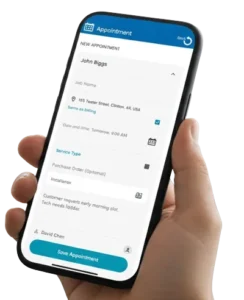
Once the job lands on her schedule, Sarah's phone buzzes. The mobile app gives her everything she needs to walk onto that job site prepared:
- Customer Details: Name, address, and phone number.
- Job Notes: The specific problem, like "AC unit not blowing cold air."
- Complete Service History: She can see the last time that unit was serviced and what was done.
- Integrated Navigation: A single tap gives her the fastest route to the customer.
This diagram shows the transition perfectly—from the old, chaotic methods to a clean, digital workflow.

As you can see, a central, organized board replaces the messy, disconnected process, smoothing out the entire scheduling sequence from the first call to the final invoice.
Adapting to Real-World Chaos
Of course, no day ever goes exactly as planned. The real test of any scheduling system is how it handles the unexpected. What happens when a customer cancels, or a true emergency—like a burst pipe—comes in and needs someone on-site now?
This is where a dynamic system shines. The dispatcher just drags the canceled appointment off the schedule, instantly freeing up that technician. Then, they drag the new emergency job into that open time slot. The technician is automatically notified and rerouted. The ability to react this quickly is a key part of broader efficiency goals like supply chain automation, which connects every part of the operation.
If you’re interested in a deeper look, our guide on field service scheduling software that saves time covers this in more detail.
This fluid process marks a huge shift from the days of playing phone tag and shouting across the office. The numbers back it up: the appointment scheduling software market grew from $205.85 million in 2018 to an estimated $546.31 million by 2026. This explosive growth shows just how many contractors are embracing these tools to cut down on administrative headaches and give their customers a better experience. By turning a chaotic workflow into a simple drag-and-drop process, businesses can finally stop reacting to the day and start running it.
How Drag-and-Drop Scheduling Helps Your Whole Team Win
Bringing in drag-and-drop scheduling software isn't just about giving your dispatcher a new toy. It's a fundamental change that brings real, measurable benefits to everyone, from the owner watching the bottom line to the technicians out in the field. When your schedule clicks into place, the entire business runs better.

To see what this really looks like, let's follow a day in the life of an electrical contracting business and see how each person's job gets a whole lot easier.
The Business Owner Sees Clearer Paths to Profit
For a business owner, a messy schedule isn't just a headache—it's lost money. Missed appointments, inefficient routes, and wasted time are all direct hits to your revenue. Good scheduling software flips that script, turning operational smoothness into tangible financial gains.
Imagine the owner, Sarah, looking at her dashboard first thing in the morning. Instead of worrying about where her crews are, she sees they're on track to complete 15% more jobs this month. That’s because the system’s smart routing has cut down drive time between jobs, slashing fuel costs and creating room for each tech to fit in one more appointment each day.
This shift means the business isn’t just working harder; it’s working smarter. Increased job capacity without adding more trucks or technicians leads directly to higher revenue and healthier profit margins.
By connecting the day's schedule directly to financial reports, Sarah sees the return on her investment in real time. The software isn't just organizing the calendar; it's actively fueling the company's growth.
The Dispatcher Finds Calm in the Chaos
Dispatchers are the air traffic controllers of a field service business, constantly navigating a storm of phone calls, texts, and last-minute changes. A visual scheduling board is their command center, bringing order and control to what can often be a stressful, reactive role.
Think of a dispatcher like Mike. His old routine was a frantic juggle between a whiteboard, a spreadsheet, and a phone that never stopped ringing. Now, his screen is a clean, drag-and-drop calendar. He can see every technician's location on a map, their current job status, and their availability at a glance.
When an emergency call comes in—a faulty circuit breaker needs immediate attention—Mike doesn't skip a beat. He simply:
- Looks at the map to find the closest available electrician.
- Drags the new emergency job onto that tech's timeline.
- Lets the system automatically push all the job details and notes to the technician's phone.
This intuitive process puts an end to double-bookings and frantic games of phone tag. Mike can handle a customer cancellation or a job that’s running long by just dragging and dropping tasks to rebalance the day. The constant stress is replaced by the confidence that he's putting the right people in the right place, every time.
The Technician Gets the Info They Need to Succeed
Out in the field, confusion is the enemy of a productive day. Nothing slows a technician down more than having to constantly call the office for an address, job notes, or a customer's service history. A mobile app connected to the schedule gives them all the information they need, right in their pocket.
Our electrician, David, starts his day by opening the app on his phone. His entire schedule is laid out, complete with customer contact info, detailed job notes, and the service history for each location. He taps his first job and gets turn-by-turn directions.
Once he's on-site, David can do everything from his device:
- Check past work orders to see what repairs were done before.
- Upload photos of the faulty wiring directly to the job file for the office to see.
- Update his status from "en route" to "in progress" and finally to "complete" with a simple tap.
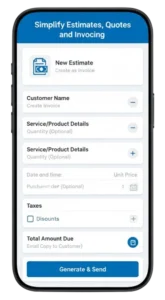
This instant access to information means fewer interruptions and more time spent on billable work. After finishing the repair, David can even generate an invoice on the spot. This kind of detailed control is crucial when you want to simplify estimates, quotes, and invoicing across your entire operation. Giving techs this autonomy not only makes them more efficient but also boosts their job satisfaction.
What to Look For: 7 Must-Have Features in Modern Scheduling Software
A slick-looking drag-and-drop board is a good starting point, but the real power of any scheduling software is what’s humming away under the hood. It’s easy to get wowed by a colorful calendar, but not all drag and drop scheduling software is built the same. To find a platform that actually solves real-world problems for your trade business, you have to dig deeper.

Think of it like buying a new work van. A flashy paint job is nice, but what you really care about is the engine’s reliability, whether you have enough room for your tools, and how much it costs you at the pump. The same logic applies here. Let's get past the showroom polish and inspect the features that will actually drive your business forward.
Essential Drag and Drop Scheduling Software Feature Checklist
Before you commit to a platform, use this checklist to make sure it has the core capabilities a modern field service business needs to thrive. It's a quick way to compare options and separate the simple calendar apps from the true business management powerhouses.
| Feature | Why It's Critical for Trades | What to Look For |
|---|---|---|
| Real-Time GPS Tracking | Lets dispatchers see everyone on a live map to make smart, on-the-fly decisions for emergency calls or delays. | Live map view, color-coded technician status (traveling, on-site), and route optimization to find the fastest path to the next job. |
| Automated Notifications | Frees up your office staff from answering "Where's my tech?" calls all day by keeping customers in the loop automatically. | Customizable SMS and email templates for reminders, confirmations, and "on-my-way" alerts with a real-time ETA. |
| Technician Mobile App | Empowers your team in the field with all the information they need, right on their phone or tablet. No more calling the office for details. | An intuitive app that syncs schedules, job history, and notes. It should allow photo uploads, signature capture, and status updates. |
| Estimate-to-Job Conversion | Eliminates double-entry and mistakes by turning an approved quote into a scheduled job with one click. | A seamless workflow where all customer details, line items, and notes from the estimate are automatically carried over to the work order. |
| Integrated Inventory | Prevents wasted trips to the supply house and stops you from ordering parts you already have on a van or in the warehouse. | The ability to track stock levels on each van and in the warehouse, assign parts to jobs, and receive low-stock alerts. |
| Job Costing Tools | Shows you exactly which jobs are making you money and which ones are costing you, helping you create more profitable estimates. | Features that track labor hours, materials used, and other expenses against each job to give you a clear profit and loss breakdown. |
| Custom Reporting | Provides the hard data you need to understand business performance, technician efficiency, and customer trends. | A flexible reporting dashboard where you can build custom reports on key metrics like revenue per technician, first-time fix rate, and more. |
Having a system that ticks all these boxes is what truly transforms your operations. It connects every part of your business, ensuring nothing falls through the cracks.
Why This Integrated Approach Matters
A great scheduling platform doesn't just manage appointments; it acts as the central nervous system for your entire business, connecting the field, the office, and your finances.
For example, when your dispatch software works hand-in-hand with the top fleet management software NZ, you get a complete picture of your vehicles and your people. It's about creating a single source of truth.
Here’s the bottom line: Information needs to flow effortlessly. An approved estimate becomes a scheduled job instantly. A completed job turns into an invoice automatically. This eliminates the tedious and error-prone task of entering the same data over and over again.
This unified approach is no longer a "nice-to-have"—it's a necessity. The market for just one segment of this software was valued at USD 2.59 billion in 2025 and is projected to climb to USD 2.79 billion in 2026.
That huge investment shows that businesses are moving away from simple scheduling tools and are now demanding complete, end-to-end platforms. You can find more market analysis from firms like 360iResearch.
By choosing a system with these must-have features, you’re not just getting organized. You’re building a smarter, more profitable, and scalable business from the ground up.
Your Smooth Guide to Implementing the New System
Moving on from paper, spreadsheets, or clunky old software can feel daunting. I get it. But with a solid plan, transitioning to a modern drag-and-drop scheduling software is a completely manageable process. Don't think of it as a massive, disruptive project, but as a series of smart, logical steps.
Fear of change is natural, but today’s platforms are built to be intuitive. This guide is your roadmap to a smooth rollout, one that gets your team confident and your business humming without any of the chaos.
First, Get Your Foundation Right
Before you even log into the new software, a little prep work will pay off big time. This is all about getting your current information ready for its new home. It’s just like organizing your tools and parts before starting a big installation—it makes every step that follows go much smoother.
The first job is data migration. That term sounds technical, but it really just means getting your essential info into a clean, digital format. You’ll want to gather:
- Customer Lists: Compile all your names, addresses, phone numbers, and any important service notes into a single spreadsheet.
- Inventory and Parts: Create a master list of all the parts and equipment you track, including what’s in the warehouse and what’s on each truck.
- Job History: If you can, export historical job data. This is gold for providing smarter, faster service down the road.
Most quality software providers, including us at TackonFSM, offer help with this. Our team can import your spreadsheets for you, which saves countless hours of manual entry and makes sure you start with clean, accurate data from day one.
Next, Onboard and Empower Your Team
Here’s a truth I’ve learned over the years: a successful rollout is as much about your people as it is about the technology. Success hinges on getting your team on board, trained, and genuinely excited about the tools that will make their jobs easier.
Key Strategy: The best approach is a phased rollout, not a "big bang" switch on a Monday morning. Start small with an enthusiastic pilot group—maybe one dispatcher and one or two of your most tech-savvy technicians.
Let this small team use the drag-and-drop scheduling software for a full week. They'll quickly become your internal champions, working out any initial kinks and offering priceless, real-world feedback. Their success stories will build incredible confidence across the rest of the company.
When you do train, focus on what’s in it for them. Show your dispatchers how they can now handle an emergency call with a simple click and drag. Show your techs how the mobile app puts all the job details, customer history, and directions right in their pocket, eliminating those constant calls back to the office.
Finally, Execute and Fine-Tune Your Rollout
Once your pilot group is running smoothly, it's time to bring the rest of the team into the fold. With your internal champions ready to help their colleagues, the broader training sessions will be far more effective. Keep leaning on your software provider for support; they should have plenty of resources and be ready to answer questions.
Set a few clear, achievable goals for the first 30 days. This gives everyone a target to aim for. Good examples are:
- Booking 100% of all new jobs within the new platform.
- Having technicians update every job status from the field using the mobile app.
- Generating all new estimates and invoices directly through the system.
After the first month, schedule a check-in with your team to see how things are going. What’s working well? What are the snags? Use that direct feedback to fine-tune your workflows. This is how you unlock the full power of the software and ensure your transition is not just successful, but profitable.
Common Questions About Drag-and-Drop Schedulers
Making the jump from a paper-and-pen system always brings up a few "what if" scenarios. It's only natural. We talk to HVAC, plumbing, and electrical contractors every day, and we tend to hear the same questions time and again. Let's tackle them head-on.
How Much Time Does This Software Really Save?
Honestly, the time savings are almost immediate. Most dispatchers tell us they get hours back each week because they're no longer buried in manual data entry, playing phone tag with technicians, or trying to decipher a messy whiteboard. A single drag-and-drop move on the screen replaces what used to be a flurry of phone calls and text messages.
With that newfound time, your dispatcher can focus on what really matters—like tightening up routes to save on fuel or giving customers a heads-up call. This efficiency boost often means each tech can squeeze in at least one extra job per day, which goes straight to your bottom line without adding a dime to your overhead.
Will My Technicians Actually Use It in the Field?
Yes, and they’ll probably thank you for it. The biggest change in software over the past decade has been a laser focus on the person actually using it. Modern field service apps are built "mobile-first," meaning they were designed for a smartphone screen from day one.
Your techs get a simple app on their phone (it works on both iOS and Android) that shows them everything they need: their daily schedule, complete job details, customer notes, and even turn-by-turn directions. In just a few taps, they can:
- Update a job’s status from "traveling" to "working" to "complete."
- Snap photos of the work for your records (and the customer's peace of mind).
- Build and send an invoice right on the spot.
Because the app is genuinely easy to use, training is minimal. It quickly becomes a tool they can't imagine working without.
Key Takeaway: The whole point of the mobile app is to make a technician's life easier, not harder. It gives them the info they need to work confidently and cuts down on the constant back-and-forth calls to the office.
What Happens If My Internet Connection Is Lost?
This is a non-negotiable for any business with techs in the field, and any good software platform has it covered. The best scheduling apps have a powerful offline mode built right in. This means your technicians can still see all their job details and log their work even when they're in a basement or a rural area with zero bars.
As soon as their phone finds a signal again, the app automatically syncs everything they did—job notes, photos, status changes—back to the main office system. And since the main scheduling board is web-based, your dispatcher can always access it from any device with an internet connection, even a phone hotspot. Your business never truly goes dark.
Is This Affordable for My Small Business?
Absolutely. The days of needing a massive, six-figure budget for powerful software are long gone. Most modern platforms are designed to grow with you. Instead of one giant upfront cost, you pay a flexible monthly fee based on how many users you have.
This model lets a small shop with just two to five technicians use the exact same scheduling, dispatching, and invoicing tools as a company with 50. It’s a predictable operating expense that you can easily scale up as you hire more people or scale down if you need to.
Ready to see how a visual schedule can transform your operations? TackonFSM provides powerful, easy-to-use drag-and-drop scheduling designed specifically for HVAC, plumbing, and electrical contractors. Start your free 14-day trial today and see the difference for yourself.