

Cost for hvac service call: What to Expect in 2026
When your air conditioner or furnace quits, the first question on your mind is almost always the same: "How much is this going to cost me?" You can generally expect to pay a diagnostic fee somewhere between $95 and $220. It’s important to remember, though, that this initial charge just covers the technician’s visit and diagnosis—not the actual repair.
What's Inside Your HVAC Service Call Bill?
Ever felt like you needed a decoder ring to understand an HVAC invoice? Let's clear up the confusion. The total cost for an HVAC service call is a lot like a restaurant bill. You have the initial charge just for getting a spot at the table (that's your service fee), the price of what you actually ordered (the labor to fix the problem), and any ingredients needed (the parts).
That first fee is just the starting line. It gets a skilled professional to your doorstep with the right diagnostic tools and know-how. After they pinpoint the problem, the final bill will add in the costs for whatever it takes to get you comfortable again.
The 3 Key Parts of Your Invoice
Your final bill almost always boils down to three main things. Each one plays a part in the total price you pay to get your system back in action.
Service Call or Diagnostic Fee: Think of this as the "trip charge." It’s a flat rate that covers the technician's travel, their time to thoroughly inspect your system, and the expertise required to figure out what went wrong.
Labor Costs: This is what you pay for the technician's hands-on time doing the actual repair. This can be billed by the hour or, for common jobs, as a flat-rate price.
Parts Costs: If your system needs a new capacitor, a fan motor, or a control board, this line item covers the cost of those specific components.
This simple breakdown shows how each charge stacks up to create your total bill.

As you can see, the final cost isn't just one number but a sum of these connected pieces.
Understanding the Price Range
HVAC service pricing isn't one-size-fits-all, and costs can vary quite a bit. Below is a quick look at what you can expect to pay for just the initial visit in 2026, based on when you call.
2026 HVAC Service Call Fee Estimates
| Service Call Type | Typical Cost Range |
|---|---|
| Standard Business Hours | $95 – $150 |
| Emergency / After-Hours / Weekend | $150 – $220+ |
Note: These ranges cover the diagnostic fee only and do not include the cost of labor or parts for the repair itself.
As the table shows, a standard weekday call will cost less than a late-night or holiday emergency. That premium pays for the inconvenience and urgency of getting a technician to you outside of their normal schedule.
By understanding these core components, you can ask smarter questions, compare quotes more accurately, and feel confident that you’re paying a fair price to keep your home comfortable.
This knowledge puts you in the driver's seat when talking with your technician. For HVAC business owners, properly managing these costs is the key to running a profitable company. It's why so many are exploring how field service management software matters for their operations. When the bill is demystified, it creates a transparent and fair experience for everyone involved.
The Two Sides of a Repair Bill: Labor and Parts

So, your technician has figured out what’s wrong with your system. The final repair quote you see is built from two key elements: the cost of the parts needed and the labor to install them. Getting a handle on how both are calculated is the best way to understand the total cost for an HVAC service call.
It’s just like getting your car fixed. You pay for the new brake pads, and you also pay for the mechanic's time and expertise to put them on. Both are separate charges, but they come together to create the final bill.
What Goes Into the Labor Rate?
When you see a labor charge on your invoice, you're paying for much more than just an hour of someone's time. That rate is a carefully calculated figure that covers the true cost of sending a licensed, insured, and highly-trained professional to your home.
Think about it—that technician brings years of experience right to your doorstep. They can diagnose a tricky problem in minutes, potentially saving you from a much bigger, more expensive failure down the road. Their expertise is a company's most valuable asset.
The labor rate isn't just the technician's paycheck. It's an all-inclusive number that has to cover their salary, insurance, specialized tools, ongoing training, truck maintenance, fuel, and all the other overhead costs of running a legitimate business.
A higher labor rate often means you're hiring a company that invests heavily in quality people and safe practices, which is exactly what you want when someone is working on a critical home system.
Understanding the "Fully Loaded" Rate
Across the industry, labor typically accounts for a huge chunk of the final bill—often around 50% of the total project cost. For 2026, you can generally expect to see residential HVAC technicians charging somewhere between $85 and $150 per hour.
For a standard two-hour repair, that means the labor alone could run from $200 to $500, and that’s before you even add the price of the replacement part. For a deeper look at specific repair costs, you can get a detailed breakdown of HVAC repair costs on Angi.com.
Contractors call this the "fully loaded" rate. It’s the number that ensures the business can operate, pay its people well, and still be around to answer your call next year.
The Real Cost of Replacement Parts
The second piece of the puzzle is the part itself. When a motor burns out, a capacitor blows, or a control board fries, you’ll need a replacement. The price of that component depends on a couple of important things.
First, you'll hear about OEM (Original Equipment Manufacturer) parts versus aftermarket parts.
- OEM Parts: These are made by the same company that built your furnace or air conditioner. They’re a guaranteed fit and are often necessary to keep your manufacturer's warranty intact.
- Aftermarket Parts: These are produced by third-party companies. They might save you a few bucks upfront, but the quality can be a mixed bag, and installing one could void your original warranty.
HVAC companies also add a markup to the parts they sell. This isn't just for profit. That markup covers the time and effort to find and order the correct part, the cost of stocking common items on their trucks for faster service, and, most importantly, the warranty they provide on the new part and their work. If that brand-new part fails a month later, this markup ensures the company can replace it for you at no charge.
Why Emergency and Seasonal Calls Cost More

Ever wonder why the same exact repair costs more on a sweltering July weekend than on a mild Tuesday in May? It all comes down to simple supply and demand. The cost for an HVAC service call isn't a fixed number; it flexes based on how urgently you need help and the time of year.
Think of it like booking a last-minute flight for a holiday. Airlines charge a premium because everyone wants to travel at the same time and seats are limited. The same principle applies when your HVAC system decides to quit at the worst possible moment.
The Premium for Urgent Service
When your AC dies in the middle of a heatwave or the furnace gives up on the coldest night of the year, you're not just paying for a repair—you're paying for immediate relief. That urgency comes with a higher price tag, and for good reason. An emergency call forces an HVAC company to throw its entire schedule into a blender.
A technician who was supposed to be doing routine maintenance across town might get rerouted to your home, creating a logistical shuffle. More importantly, calls that come in after 5 PM, on weekends, or during holidays mean technicians are working overtime.
This premium pricing covers a few key business realities:
- Overtime Pay: Most states require companies to pay technicians time-and-a-half, or even double-time, for work outside of standard hours. That added labor cost has to be accounted for in the bill.
- On-Call Staffing: Many companies pay technicians a stipend just to be "on-call" and ready to go, even if they don't get a single call. This ensures someone is always available to answer the phone and roll a truck.
- Immediate Dispatch: The logistics of sending a fully-stocked truck to your home at a moment's notice involves operational costs that a pre-scheduled call simply doesn't have.
Because of this, it's standard practice to add an emergency fee—often between $100 to $250—on top of the standard service call fee. This isn't a penalty; it directly compensates for the higher cost of dropping everything to provide immediate service.
When your system fails unexpectedly, you’re not just buying a repair—you’re buying your way to the front of the line. The emergency fee is the cost of that priority access.
For contractors, being upfront about this is crucial. Explaining that the surcharge covers the technician's overtime and the disruption to operations helps customers understand they are paying for a premium, necessary service.
Riding the Seasonal Pricing Waves
Beyond after-hours emergencies, the time of year itself has a huge impact on the cost for an HVAC service call. The HVAC business is incredibly seasonal, with demand going through the roof during the hottest weeks of summer and the coldest snaps of winter.
During these peak seasons, contractors are swamped. Technicians are working long hours, schedules are booked solid for weeks, and the sheer volume of calls strains every resource. This high demand naturally pushes prices up for both service calls and repairs.
On the flip side, the "shoulder seasons"—spring and fall—are the industry's slow periods. The weather is mild, fewer systems are under stress, and contractors are actively looking for work. This is without a doubt the best time to schedule any non-urgent services.
You'll often find discounts and better availability on:
- Preventative Maintenance: Many companies run spring "AC tune-up" and fall "furnace check" specials to keep their teams busy and your system ready for the rush.
- System Upgrades: With more breathing room in their schedules, contractors may offer better pricing on new installations.
- Minor Repairs: If you've been putting up with a noisy fan or another minor issue, getting it fixed in the shoulder season can save you a good chunk of change.
By scheduling routine maintenance in the spring or fall, you not only pay less but also give yourself the best shot at preventing one of those expensive, stressful breakdowns during peak season.
How Smart Contractors Price for Profit
For any HVAC business owner, just covering your costs is a recipe for going nowhere fast. Real success comes from pricing your work strategically to guarantee a profit. If you're still using old-school, cost-plus formulas, it's time for a change. The smartest contractors know that a profitable cost for an HVAC service call has to account for every single expense—both the obvious and the hidden.
This means ditching simple hourly rates. Instead, you need to calculate your fully-loaded labor rate. This number isn't just a technician's wages; it’s the true, all-in cost of having that tech on the road for one hour.
Calculating Your Fully-Loaded Labor Rate
Think of it this way: your business is a machine, and the fully-loaded rate is the fuel that keeps every part running. It covers the direct costs, like what you pay your techs, but more importantly, it accounts for all the indirect overhead that quietly drains your bank account if you ignore it.
These indirect costs, your overhead, are everywhere:
- Vehicle Expenses: Truck payments, gas, insurance, and all that regular maintenance.
- Tools and Equipment: The price of those expensive diagnostic tools and replacing them over time.
- Insurance and Licensing: Your business liability, workers' comp, and all the professional licenses you have to maintain.
- Office and Shop Costs: Rent for the shop, utilities, and salaries for your office staff.
- Marketing and Software: The money you spend on ads and subscriptions to run the business.
When you divide your total annual overhead by the total billable hours your team works in a year, you find the real cost of each hour. Add that to the technician's hourly pay and tack on your desired profit margin. That’s your fully-loaded rate, and it’s your key to making money on every job.
Using Technology for Smarter Pricing
Doing these calculations by hand for every job is a nightmare and a recipe for mistakes. This is exactly where modern field service management (FSM) software becomes a contractor's best friend, building profitability right into your daily process.
A digital pricebook is a contractor's single source of truth. It standardizes pricing, eliminates guesswork, and ensures every technician quotes jobs consistently and profitably, protecting your margins on every service call.
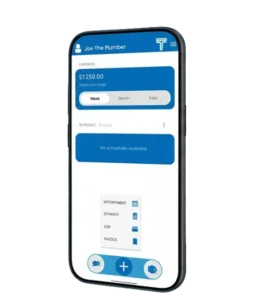
With an FSM system like TackonFSM, you can build a central, digital pricebook. This isn't just a simple parts list. It's an intelligent catalog that combines your parts inventory with your carefully calculated labor times and markups. When a tech builds an estimate in the field, they're pulling from this standardized system, making sure every quote hits your profit goals.
A centralized dashboard like this gives your office team a bird's-eye view of schedules and job statuses. This allows for quick dispatching adjustments that directly boost your bottom line.
Many savvy contractors also use other methods to improve their efficiency, which helps keep their pricing competitive. For example, understanding what route optimization entails is a game-changer. It slashes fuel costs and wasted drive time, and those savings can either be passed on to the customer or put right back into the business.
From Estimate to Invoice Without Errors
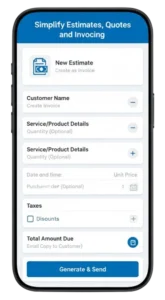
One of the biggest leaks in a contractor’s revenue stream is the gap between the field estimate and the final bill. Lost paperwork, typos during data entry, and simple miscalculations can mean you’re leaving money on the table. A solid FSM platform plugs that leak for good.
When a customer gives the thumbs-up on a digital estimate, the system instantly turns it into a work order. Once the job is done, it becomes a final invoice. Every part, labor hour, and fee is carried over automatically. This doesn't just cut down on administrative headaches; it wipes out the human errors that cost you money, ensuring you get paid exactly what you’re owed for every single service call.
Investing in Prevention to Reduce Future Costs
Let's be honest—nobody wants to pay for a big HVAC repair. The most affordable fix is always the one you manage to avoid in the first place. While it's crucial to understand the immediate cost for an HVAC service call, the smarter financial move is to invest a little upfront to prevent a massive headache later. This is where preventive maintenance really shows its value.
It’s just like getting regular oil changes for your car. You spend a bit every few months to keep the engine healthy, which is a whole lot better than facing a catastrophic, multi-thousand-dollar engine failure down the road. An HVAC maintenance plan operates on the exact same principle for your home's heating and cooling system.
The Financial Case for Annual Maintenance
The logic is straightforward: a small, predictable annual expense is far easier to stomach than a sudden, budget-shattering emergency repair bill. A system that gets regular attention is much less likely to die on you during a blistering heatwave or a freezing winter night, saving you from the premium rates that come with urgent, after-hours service calls.
Just think about the cost of a major breakdown. Replacing a failed compressor can easily set you back $1,500 to $3,500, while a new evaporator coil can run anywhere from $1,000 to $2,500. These are the very types of failures that routine inspections are designed to prevent. A good technician can spot problems like low refrigerant or dirty coils long before they cascade into system-wide damage.
A maintenance plan is your financial shield against the worst-case scenarios. It turns a potential four-figure emergency into a predictable, manageable two-figure monthly or low three-figure annual expense.
But it's not just about dodging disasters. A clean, well-tuned system simply runs better. When parts like coils, blowers, and filters are clear of the gunk that builds up over time, your unit doesn't have to work as hard to keep you comfortable. That efficiency boost shows up directly on your monthly utility bills, often saving homeowners 5% to 15% on heating and cooling costs.
To help you visualize the savings, here’s a quick comparison of the cost of a typical maintenance plan versus the potential cost of dealing with common, preventable repairs on an emergency basis.
Annual Maintenance Cost vs. Potential Repair Cost
| Item | Average Annual Cost | Potential Emergency Repair Cost (Without Maintenance) |
|---|---|---|
| Annual HVAC Tune-Up Agreement | $150 – $350 | N/A |
| Blower Motor Replacement | Included in discounts | $450 – $1,500+ |
| Compressor Failure | Included in discounts | $1,500 – $3,500+ |
| Capacitor Replacement | Included in discounts | $150 – $450 |
| Refrigerant Leak Repair & Recharge | Included in discounts | $300 – $1,600+ |
As you can see, the annual fee for a maintenance plan is a small fraction of the cost of just one major repair. Over the life of your system, the math overwhelmingly favors prevention.
What Does a Maintenance Agreement Include?
HVAC service contracts are built to give homeowners both peace of mind and real financial perks. The exact details can vary from one company to the next, but most solid plans include a core set of benefits that make them a no-brainer.
- Two Annual Tune-Ups: You'll typically get one service for your AC in the spring (before you need it) and another for your furnace in the fall.
- Priority Service: If something does break, you jump to the front of the line. This is a huge relief when you're stuck in the middle of a busy season and everyone else is waiting days for a technician.
- Discounts on Repairs: Most plans give you a 10% to 20% discount on any parts and labor needed for repairs.
- Waived or Reduced Fees: Many agreements will waive the standard diagnostic fee or cut the cost of an emergency call, saving you money right away.
These plans are a true win-win. The homeowner gets a more reliable system, saves money on energy and repairs, and sleeps better at night. Meanwhile, the contractor gets a steady stream of recurring revenue and builds a base of loyal customers. If you want to stay on top of your system's health, using a good preventive maintenance checklist template is an excellent way to start.
How Contractors Benefit from Maintenance Plans
For any HVAC business owner, service agreements are the bedrock of a stable, thriving company. They help you move away from a purely reactive business model—where you just wait for phones to ring with emergencies—to one that’s built on proactive, recurring income. This predictable cash flow helps smooth out the seasonal peaks and valleys that plague so many in this industry.
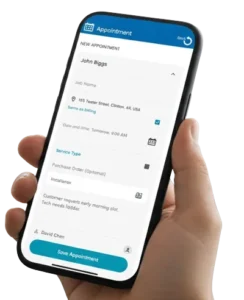
And managing these plans doesn't have to be a headache. Forget about clunky spreadsheets and manual calendar reminders. Modern field service management software handles the whole process for you. You can see how a dedicated system makes managing these agreements nearly effortless, as it can automatically schedule tune-ups, ping customers with reminders, and track renewals so no opportunity falls through the cracks.
Recent industry data shows that annual HVAC maintenance costs have settled in at around $250 on average, with most contractors pricing their service agreements between $150 and $500 per year. These plans don't just lock in revenue; they dramatically boost customer retention, turning a one-time repair job into a long-term, profitable relationship.
Frequently Asked Questions About HVAC Costs

When it comes to the cost for an HVAC service call, it’s easy to feel like you’re in the dark. To clear things up, we've answered some of the most common questions homeowners have when their system acts up.
Getting a handle on these key points will help you know exactly what to expect.
Can I Get a Repair Estimate Over the Phone?
Most experienced HVAC companies will avoid giving a firm repair estimate over the phone, and for good reason. Without a technician physically inspecting your system, it’s just a guessing game.
Think of it this way: you wouldn't want a doctor to diagnose a serious condition based on a phone call. The initial service call fee covers the technician’s expertise and time to find the actual problem. Only after a proper diagnosis can they give you a solid, reliable quote for the fix.
Is the Service Call Fee Applied to the Final Repair Cost?
This is an excellent question, and the answer really depends on the company's policy. It’s something you should always ask about when you first call to book the appointment.
Some contractors will happily credit the diagnostic fee toward the repair cost if you approve the work on the spot. Others treat it as a separate charge for the diagnosis itself, whether you go ahead with the repair or not.
Always ask about the company's policy on applying the service fee to the repair. This simple step can prevent unexpected charges and clarify how the final bill is calculated.
Knowing this upfront helps you make an informed decision and avoids any surprises when you get the final bill.
Why Did My Neighbor's HVAC Repair Cost Less?
It's natural to compare notes with a neighbor, but when it comes to HVAC repairs, no two jobs are ever truly the same. What seems like an identical problem on the surface can have a very different price tag.
Several factors can make a big difference in the final cost:
- System Age and Type: Parts for an older, obsolete unit can be much harder to source and more difficult to install than those for a modern system.
- Part Complexity: Replacing a simple capacitor is a quick, inexpensive job. Swapping out a complex circuit board, on the other hand, is a much more involved and costly repair.
- Warranty Status: If the broken part is still covered by the manufacturer's warranty, you'll only have to pay for the labor.
- Labor Time: A straightforward fix that takes 30 minutes will always be cheaper than a complicated repair that requires a few hours of work.
Because every situation is unique, comparing your bill to someone else’s is rarely a good way to judge if the price was fair.
Ready to stop juggling paperwork and start running your business more efficiently? See how TackonFSM puts scheduling, estimating, and inventory all in one simple platform. Start your free 14-day trial today!