
Your Ultimate Plumbing Price Book Guide

Think of a plumbing price book as the central playbook for your entire business. It’s a complete, detailed catalog of all your services, the materials you use, your labor costs, and—most importantly—your profit margin. This is the tool that lets you give customers consistent, profitable, flat-rate pricing on every single job, taking the guesswork out of quoting and building real trust.
What Is a Plumbing Price Book and Why It’s Your Most Valuable Tool

Let's try an analogy. Imagine your plumbing company is a top-notch restaurant. Your techs are the chefs, your services are the menu items, and your customers are expecting a great meal at a fair price. What would happen if every chef just made up their own recipes and prices on the fly? Total chaos. One customer might pay $20 for a burger, while the next pays $35 for the exact same thing. The quality would be all over the place, and you'd have no idea if you were actually making any money.
A plumbing price book is your professional recipe book and menu, all in one. It stops that chaos cold. It’s so much more than a simple parts list; it's the operational nervous system for your business. It meticulously breaks down every task you offer, from a basic drain cleaning to a full-on repipe, detailing the exact "ingredients" needed for each.
This level of detail ensures every quote you give is built on a solid foundation of data, not just a gut feeling a tech has in the back of their van. This is the one tool that truly separates the thriving, scalable businesses from the guys who are just "owning a job" instead of running a company.
From Guesswork to Guaranteed Profit
Without a price book, every quote is a high-stakes guessing game. Your tech might quote a price based on what they think a part costs, or how long a similar job took them last month. That approach is riddled with risk and almost always leads to underpriced jobs that quietly drain your profits.
A well-built price book completely flips the script, moving your business from reactive guesswork to proactive, engineered profit. It guarantees that every single quote covers all your costs and hits your target profit margin—every time. This is absolutely critical, especially with material costs always on the move.
For example, the global market for plumbing fixtures was valued at USD 98.44 billion in 2025 and is expected to climb to USD 152.11 billion by 2035. That steady growth means the price of toilets, faucets, and pipes will keep going up. If you're not using a dynamic price book to track these changes, you could easily underbid jobs heavy on materials, potentially losing 10-20% of your profit right off the bat. You can dig into this market trend and how it affects pricing over at Precedence Research.
The Power of Consistency and Trust
A solid price book does more than just protect your bottom line; it builds unbreakable trust with your customers. When every technician on your team presents the same professional, upfront price for the same job, you create a reputation for fairness and transparency. Customers feel confident they’re getting a fair deal, not just a number pulled out of thin air.
This consistency also gives your team a major boost by providing:
- Confidence in the Field: Techs can present quotes with authority, knowing the prices are accurate and backed by solid company data.
- Clear Upsell Opportunities: A digital price book makes it easy to show "Good, Better, Best" options, empowering techs to sell based on value, not just the cheapest fix.
- Faster Quoting: No more frantic calls back to the office to double-check a price. Techs can build and present professional estimates right on the spot in minutes.
A price book is your company's intellectual property. It’s the proprietary system that makes your business scalable, professional, and ultimately, more valuable. It turns individual expertise into a standardized, repeatable process that drives growth.
Pricing Then vs Now: Paper vs Digital Price Books
The evolution from paper-based pricing to an integrated digital system is a game-changer. The old way was cumbersome and prone to error, while the modern approach gives you unparalleled control and efficiency. This table breaks down the stark difference.
| Feature | The Old Way (Paper and Spreadsheets) | The Modern Way (Integrated Digital Price Book) |
|---|---|---|
| Updating Prices | A manual, time-consuming nightmare. Requires printing new pages for every binder. | Instantaneous. Update a material cost once, and it's live for the whole team. |
| Accuracy | Prone to human error, outdated costs, and inconsistent math. | Automated calculations ensure every quote includes labor, overhead, and profit. |
| Accessibility | Stuck in a binder in the truck or back at the office. Easily lost or damaged. | Available on any phone or tablet, anytime. Always up-to-date. |
| Customer Experience | Handwritten quotes on a form. Can look unprofessional and hard to read. | Professional, branded digital quotes with images and options. Sent via email or text. |
| Integration | A completely separate system. Data has to be manually entered into invoices or accounting software. | Seamlessly connects to scheduling, invoicing, and accounting within your field service management software. |
| Sales Process | Limited to a single price. Upselling is difficult and relies on the tech's memory. | Easily present Good-Better-Best options, helping customers choose higher-value solutions. |
As you can see, the modern approach isn't just a minor upgrade—it's a fundamental shift in how you run your business.
By integrating a plumbing price book, especially within a modern software system, you aren't just making a list of prices. You're building the engine that powers profitability, consistency, and customer loyalty. It’s the single most important step you can take to get control of your business and make sure it thrives for years to come.
The Three Pillars of a High-Profit Price Book
Building a solid plumbing price book can seem like a huge task, but it really boils down to three core components. Think of them as the legs of a stool—if one is weak, the whole thing wobbles. Get these three pillars right—Materials, Labor, and Services—and you'll have a powerful tool that makes every job more profitable.
Let's start with the most concrete pillar: materials. This can't be just a mental list or a stack of old invoices. A professional materials database is a well-organized catalog of every single part you use, from a tiny washer to a top-of-the-line tankless water heater.
Having a system for this is more important than ever. The market for plumbing parts is massive—it generated USD 61.75 billion globally in 2023 and is projected to climb to USD 84.78 billion by 2029. Without a price book to track these costs, you're flying blind. Poor inventory management, like double-ordering or shrinkage, hits an estimated 30% of small businesses right in the wallet. To see how these market trends could affect your business, you can dive deeper into the full plumbing parts market research.
Pillar 1: Your Organized Materials Catalog
A good materials catalog is your single source of truth for every nut, bolt, and fitting. It acts like a digital warehouse where every part has its place, its price, and its purpose clearly defined.
Here's what every item in your materials list needs:
- Part Name and SKU: A clear, consistent name (e.g., "3/4-inch Copper Pipe, 10 ft") and a unique Stock Keeping Unit (SKU) so there are no mix-ups.
- Supplier Information: Who you buy it from and their part number. This makes reordering a breeze.
- Your Cost: The exact price you pay for the part—and this needs to be kept up-to-date.
- Markup Rule: Your formula for profitability. This could be a percentage or a fixed dollar amount you add to your cost.
- Selling Price: The final price the customer sees, automatically calculated based on your cost and markup.
For instance, a field service management platform like TackonFSM allows you to manage this entire database in one place. It bridges the gap between the office and the van, so everyone is working from the same numbers.
This kind of integrated view shows how a digital system can track part names, SKUs, and costs in real-time. It’s a huge leap from clunky spreadsheets to a dynamic system that reflects what you’re actually paying for parts today.
Pillar 2: Calculating Your True Labor Rate
The second pillar, labor, is where many contractors get it wrong. It's so much more than what you pay your tech per hour. To actually make money, you have to calculate your fully-burdened labor rate—the real, all-in cost of keeping that technician on the clock.
Your fully-burdened labor rate is your secret weapon for profitability. It accounts for all the hidden costs of employment, ensuring that every billable hour actually contributes to your bottom line, rather than just covering wages.
This rate wraps in not just the technician's wage but all the overhead that comes with having them on your team. Think of it as what it truly costs you to "rent" one hour of your technician's time.
To figure it out, you need to add up:
- Technician's hourly wage
- Payroll taxes (Social Security, Medicare)
- Workers' compensation insurance
- Health insurance premiums
- Retirement contributions
- Uniforms and tool allowances
- Prorated costs of their service vehicle, gas, and insurance
If you miss these costs, you could be losing money on every single job, even when it feels like you're charging a fair price.
Pillar 3: Bundling Into Flat-Rate Services
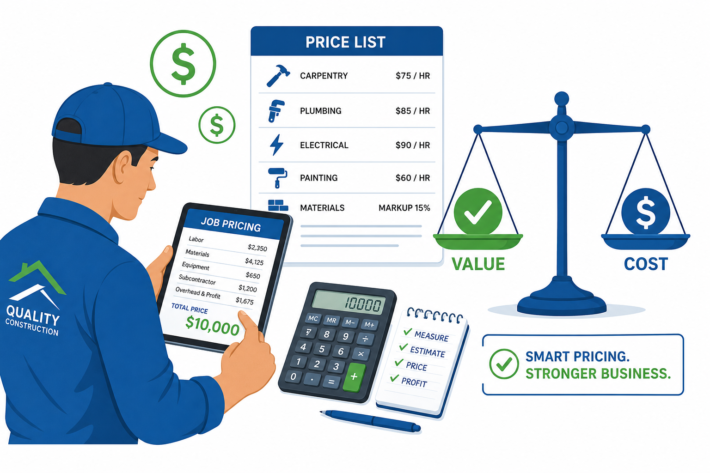
The final pillar, Services, is where the magic happens. A flat-rate service is simply a pre-packaged job that bundles specific materials and a set amount of labor into one straightforward, upfront price for the customer. This is where you combine the first two pillars into something you can actually sell.
Let's build a "Standard Toilet Rebuild Package" as an example:
- Materials: You pull in the toilet rebuild kit from your catalog (with your cost and markup already applied).
- Labor: You estimate the job will take 1.5 hours and multiply that by your fully-burdened labor rate.
- Overhead & Profit: You add your company's profit margin on top of the combined material and labor cost.
The result is a single, clean price—say, "$325 for a complete toilet rebuild." Now, your technician doesn't have to fumble with a calculator in the customer's home. They just select the service from the price book on their tablet. This system guarantees consistent, profitable pricing on every job and gives customers the confidence of knowing the cost before the work even starts.
How to Build Your First Plumbing Price Book
Turning theory into practice is what separates a struggling contractor from a profitable business owner. This section is your roadmap for creating your first plumbing price book, even if you’re starting from absolute zero. We'll walk you through the entire process, from digging up the raw cost data to building your very first profitable flat-rate task.
The first step can feel a bit like detective work. Your mission is to gather all the numbers that form the financial backbone of your services. This isn't about guessing; it's about collecting hard evidence of what things actually cost you. Don’t get overwhelmed by trying to build a 1,000-item book overnight. Just start small and focus on your most common jobs.
The Initial Data Hunt
First things first: you need to collect the raw numbers that will become the building blocks for every price in your book. Think of it like gathering ingredients before you start cooking.
Here’s your action plan for the data hunt:
- Gather Supplier Invoices: Pull together at least three to six months of invoices from your main parts suppliers. This gives you a real-world average cost for the materials you use most often.
- Time Your Common Jobs: For the next two weeks, have your techs (or yourself) time how long it really takes to complete your top 10 most common tasks. Be sure to track time from leaving the last job to finishing the current one, not just wrench time.
- Catalog Every Service: Make a simple list of every distinct service you offer. Start with the most frequent ones—drain cleanings, water heater flushes, and faucet replacements.
This initial data is the bedrock of an accurate price book. Without it, you’re just creating a more organized version of the same old guesswork.
Structuring Your Information for Success
Once you have your raw numbers, it’s time to get them organized. While the endgame is a digital system, starting with a simple spreadsheet is a fantastic way to understand the structure and the relationships between your costs. This process helps you see exactly how materials, labor, and profit all fit together.
Create a spreadsheet with columns for Part Name, SKU, Supplier Cost, Your Cost (including shipping), and Markup Percentage. This becomes your initial materials database. For labor, use the data from your time-tracking exercise to find an average time for each task.
Remember, a price book isn’t just a list; it’s a formula. Every single entry combines tangible costs (parts, labor) with your business strategy (markup, profit) to produce a consistent, predictable outcome on every job.
Now, let's walk through building your very first flat-rate task. This is where all that data collection finally pays off and becomes a real, sellable service.
The flowchart below shows how these core components—materials, labor, and services—come together to create a profitable final price.

This visual makes it clear: a profitable service doesn’t happen by accident. It’s the engineered result of tracking your material costs, accounting for your true labor expenses, and packaging them into a service that delivers value to the customer and profit to your business.
Building Your First Flat-Rate Task
Let's put it all together by creating a "Standard Kitchen Faucet Replacement" task. This hands-on example will make the whole concept click. We'll combine the part cost, your burdened labor rate, and your profit target into one clear, flat-rate price.
Here’s the step-by-step breakdown:
- Part Cost: Looking at your supplier invoices, you see the new kitchen faucet costs you $120.
- Miscellaneous Supplies: You add $15 for plumber's putty, new supply lines, and other small consumables. Your total material cost is now $135.
- Burdened Labor: You’ve already calculated that your fully-burdened labor rate is $95/hour. From your time tracking, you know this job consistently takes one hour. So, your labor cost is $95.
- Total Job Cost: Your total direct cost for this job is simply the sum of materials and labor: $135 + $95 = $230. This is your break-even point.
- Adding Profit: Let's say you're aiming for a 40% profit margin. To get there, you need to mark up your cost. (We’ll dive into the math behind this later, but for now, let's say this brings the final price to $383).
And just like that, you’ve created your first flat-rate task. The price is no longer a gut feeling but a calculated figure that guarantees your costs are covered and your profit is protected. Now, you can repeat this exact process for your top 10-20 services, creating the core of a powerful price book that will immediately improve your quoting accuracy and overall profitability.
Mastering Markup vs. Margin to Maximize Profit
Confusing markup and margin is one of the most common—and costly—mistakes a plumbing contractor can make. They sound similar, but they give you two completely different pictures of your profitability. Get them wrong, and what looks like a great job on paper could actually be a money-loser.
Think of it like this: Markup is what you add to your cost. If a part costs you $50 and you apply a 100% markup ($50), you sell it for $100. It feels like you just doubled your money, right?
Not quite. Margin is the slice of that final price that’s actually profit. In that same scenario, your profit is $50 on a $100 sale. That means your profit margin isn't 100%—it's 50% ($50 profit ÷ $100 price). Understanding this difference isn't just a good idea; it's essential for survival.
The Markup vs. Margin Distinction
Getting the math right here is non-negotiable if you want to build a plumbing price book that actually makes you money. A huge markup doesn't automatically mean a huge profit margin, and it's the margin that pays the bills and fuels your company's growth.
A 100% markup always equals a 50% profit margin. This simple fact is a financial tripwire for so many contractors. If you think a 100% markup means 100% profit, you’re underpricing every single job and leaving a ton of money on the table.
Nailing down the calculation for both is critical. For anyone who wants a deeper dive, this guide on how to calculate profit margin is a great resource. At the end of the day, your price book has to be built on the solid foundation of profit margin, not just markup.
This financial clarity is becoming even more important. The plumbing services market, which hit USD 113.796 billion by 2025, is expected to balloon to USD 162.574 billion by 2033. In a market growing that fast, having a pre-loaded price book in your software becomes a real game-changer for protecting your margins, tracking parts without fail, and getting paid faster.
Smart Pricing Strategies for Your Price Book
Once you move past the basic math, a digital plumbing price book lets you put sophisticated pricing strategies on autopilot. This is how you make sure every quote, from every tech, protects your bottom line.
Here are a few powerful strategies you can build right into your price book:
-
Offer Good-Better-Best Options: This is a classic sales technique that puts customers in control. Instead of one take-it-or-leave-it price, you present three tiers. For a water heater replacement, that might be a basic repair (Good), a new standard unit (Better), and a high-efficiency tankless model (Best). It shifts the customer’s mindset from "if" to "which."
-
Value-Based Pricing for Diagnostics: Stop giving your expertise away for free. Create a flat-rate service for diagnostic work. The price isn't based on how long it takes, but on the value of accurately finding the root of the problem. When a customer makes this initial investment, they are far more likely to move forward with the repair.
-
Apply Different Markups: Not all parts and labor are created equal. You can set up rules in your price book to stay competitive where it counts. For instance, you could apply a lower markup on big-ticket items like a boiler (where customers are more price-sensitive) and a much higher markup on small, common parts that are just one piece of a larger service call.
Embedding Strategy into Your Software
The real magic happens when these strategies are baked right into your field service software. You’re no longer relying on a tech’s memory or a messy binder in the truck—the system does all the heavy lifting for you.
Example in Action
-
Create a Rule: In your software's price book settings, you set a rule: "For all parts under $20, apply a 300% markup. For parts over $500, apply a 40% markup."
-
Tech Builds a Quote: Your technician is on-site and adds a toilet rebuild kit ($35) and a premium faucet ($550) to the quote.
-
Pricing is Automated: The software instantly prices the kit at $140 ($35 cost + $105 markup) and the faucet at $770 ($550 cost + $220 markup).
This kind of automation gives you consistent, profitable pricing on every single quote, no matter which technician is building it. It transforms your price book from a static list of numbers into an active, profit-generating tool that grows with your business.
Integrating Your Price Book with Field Service Software
A plumbing price book in a three-ring binder is a decent start. But when you integrate that price book directly into your field service management (FSM) software, it stops being a simple reference tool and becomes a powerful, profit-generating engine for your entire business.
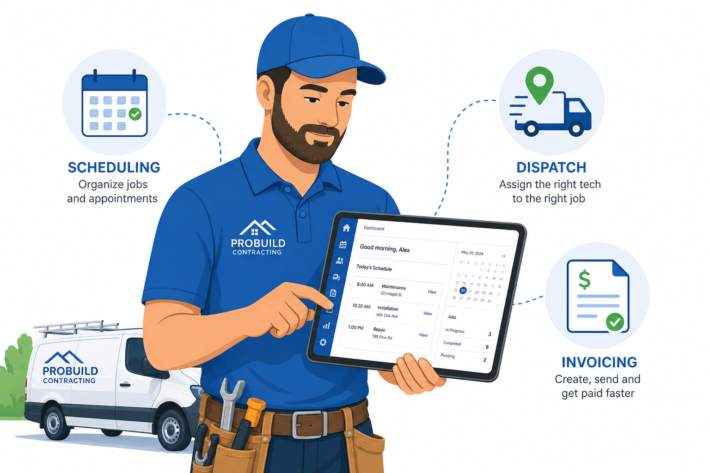
This connection isn’t just a minor upgrade; it fundamentally changes how you operate day-to-day. Your price list is no longer a static document sitting in a truck—it's a dynamic command center that drives your quoting, scheduling, and billing.

Think about the real-world difference. Your tech shows up to a job, tablet in hand, with every service, part, and task you offer right at their fingertips. No more frantic calls back to the office to ask for a price. No more techs guessing at costs under pressure. And, most importantly, no more missed charges on the final invoice. It's all about gaining total efficiency and control.
From Manual Quoting to Mobile Sales Power
The most immediate win you'll see is how it empowers your technicians in the field. Instead of fumbling with a beat-up binder or trying to recall a price from memory, they can build professional, multi-option estimates in minutes on a tablet or phone.
This turns every technician into a far more effective salesperson. They can confidently present "Good, Better, Best" options, complete with clear descriptions and even pictures, showing the customer why a higher-value solution is the right choice, not just the cheapest fix. This approach isn't just theory—companies that make this switch see an average revenue growth of about 13% year-over-year.
Integrating your price book with FSM software is the final step in turning your business's proprietary knowledge into an automated, scalable system. It ensures that the profitable pricing you engineered is the pricing that gets used on every single job, without exception.
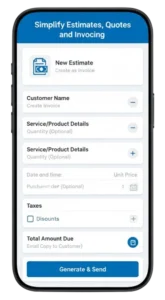
Plus, these digital estimates can be texted or emailed to the customer for instant approval on the spot. This level of professionalism builds massive trust and drastically shortens the time it takes to get a "yes." To see exactly how this works, our guide can show you how to simplify estimates, quotes, and invoicing.
Unlocking Operational Efficiency and Control
Beyond quoting, a fully connected plumbing price book ties together every part of your workflow, from dispatch and inventory all the way to the final bill. This creates a seamless loop of information that cuts down on administrative busywork and plugs the profit leaks you might not even know you have.
Here’s how it impacts your entire operation:
- Real-Time Inventory Visibility: When a tech uses a part from their van, it’s instantly deducted from their mobile inventory. This gives everyone in the office a live view of what’s on which truck, stopping those time-wasting, last-minute trips to the supply house.
- Automated Purchase Orders: As parts are consumed and stock drops below the minimums you've set, the system can automatically flag them for reorder or even generate purchase orders. This helps prevent stockouts on the parts you use most.
- Flawless Invoicing: Since the estimate is built directly from the price book, it converts to a job and then a final invoice with 100% accuracy. This single step eliminates the manual data entry that leads to so many billing errors and lost revenue.
By linking your pricing directly to your field operations, you're not just getting organized—you're building a leaner, more disciplined, and far more profitable business.
Keeping Your Price Book Accurate and Profitable
Think of your plumbing price book as a living, breathing part of your business—not some dusty binder you create once and then forget about. Letting it go stale is like letting your best tools rust in the back of the truck. An outdated price book, filled with old costs, will silently bleed profits from your bottom line.
To stop this "profit leak," you need a simple, consistent maintenance plan. This isn't about some massive, painful overhaul every month. It’s about getting into a steady rhythm of checks and adjustments that keeps your business sharp and profitable.
The Quarterly Materials Review
Material costs are always in motion. The price of copper, PVC, and even specific fixtures can swing wildly thanks to supply chain hiccups and market demand. A seemingly small price jump of just 5% on your most-used parts can completely wipe out your profit margin on dozens of jobs if your pricing doesn't keep up.
That's why a quarterly review is non-negotiable. Here’s a straightforward checklist to get it done:
- Request Updated Price Sheets: Reach out to your top three to five suppliers for their latest pricing lists.
- Compare and Update: Systematically check the costs in your price book against the new supplier sheets.
- Focus on High-Volume Items: Start with the parts you use every single week. These are where outdated prices hurt the most.
- Automate Where Possible: If your software has a bulk editing feature, use it. This will save you hours of manual data entry.
When you're updating costs, especially if you're importing a spreadsheet, accuracy is everything. Following established data integrity best practices is just smart business—it helps prevent small data entry mistakes that can turn into big financial headaches.
A price book review is a proactive health check for your business. It allows you to spot financial leaks before they become major problems, ensuring your pricing accurately reflects your real-world costs.
The Annual Deep Dive
While materials need a quick check-in every quarter, you should set aside time once a year for a much deeper look at your entire pricing structure. This is your chance to zoom out and make sure your business model is still steering you toward your financial goals for the year.
This annual deep dive is about more than just parts. It’s a full-on analysis of every number that impacts your profitability.
Your Annual Review Checklist:
- Recalculate Your Burdened Labor Rate: Have your tech wages, insurance premiums, or truck maintenance costs gone up? If so, your labor rate needs to be adjusted to reflect these new realities.
- Analyze Job Profitability Reports: Dive into your field service software and run reports on which types of jobs are making you the most (and least) money. If you spot tasks that are consistently underperforming, it's time to adjust their pricing.
- Add New Services and Parts: Did you start offering tankless water heater installations or begin using a new PEX fitting? Now is the time to formally build them into your price book with accurate tasks, material costs, and markups. Making sure your team is scheduled efficiently for these new jobs is crucial, and our guide to
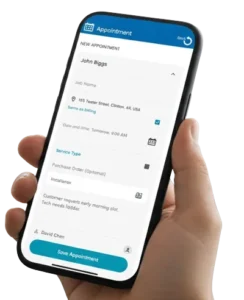
can help you dial in that process.
- Review Overhead and Profit Goals: Did your shop rent go up? Did you hire a new dispatcher? Double-check that your overall markup strategy still covers every single overhead expense while leaving enough room for the profit you need to grow the business.
Frequently Asked Questions About Plumbing Price Books
Even with the best plan, you're bound to have questions when you start using a price book for the first time. It’s a big shift in how you run your business. Let's tackle some of the most common questions we hear from plumbing contractors.
How Long Does It Take to Build a Plumbing Price Book?
Honestly, it varies. A small shop can get a solid start in a weekend, while a larger company with a wider range of services might take a few weeks.
The trick is not to try and build the entire thing at once. Focus on your bread and butter—the top 20-30 jobs you do most often. If you can get those dialed in, you'll have a powerful tool right out of the gate. Using a field service software with a pre-loaded parts catalog can be a game-changer here, cutting down on a ton of mind-numbing data entry.
What Is the Difference Between Flat-Rate and Time and Materials Pricing?
With Time and Materials (T&M), you’re essentially billing the customer for every part you use and every minute your tech is on site. The problem? It's unpredictable. The customer is on edge the whole time, and you risk sticker shock when the final invoice is way more than they imagined.
A flat-rate price, on the other hand, gives the customer one single, upfront cost for the entire job. For example, "$475 to install a new garbage disposal." That price is built from your price book, and it already includes your parts, labor, overhead, and profit.
It builds immediate trust and gets rid of the "running clock" anxiety for both the customer and your technician. Sure, it puts the risk on you to be efficient, but with a well-built price book, that risk is pretty much gone. Your techs are motivated to work smart, not just slow.
How Often Should I Update My Price Book?
Your price book isn't a "set it and forget it" tool; it's a living document. You should be checking your material costs at least quarterly. Copper and PVC prices can jump around, and even a small, unrecorded increase will quietly chew away at your profit margins.
Beyond that, plan on a full-scale review of your labor rates, overhead costs, and service pricing annually. This keeps your numbers in line with your actual business expenses and what the market is doing, ensuring you're always profitable.
Can I Offer Different Pricing for Commercial vs. Residential Customers?
Absolutely, and you should. A good digital price book makes this simple. You can create different pricing tiers for various customer types, so you aren't stuck with a one-size-fits-all approach.
For example, you could easily have separate rate structures for:
- Residential Clients: Your standard, everyday pricing.
- Commercial Accounts: Who might require different labor rates or material markups.
- Service Agreement Members: Where you offer preferential pricing or discounts to reward their loyalty.
Modern field service software will automatically apply the right price level when a tech creates an estimate for a customer. This eliminates guesswork and ensures every quote is consistent and accurate.
Ready to build a price book that guarantees profit on every job? TackonFSM provides the tools you need to manage parts, create flat-rate services, and empower your team with mobile quoting. Start your free trial today.