A Contractor’s Guide to Vetting Lead Services for Contractors
Tired of paying good money for shared, low-quality, or completely irrelevant leads? If you're a contractor, you know the feeling. The frustrating part is, the problem often isn't just the lead services for contractors you're using. It's the entire system—from the moment a lead comes in to the moment you (hopefully) close the job.
The secret I've seen work time and again is a two-part strategy: get much smarter about vetting your lead sources and then plug those leads into a rock-solid management system that ensures lightning-fast follow-up.
Why Most Contractor Lead Services Fail And How to Fix It

Let's be real for a minute. You're probably stuck in an expensive cycle that just isn't working. Many contractors are shelling out anywhere from $9,000 to over $210,000 a year on leads. Yet, the industry-wide conversion rate is a dismal 7.33%. Think about that. A massive chunk of your marketing budget is vanishing into thin air.
The problem has two culprits: the quality of the leads you're buying and the operational chaos that erupts in your office once they land in your inbox. Even a golden lead can turn to dust if it isn’t handled correctly, and the clock starts ticking the second it arrives.
The True Cost of a Broken System
The price you pay for a lead is just the tip of the iceberg. The real cost is hidden in the wasted hours your team spends chasing dead-end contacts or getting into a bidding war over a shared lead that was sent to five other guys. Research shows that up to 80% of leads never convert, and a shocking number of them can't even be contacted. That’s a direct hit to your bottom line and a major roadblock to growing your business.
The challenge isn't just about getting more leads. It's about building a machine that can turn the leads you do get into profitable jobs. It all comes down to speed, organization, and consistent follow-through.
A Better Way to Build Your Business
To fix this, you need to change your thinking. Stop focusing on just buying more leads and start optimizing your entire lead-to-job process. This guide will walk you through a proven approach that connects your lead generation efforts directly to your daily operations. It's about building a reliable engine for growth, not just pouring more water into a leaky bucket.
Here’s what that new approach looks like:
- Smarter Vetting: Learn how to properly evaluate lead sources to find the ones that deliver real opportunities, not just a high volume of contacts.
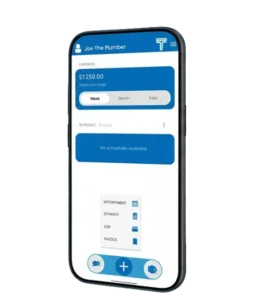
- Robust Management: Put a central system in place, like a Field Service Management (FSM) platform, to instantly capture, track, and manage every single inquiry.
- Disciplined Follow-up: Create a non-negotiable process for rapid response so you can engage potential customers before your competitors even have a chance.
When you connect your lead sources to a powerful operational tool like TackonFSM, you create a seamless flow from inquiry to invoice. This integration is the key to turning those expensive leads into scheduled jobs and, ultimately, real revenue.
Decoding the Different Types of Lead Generation for Contractors
Navigating the world of lead generation services can feel like walking through a minefield of overblown promises. To figure out what actually works, you first need to understand the lingo and the different models out there.
Each option serves a different purpose. What works wonders for a big roofing company might just be a money pit for a solo electrician. Let's break down the main choices you'll run into, looking past the sales pitches to see how they really perform on the ground. This will give you the vocabulary you need to know exactly what you're buying.
Comparing Contractor Lead Generation Models
Before we dive deep into each service, this table offers a quick snapshot of the most common lead generation models. It compares their cost structures, how quickly you can expect to see results, and which type of contractor they're generally best for.
| Service Type | Cost Model | Typical Time to See Results | Best For |
|---|---|---|---|
| PPL Marketplaces | Pay-Per-Lead | Immediate (within hours/days) | New businesses or filling schedule gaps quickly. |
| PPC Advertising | Pay-Per-Click | Fast (within days/weeks) | Established contractors with a budget for consistent, high-intent leads. |
| SEO | Monthly Retainer / Project-Based | Slow (3-9+ months) | Contractors focused on sustainable, long-term growth and asset building. |
| Paid Social Ads | Pay-Per-Impression/Click | Fast (within days) | Visual trades (remodeling, landscaping) looking to generate new demand. |
Think of this as your cheat sheet. Now, let's unpack what these categories really mean for your business.
Pay-Per-Lead (PPL) Marketplaces
Pay-Per-Lead services, like Angi or Thumbtack, are often the first stop for contractors needing work. The appeal is simple: you pay a set fee, anywhere from $15 to over $85, for each lead that comes in. It feels like a direct, low-risk way to get the phone ringing.
Here’s the catch, though. Those leads are almost never exclusive. They're sold to you and a handful of your competitors at the exact same time, triggering a race to the bottom on price. Your shot at winning the job often comes down to who can call the fastest and bid the lowest, not who does the best work.
This model can work for new businesses that desperately need cash flow or for companies with a perfectly-tuned, rapid-response sales process built for high volume and lower margins.
Pay-Per-Click (PPC) Advertising
Pay-Per-Click (PPC) advertising, which is dominated by Google Ads, puts you in the driver's seat. You get to bid on specific search terms—think "emergency plumber near me" or "kitchen remodel cost"—and you only pay when someone actually clicks on your ad.
The biggest advantage here is the sky-high intent of the leads. You're getting in front of homeowners who are actively looking for your services right now. The flip side? It can be expensive and complicated. If you don't manage your campaigns carefully, your budget can vanish in a flash with very little to show for it.
PPC is a great fit for established contractors who have a solid marketing budget and need a consistent flow of high-quality leads. It requires a commitment to testing and optimizing over time to really get it right.
A key thing to remember is that with both PPL and PPC, you're essentially "renting" visibility. The moment you stop paying, the leads dry up. This is a crucial difference compared to building a long-term asset.
Search Engine Optimization (SEO)
Search Engine Optimization, or SEO, is all about getting your own website to show up high in Google's natural search results—the ones people really trust. Unlike PPC, you don't pay for clicks. You earn them by proving to Google that you're the most relevant, authoritative answer to what someone is searching for.
One of the most powerful ways to get a steady stream of top-notch leads is by mastering your online footprint with strategies like those in this guide to Local SEO for Contractors.
I'll be straight with you: SEO is a long game. It takes patience and consistent effort, often taking several months before you see a major impact. But the leads you get are yours and yours alone, they come with built-in trust, and they're incredibly cost-effective over time.
Think of SEO as an asset you own—a lead-generating machine that works for you 24/7. If you're serious about sustainable, long-term growth, SEO needs to be a top priority. For those who want to get into the weeds, tools like https://rankmath.com/ can help you understand the technical side of what makes SEO tick.
Paid Social Media Ads
Platforms like Facebook and Instagram offer a different approach. Instead of capturing existing demand, you're trying to create it. You can target ads for a bathroom remodel to homeowners in a specific zip code who have shown an interest in home improvement shows.
These leads are generally "colder" than someone who just googled for a plumber because their pipe burst. They require more of a sales process and nurturing to convert. This strategy really shines for visual trades like landscaping, painting, or remodeling, where a stunning portfolio of photos and videos can inspire a homeowner to start a project they weren't even planning.
Your Vetting Checklist for Choosing a Lead Generation Partner
Picking a partner for lead services for contractors is a big deal, and frankly, it should feel like one. This isn't just about buying a list of names; it's a direct investment in your company's growth and your crew's paychecks. To get past the polished sales decks and find a service that actually delivers, you need a solid game plan for vetting them.
It's about asking the right questions and, more importantly, knowing a good answer from a bad one. A great partnership will keep your calendar packed with profitable jobs. The wrong one? It’ll just drain your marketing budget, leaving you with a handful of dead-end contacts. Before you even think about signing a contract, run every potential partner through this checklist.
Uncovering the Truth About Lead Quality
Your first line of questioning should be all about the quality and exclusivity of the leads. A flood of cheap leads is worthless if they’re shared with every other contractor in a ten-mile radius or are just tire-kickers. You need to get specific.
Get right to the point and ask:
- Are these leads exclusive to my business? If the answer is no, your follow-up is critical: "How many other contractors get this same lead?" Anything more than one or two, and you’re just buying a ticket to a bidding war. You want an opportunity, not a race to the bottom on price.
- What’s your exact process for qualifying a lead? A vague answer like “we verify all our leads” is a massive red flag. Push for details. Do they use a simple web form? Is there a live person on the phone confirming intent and budget? You need to know their definition of a "lead" before you agree to pay for one.
- Where do these leads actually come from? A trustworthy service will be upfront about their methods, whether it's well-ranked websites, targeted Google ads, or savvy social media campaigns. If they're cagey about their sources, that's your cue to leave.
A key part of this is making sure they follow ethical and effective lead generation best practices. Good practices on their end mean better, more qualified customers for you.
Inspecting Contract Terms and Flexibility
Once you feel good about the lead quality, it's time to put the contract under a microscope. This document can either be your safety net or a trap that locks you into a bad deal. Long-term, ironclad contracts with no easy way out are a serious warning sign.
A provider who is truly confident in their ability to deliver results won't need to lock you into a 12-month contract. They'll be eager to prove their worth and earn your business for the long haul.
Always look for flexibility. Ask if they offer a trial period, maybe for 30 to 90 days. That's plenty of time to see if they can deliver the goods without you having to make a huge, risky commitment. If a vendor balks at a pilot program or demands a massive setup fee, they're more interested in your wallet than in your success.
Confirming System Integration Capabilities
Finally, you have to think about the practical side of things. A lead's value drops with every minute it sits unanswered in your email. Your vetting process absolutely must include a conversation about technology and how their system will connect with yours.
The goal is a seamless, automatic flow of information into your Field Service Management (FSM) software, like TackonFSM. When a new lead can be pushed directly into your system, it’s a game-changer. It means you can instantly:
- Create a new customer profile and job opportunity.
- Pop the job onto the dispatch board for immediate scheduling.
- Send an automated text to the customer, letting them know you're on it.
This kind of speed is what wins jobs. If a potential partner doesn't have a clear, simple way to integrate with your software, you’re signing up for a mountain of manual data entry. That wasted time is more than just an annoyance—it directly costs you business.
Integrating Leads with Your Field Service Management Software
Capturing a lead is just the starting gun. The real race is turning that name and number into a scheduled, profitable job. We've all seen it happen: a lead's potential value plummets with every minute it sits untouched in an inbox. This is why integrating your chosen lead services for contractors directly with your Field Service Management (FSM) software isn't just a "nice-to-have"—it's how you build an operational powerhouse.
This is where speed becomes your biggest competitive advantage. Think about this workflow: a new lead from your website or a paid service instantly creates a customer profile and a job opportunity inside your FSM. Your dispatcher sees it pop up, assigns the closest tech, and the customer gets an automatic confirmation text. This isn't some futuristic fantasy; it's exactly how the top-performing contractors are operating right now.
From Raw Lead to Actionable Job
The magic of integration is that it kills the manual work that kills your momentum. Without it, someone has to physically copy-paste info from an email into a spreadsheet, then call or text a technician, and then create a calendar event by hand. Each one of those steps adds delays and opens the door for costly human error.
An integrated system automates that entire sequence. Not only does this free up a huge amount of admin time, but it also creates a seamless, professional experience for your customer from the very first click. When you can respond in minutes, you set a standard that competitors stuck with manual processes simply can't meet. To get a better sense of how this fits into the bigger picture, you might want to look over our guide on Why Field Service Management Software Matters.
Choosing a lead partner with solid integration capability is just as important as the quality of the leads themselves.

As the diagram shows, these three pillars—exclusivity, quality, and integration—are interconnected. Great leads without a great system to handle them are a wasted investment.
The Rise of Integrated FSM Platforms
The explosive growth of the field service management software market tells you everything you need to know. The US market hit $2.9 billion in 2025 and is on track to grow another 7.5% to $3.1 billion in 2026. Smart contractors are dropping messy paper-based methods for integrated FSM because it goes way beyond just managing leads. It’s a tool for enforcing profit margins, tracking truck inventory, and getting paid faster—all things that directly improve your company's financial health. You can dig into more of these trends and their impact in this IBISWorld report on FSM software.
A non-integrated lead is just a contact. An integrated lead is a job waiting to be scheduled. The difference is measured in response time, booking rates, and ultimately, your bottom line.
Tracking Lead Sources for Smarter Decisions
One of the most powerful, yet often overlooked, benefits of integration is the ability to track performance. When you connect a lead provider to your FSM, every resulting job can be automatically tagged with its origin—whether that's "Google Ads," "Angi," or "Website SEO."
Suddenly, you have crystal-clear data showing you which channels are actually making you money. You can finally answer those critical business questions with complete confidence:
- Which lead services for contractors deliver the highest booking rates?
- What's the average ticket price from each lead source?
- Which channel produces the most profitable work once you subtract the lead cost?
This is the kind of insight that lets you double down on what’s working and cut the dead weight from your marketing budget. It’s how you optimize for true return on investment, not just a high volume of calls.
Measuring the True ROI of Your Lead Services

Paying for lead services for contractors without knowing the real return is like driving blind. It’s so easy to get hooked on a low Cost Per Lead (CPL), but that number alone can be dangerously misleading.
Think about it. A cheap lead that never answers the phone is worthless. In reality, it’s far more expensive than a pricier lead that turns into a high-margin project. To really know what’s working, you have to look past the surface-level vanity metrics. It’s time to track the numbers that actually hit your bank account.
The secret is to follow each lead source from the very first contact all the way to the final invoice.
Key Metrics That Actually Matter
Forget focusing only on CPL. Your attention needs to be on these three metrics. They will quickly tell you who the real winners and losers are in your marketing budget.
- Lead-to-Booking Rate: Of all the leads a source sends you, what percentage actually becomes a scheduled, confirmed job? This is your best indicator of lead quality.
- Customer Acquisition Cost (CAC): How much, in total, did you spend to land one paying customer from that specific source? This calculation must include everything—the lead cost, ad spend, and even a portion of your team's time.
- Average Job Value by Source: What’s the average final invoice for jobs that came from a particular channel? You might discover that one source consistently delivers bigger, more profitable work.
Looking at these three together gives you the full story. For instance, a lead service could have a low booking rate but an incredibly high average job value, which might make its CAC completely worth it. On the other hand, a service that sends you tons of cheap leads that only book small, low-margin jobs is probably wasting your time and money.
Calculating Your Customer Acquisition Cost
Tracking CAC is where the rubber meets the road. It tells you exactly what you’re paying to put a new customer on the books, and the formula is simpler than you might think.
CAC = (Total Marketing & Sales Costs for a Specific Channel) / (Number of New Customers Acquired from that Channel)
Let’s run a quick scenario. Say you spent $3,000 on Google Ads last month and landed 10 new customers. Your CAC for that channel is $300. Now, let's say you also spent $1,500 on a Pay-Per-Lead service but only got 3 customers from it. That’s a CAC of $500. All of a sudden, those "cheaper" leads look a lot more expensive, don't they?
This kind of detail is what separates the growing businesses from the stagnant ones. Smart contractors are using Field Service Management software not just for handling leads but for major operational wins. According to a market report from Mordor Intelligence, many are cutting costs by up to 25% by using FSM tools for things like route optimization and crew scheduling—all of which makes every lead you convert more profitable.
Getting these numbers doesn't have to be a headache. A good FSM platform like TackonFSM automatically tags every job with its original lead source. This means you can run reports that instantly show which services are fueling your growth and which are just draining your bank account. A clear dashboard makes your ROI analysis for lead services a whole lot easier.
Answering Your Top Questions About Contractor Lead Services
When you're trying to figure out which lead generation service is right for your contracting business, the same questions tend to pop up. Once you get past the sales pitches and into the nitty-gritty of making a service work, you're left with the practical stuff.
Let's cut through the noise and get straight to the answers I hear HVAC, plumbing, and electrical pros asking for most.
Are Exclusive Leads Actually Worth the Extra Cost?
In my experience, yes, almost always. An exclusive lead costs more upfront, but it completely changes the conversation you have with the customer.
Instead of being one of four companies calling the same homeowner within minutes, you're the only one. This means you aren't immediately forced into a bidding war. You can take a breath, build some rapport, and sell on the quality of your work, not just a lowball price. Shared leads, on the other hand, often become a race to the bottom, which is a terrible place to be for your profit margins. Your booking rate from exclusive opportunities will almost always be miles ahead.
How Long Should I Give a New Lead Service a Try?
Give it a solid 30 to 90 days. That's the sweet spot. Anything less, and you won't have enough data to know if it's truly working. You need time to get a decent volume of leads, see how many turn into actual jobs, and calculate your real return on investment.
A lead provider who's confident in what they deliver won't try to lock you into a long-term contract from the get-go. They'll be happy to prove their value first.
If a company demands a six-month or year-long commitment without a trial period or a clear way out based on performance, that’s a red flag. A pilot program is your safety net—it makes them prove they can deliver.
What’s a Good Booking Rate to Aim For?
This definitely depends on your trade and where the leads are coming from, but for high-quality, exclusive leads, you should be aiming for a booking rate of 40% to 60%.
Now, if you're dealing with shared leads from a general marketplace, expect that number to plummet. You'll be lucky to hit 10% to 25%. That's why it's so important to track this for every single lead source. It's the clearest sign you have of whether a service is pulling its weight.
How Does FSM Software Help Convert More Leads?
This is a piece of the puzzle many contractors miss. Good Field Service Management (FSM) software is more than just a scheduling tool; it's a conversion machine. A key feature that directly impacts your ability to close a deal is integrated inventory management. The global FSM market is expected to balloon to $10.09 billion by 2030 because more and more contractors are realizing this. For more on this trend, check out this detailed market report.
Think about it: Your FSM software can show you in real-time what parts are on which truck and what's in the warehouse. That means no more telling a customer, "I have to order that part and come back next week." When your tech can confidently say, "I've got that on my truck and can fix it right now," your chances of closing that job on the first visit go way up.
Ready to stop gambling on bad leads and build a reliable system that turns calls into cash? TackonFSM connects your lead sources directly to your dispatch, inventory, and billing. You'll respond faster, know your ROI on every dollar spent, and finally get control over your growth. See exactly how it works with a free 14-day trial.