
What Is a Field Technician: what is a field technician and more
A field technician is the hands-on expert who installs, maintains, and repairs essential systems right where your customers live and work. Think of them as brand ambassadors with a toolkit—they are the face of your business, blending technical skill with crucial customer service. For any trade contractor, these are the people who make or break your reputation and are the engine for your revenue.
The Modern Field Technician Explained

In the skilled trades, your field technician is the professional you send to a job site to turn a work order into a finished job. They're the problem-solvers dispatched to diagnose a broken furnace, fix a leaky pipe, or install a new electrical panel. Their office isn't a cubicle—it’s a service van, a client’s basement, or a commercial rooftop.
The role has changed a lot over the years. Yesterday's technician was mostly a "fixer" with a truck full of tools and a stack of paper work orders. Today’s technician is a tech-savvy expert who uses modern tools to work smarter and faster.
The modern field technician is more than just a pair of hands; they are a mobile hub of information and customer interaction. They are the critical link between your office operations and on-the-ground reality, where customer relationships are either won or lost.
To get a clearer picture, this table breaks down the core attributes of a modern field technician in the trades.
The Modern Field Technician at a Glance
| Attribute | Description for HVAC/Plumbing/Electrical Contractors |
|---|---|
| Core Role | The on-site expert who performs installations, maintenance, and repairs. |
| Primary Workplace | Mobile; operates from a service vehicle at customer homes or commercial properties. |
| Key Objective | To resolve the customer's issue efficiently, safely, and professionally on the first visit. |
| Modern Tooling | Relies on mobile apps, tablets, and field service management software, not just physical tools. |
| Customer Impact | Directly shapes customer satisfaction, retention, and the company's public reputation. |
As you can see, the job is a dynamic mix of technical skill and professional service. They are the frontline of your entire operation.
Key Functions of a Field Technician
For HVAC, plumbing, and electrical shops, a field technician's duties are far more than just turning a wrench. Their work touches every part of the business, from efficiency to profitability. Their responsibilities typically include:
- Diagnosing and Troubleshooting: Getting to the bottom of complex mechanical or electrical problems.
- Installation and Maintenance: Correctly setting up new systems and performing preventative checks to stop future breakdowns.
- Customer Communication: Explaining issues clearly, walking through the proposed solutions, and managing expectations on-site.
- Safety and Compliance: Following strict safety rules to protect themselves, customers, and property. This is non-negotiable, as technicians often face serious workplace safety risks in utilities (electric, gas, water) and other demanding environments.
At the end of the day, a great field technician makes sure the job gets done right the first time. This reinforces your company’s name for quality work and builds the trust that keeps customers coming back.
A Day in the Life of a Field Technician

The best way to really get what a field technician does is to see the job through their eyes. No two days are ever the same, really. Each one is a mix of planned jobs, last-minute emergencies, and some serious on-the-fly problem-solving. A tech's day kicks off well before they even get to the first customer—it usually starts with checking their schedule on a phone or tablet.
This digital schedule is their game plan. It’s got all the customer details, a history of past jobs, and a rundown of the exact problem they're walking into. Long gone are the days of messy clipboards and frantic morning phone calls to the office. Modern tools let techs start their day prepared and focused. Let's look at three different scenarios to see how this plays out in the real world.
An HVAC Technician During a Heatwave
Picture this: It's the middle of a brutal heatwave, and an emergency dispatch hits an HVAC tech's tablet. A family's AC just died, and the house is getting dangerously hot. When the tech arrives, they have to work fast and stay cool under pressure, all while reassuring an anxious homeowner.
They pull out their diagnostic tools and start a methodical hunt for the problem—checking refrigerant levels, inspecting the compressor, and testing every electrical connection. It turns out to be a bad capacitor. The technician pulls up their van’s live inventory on their app, confirms they have the right part, and shows the customer a clear, upfront price for the fix. In no time, the job is done, the payment is handled on the spot, and the tech is off to the next call, leaving behind a cool house and a very relieved customer.
A Plumber Tackling a Tough Clog
A plumber's day might take a sharp turn when a call comes in for a serious drain backup. We're not talking about a simple clog a homeowner could handle with a plunger. This is a job that demands specialized gear and a smart strategy. The first thing the plumber does is send a small diagnostic camera down the drain to see exactly what's going on and where the blockage is.
This camera feed lets them pick the perfect tool for the job, like a powerful hydro-jetter that blasts the pipe clean. As they work, they show the homeowner the camera footage on their tablet, explaining the process and pointing out other potential issues, like pipe corrosion.
This approach is more than just a repair; it’s a consultation. The plumber isn't just clearing a clog. They're educating the customer about their home’s plumbing system and helping them make smart choices for future maintenance.
Once the immediate crisis is over, the technician can use their app to show the customer options for a permanent fix, like a pipe relining service. Being able to clearly explain an upsell like this is a massive skill for a modern tech, turning a one-off job into a long-term customer relationship.
An Electrician on a Critical Panel Upgrade
For an electrician, every day is built around precision and, above all, safety. Let’s say they have a scheduled electrical panel upgrade in an older home. This kind of job is all about careful planning. Before a single wire is touched, the electrician follows a strict lockout-tagout procedure to make absolutely certain the power is off and the site is safe.
The job itself involves meticulously removing the old panel, fitting the new one, and correctly re-routing every single circuit. During the day, they might need to coordinate with the local utility for the main power shutoff and keep the homeowner updated on the timeline. After the new panel is in, they run a series of rigorous tests to ensure every circuit is safe and fully compliant with the National Electrical Code (NEC). Every step, every photo, and every test result gets logged into their field service app, creating a detailed digital record. This isn't just paperwork; it’s crucial for compliance, safety, and any future service that might be needed.
What It Takes to Be a Great Technician
A truly great field technician is a rare blend of technical wizardry and people skills. It’s one thing to know how to fix a furnace, but it’s another thing entirely to walk into a customer’s home, build trust, and leave them feeling great about the service they just received. Your techs are the face of your company, functioning as both hands-on problem-solvers and your most important brand ambassadors.
This dual role has become even more crucial as we face a massive talent shortage in the trades. With an estimated 2.6 million worker deficit and nearly half the current workforce over 50, finding people with the right mix of skills is tougher than ever. You can read more about this challenge in this overview of the global field service industry.
The Hard Skills Blueprint
Hard skills are the foundation—the tangible, teachable abilities a technician needs to do the job right the first time. These are the qualifications you can see on a resume and verify in a hands-on interview.
Here’s what you can’t compromise on:
- Pinpoint Diagnostics: It’s about seeing past the obvious symptoms to find the real root of the problem. Anyone can swap a part; a great tech understands why it failed and prevents it from happening again.
- Mastery of Tools and Equipment: A pro is fluent in their tools, whether it’s a multimeter, a set of pressure gauges, or a sophisticated piece of equipment like a sewer camera. They know which tool to use and how to get accurate readings from it.
- Trade-Specific Certifications: These aren't just pieces of paper; they're proof of competence and often a legal requirement. For HVAC, that means an EPA 608 certification is non-negotiable. For an electrician, a deep working knowledge of the National Electrical Code (NEC) is essential.
- Unwavering Commitment to Safety: There are no shortcuts here. A great tech lives and breathes safety, from following lockout/tagout procedures without fail to properly handling refrigerants.
A technician who lacks solid hard skills isn't just ineffective—they're a liability. They can cause repeat visits, create dangerous situations, and destroy the trust you've worked so hard to build with your customers.
The Soft Skills That Build Your Brand
If hard skills get the job done, soft skills ensure the customer calls you back next time. These are the personal attributes that shape the customer experience and turn a simple service call into a long-term relationship. This is the human side of the business.
Every technician on your team should have these skills:
- Simple, Clear Communication: The best techs can break down a complex HVAC or plumbing issue into plain English that a homeowner can easily understand. They ditch the jargon and build confidence through clarity.
- Creative Problem-Solving: This kicks in when the job doesn't go according to plan. It’s the ability to think on your feet, adapt to unexpected issues, and find a smart way to get the job done right.
- Genuine Customer Service: This is about professionalism in every interaction. It means showing up on time, keeping a workspace clean, and having the patience to listen to a frustrated customer with empathy.
- Sharp Time Management: A tech’s day is a constant balancing act. They need to manage their schedule, factor in travel, and accurately judge how long a job will take to keep the day on track and honor commitments.
How Technology Transforms a Technician's Workflow
Giving your field technicians the right tech isn't just a nice-to-have anymore; it's how you win jobs and keep your business in the black. Modern tools, especially field service management (FSM) software, completely overhaul a technician's day, turning old-school frustrations into real efficiency. It’s about ditching the chaos of paper for a system that lets your techs do their best work.
Think about the start of the day. Instead of juggling a messy clipboard, your tech fires up a tablet or phone and sees a clean, digital work order. Everything is right there: customer's name, address, job details, and—crucially—a complete service history for that location. No more squinting at sloppy handwriting or calling the office just to confirm the basics.
Having that service history at their fingertips is a massive advantage for troubleshooting. A tech can immediately see what repairs were done before, read notes from other team members, and check equipment specs. This context helps them spot recurring issues and make smarter, faster decisions right on the spot.
From Guesswork to Precision
We’ve all been there. One of the biggest time-sinks for any technician is the dreaded trip back to the shop for a part they didn't have. Technology puts an end to that with real-time inventory management. From their device, a tech can see exactly what's in their van, check stock levels back at the warehouse, and even order a part for the next job without making a single phone call.
This single feature has a direct impact on the first-time fix rate, one of the most important metrics for any service business. When your techs show up prepared with the right information and the right parts, they solve the problem on the first visit. That’s a huge win for customer satisfaction and your bottom line. You can see just how much field service management software matters for business growth in our detailed guide.
This whole process relies on technology amplifying a tech's core skills, from diagnostics to customer communication.

As you can see, technology acts as the glue holding a technician's core functions together, creating a workflow that just makes sense.
Driving Business Growth with Smart Tools
The value of these tools isn't a secret. The global field service management market is expected to hit $12.7 billion by 2033, climbing from $3.9 billion in 2021. That explosive growth tells you everything you need to know: businesses are leaning heavily on specialized software to manage their mobile workforce and stay ahead of the competition.
When you adopt modern FSM software, you aren’t just handing your techs a new app. You’re giving them a system that cuts out the administrative headaches, bridges the communication gap between the field and the office, and lets them focus on what they do best—providing expert service.
At the end of the day, technology reshapes a technician’s workflow by connecting all the dots. It links scheduling and dispatching to inventory and invoicing, creating a seamless loop that saves time, slashes errors, and helps drive your business forward.
How to Hire and Retain Top-Tier Technicians
Finding and keeping a skilled field technician is one of the toughest parts of running a trade contracting business. In a market this competitive, you can't just post a job and hope for the best. You need a real strategy to attract the right people and, just as importantly, build a company culture that makes them want to stick around.
The demand for good technicians isn’t slowing down. Projections show an 8% growth rate over the next decade, which works out to about 17,700 new jobs. For a business owner, that number just confirms what you already know: the competition for top talent is fierce and isn't going away.
Attracting the Right Candidates
Your hiring process really begins long before you have an open position to fill. It starts with building a reputation as a great place to work. So, what makes a talented technician choose your company over another? It usually boils down to respect for their craft and giving them the right tools to succeed.
- Offer Competitive Pay and Benefits: This is the table stakes. Do your homework on what other local contractors are paying and make sure your compensation package is not just competitive, but attractive.
- Highlight Your Company Culture: Don't just list job duties. Talk about what makes your company different. Do you invest in continuous training? Do you genuinely care about work-life balance? Put that front and center in your job descriptions.
- Provide Modern Tools: No one wants to fight with outdated technology. Mentioning that you use modern field workforce management software can be a huge draw. It signals that you’re invested in making their job less frustrating and more efficient.
A classic mistake is getting fixated only on technical skills in an interview. Remember, this person is the face of your company in a customer's home. You have to hire for attitude and professionalism just as much as you hire for technical know-how.
Keeping Your Best Technicians
Getting a great tech in the door is only half the battle. Keeping them is how you protect that investment. High turnover is a killer for any service business—it’s expensive, disruptive, and hurts team morale. The key is creating an environment where your technicians feel valued and can see a real future with you.
It all starts with a solid onboarding process that clearly lays out your systems and expectations. After that, focus on growth. Offer regular, paid training to help them stay on top of their game and learn new skills.
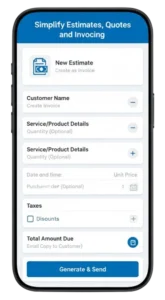
And don't underestimate the power of making their daily grind easier. Equipping your team with tools that eliminate headaches—like software that simplifies estimates, quotes, and invoicing—goes a long, long way toward boosting job satisfaction and loyalty.
A Few Lingering Questions
Even after you've got the basics down, a few common questions always seem to pop up when business owners start thinking about managing their technicians. Let's tackle them head-on, because getting these details right can make a huge difference in how smoothly your field operations run.
What Is the Difference Between a Field Technician and a Service Technician?
Honestly, in the trades, there's not much of a difference. The terms get tossed around and used for the same person all the time.
If you want to get technical about it, "field technician" really just hammers home the point that the work is done out in the field, at the customer's site. A "service technician" could theoretically work in a repair shop. But for an HVAC, plumbing, or electrical business, your techs are always on the move, so they're all field technicians by nature.
How Can I Measure My Field Technician's Performance?
You can't manage what you don't measure. The key is to focus on a handful of Key Performance Indicators (KPIs) that tell you the real story about efficiency and customer happiness.
- First-Time Fix Rate: Did they solve the problem on the first visit? This is a huge indicator of skill and preparation.
- Jobs Completed Per Day: This one is straightforward—it’s a clear look at their daily productivity and how well they manage their time between jobs.
- Customer Satisfaction Scores: Nothing speaks louder than direct feedback. Are customers happy with the tech's professionalism and the quality of the repair?
Modern field service management software is a game-changer here. It tracks all of this automatically, so you can see exactly who your top performers are without sifting through paperwork or just going on a gut feeling.
What Is the Best First Step to Improve Technician Management?
If you want the single biggest bang for your buck, get your workflow out of the paper age. Seriously.
Ditching the clipboards, messy work orders, and frantic phone calls for a dedicated field service management (FSM) platform is the most impactful move you can make. It gives you a single source of truth for dispatching, job details, and billing, which clears up communication instantly and gives you a real-time view of what’s happening in the field.
Ready to give your technicians the tools they need to shine and get your whole workflow running like a well-oiled machine? TackonFSM pulls scheduling, dispatch, inventory, and invoicing into one place, helping you close more jobs and collect payments faster. Learn more and start your free trial today.