
The Ultimate HVAC Price Calculator for Profitable Quotes
Tired of staring at a spreadsheet, trying to piece together a quote? For too many HVAC contractors, this is the daily reality. It's a manual grind filled with guesswork, outdated part prices, and forgotten overhead costs. This old-school method often leads to two painful outcomes: you either underbid and kill your profit, or you overbid and lose the job.
It's time to stop guessing.
Move Beyond Spreadsheets with an HVAC Price Calculator
Think of a dedicated HVAC price calculator as your business's central profitability engine, not just a simple math tool. It's the system that makes sure every bolt, every hour of labor, and every dollar of overhead gets accounted for, every single time. This is where you move from hoping you're profitable to knowing you are.
Why Manual Quoting Is a Recipe for Lost Profits
The biggest problem with spreadsheets is that they're static. They don’t update on their own, they can't enforce your pricing rules, and they're a breeding ground for human error. One bad formula or an old part price can silently drain thousands of dollars from your bottom line over the course of a year.
An integrated system turns this chaotic process into a repeatable science. To build an accurate, bulletproof quote, you absolutely need to include:
- Parts and Materials: The real cost of every single component.
- Labor Costs: Your technicians' time, valued correctly.
- Overhead Recovery: All the hidden costs of keeping the lights on (insurance, truck maintenance, software, etc.).
- Profit Margin: The money you actually take home.
The U.S. HVAC systems market is expected to rocket to USD 54,021.0 million by 2033. In a market this fierce, contractors relying on manual methods often underprice jobs by 10-20% on parts and labor alone. With around three million systems replaced in the U.S. each year, even tiny miscalculations add up to massive losses. This is why having a tool with an up-to-date parts database and built-in margin protection isn't just nice—it's essential for survival.
Comparing Manual Quoting vs an Integrated HVAC Calculator
The difference between wrestling with a spreadsheet and using an integrated system is night and day. One is a constant source of friction and risk, while the other becomes a powerful engine for growth and consistency.
| Feature | Manual Quoting (Spreadsheets) | Integrated Calculator (TackonFSM) |
|---|---|---|
| Part Pricing | Static and often outdated; requires manual lookup. | Dynamic and up-to-date; pulls from a live database. |
| Labor Calculation | Prone to guesswork and inconsistent rates. | Standardized rates and hours, ensuring consistency. |
| Overhead | Easily forgotten or miscalculated. | Automatically applied based on preset business rules. |
| Profit Margin | Relies on manual entry; easy to underbid by mistake. | Enforces minimum margins, protecting profitability on every job. |
| Speed & Efficiency | Slow and time-consuming, requires double-checking. | Generates professional quotes in minutes. |
| Integration | Standalone; requires manual data transfer to other systems. | Seamlessly connects to scheduling, inventory, and invoicing. |
Moving to an integrated platform isn't just an upgrade; it's a fundamental shift in how you protect your business's financial health.
The Power of an Integrated Quoting System
When you build your price calculator directly into a Field Service Management (FSM) platform like TackonFSM, it becomes more than just a tool—it becomes a core business driver. It connects your quoting directly to scheduling, inventory, and invoicing, which means no more entering the same data over and over again. The entire workflow, from the first call to the final payment, becomes one smooth, connected process.
This is what a modern, integrated quoting interface looks like inside a complete FSM platform.
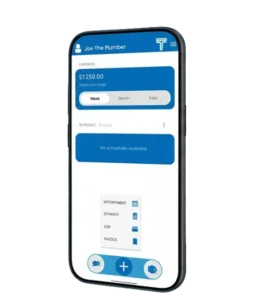
The dashboard gives you a single screen to run your entire operation, turning complicated data into clear actions. It makes quoting a simple, seamless part of your day. Understanding why field service management software matters is the first step toward building a more resilient and profitable business.
The Anatomy of a Perfect HVAC Quote
Building a profitable quote is a lot like following a recipe. If you leave out a single ingredient, you can mess up the whole thing. The result? You either lose money on the job or quote so high you scare the customer away. A good quote isn't just a number you pull out of thin air; it’s a careful calculation that covers every single cost.
To get it right every time, you need to account for seven core components in every estimate. This is where an HVAC price calculator becomes your best friend. It’s not just doing math—it's making sure every cost is measured and included, turning what feels like guesswork into a reliable, repeatable process.
This flowchart shows the difference between scrambling with spreadsheets and using a system built for profit.

As you can see, shifting from manual tools to an automated calculator is the most direct path to protecting your profits on every single job.
The Raw Materials: Parts Cost
This one’s the most obvious: the cost of parts. We're talking about the wholesale price you pay your supplier for every capacitor, contactor, filter, and coil you need. It’s the physical foundation of the work you do.
But here’s a rookie mistake I see all the time: just passing that cost straight to the customer. Your cost is just the starting point. It doesn't include any profit for you, nor does it cover the time and effort it takes to source, stock, and manage all that inventory.
The Value of Expertise: Labor Rates
Your labor rate is so much more than what you pay your tech per hour. It’s the price tag on their skill, their training, and years of hard-won experience. It's what allows them to diagnose a tricky problem in minutes instead of hours.
A properly calculated labor rate needs to cover:
- Wages and Benefits: The direct pay and perks for your team.
- Training and Certifications: The ongoing investment that keeps their skills sharp.
- Non-Billable Time: All that time spent driving between jobs, in training, or in team meetings.
If you miss any of these, you’re essentially paying for your techs to work for someone else, not making a profit on their expertise.
Getting to the Job: Trip Charges
A trip charge—some call it a service call fee—is what covers the cost of getting a skilled technician and a truck full of parts to a customer's front door. It’s a separate, upfront fee that acknowledges the resources it takes just to show up.
This fee isn't profit; it's cost recovery. It’s for the fuel, vehicle maintenance, insurance, and the tech’s drive time. Waiving this fee without a good reason is like offering free delivery on a pizza—it eats directly into your margin before you've even started the real work.
Keeping the Lights On: Overhead
Overhead costs are the silent killers of profit. These are all the expenses you have to pay just to keep your business running, whether you’re busy or slow. Think of it as the cost of unlocking your doors every morning.
Your overhead is everything you pay for whether your phone rings or not. Accurately calculating it and applying a piece of it to every job is the single most important step toward building a financially healthy HVAC business.
Common overhead expenses include:
- Rent for your office or shop
- Utilities like electricity and internet
- Software subscriptions, like your FSM
- Insurance (liability, vehicle, workers' comp)
- Office staff salaries
- Marketing and advertising
A solid HVAC price calculator automatically bakes a portion of these costs into every quote, ensuring each job pays its fair share to keep the business going.
Your Profit Engine: Markup
Finally, we get to the good part: markup. This is the amount you add to your parts and labor costs to actually make money. It’s not optional. It’s the engine that fuels your company's growth, lets you invest in better tools, and rewards you for the risk of owning a business.
Markup isn’t a one-size-fits-all number, either. You should apply it strategically. A common, inexpensive filter might get a higher markup, while a very expensive compressor might get a lower one to keep the final price competitive.
The Safety Net: Minimum Margin
While markup is what you add to your cost, margin is the slice of the final price that is pure profit. A minimum margin is your safety net. It's a rule you program into your pricing system that stops anyone on your team from creating a quote that drops below a certain profit level.
For example, if you set a 25% minimum margin, the system would literally prevent a quote from being sent if the profit fell below a quarter of the total price. This is an essential guardrail that saves you from accidental underbidding, especially when you start offering discounts.
The Final Piece: Sales Tax
The last piece of the puzzle is sales tax. It seems simple enough, but when you're quoting manually, it’s surprisingly easy to forget or apply the wrong local rate. A good FSM system automatically calculates and adds the correct sales tax based on the job's location, making sure you stay compliant and don't end up paying the government out of your own pocket.
How to Build a Quote That Wins Jobs

Knowing all the cost components is half the battle. The real trick is putting them together into a quote that a customer can understand and feel good about approving. This is where your numbers meet human psychology. A great quote doesn't just list prices; it builds trust and makes it easy for the customer to say "yes."
So, let's walk through a real-world example of how an HVAC price calculator turns a simple service call into a perfectly priced, profitable job.
Building a Quote Step-by-Step
Picture this: you get a call for an AC that’s not blowing cold air. Your tech gets there, diagnoses a bad run capacitor—a classic repair. Now it’s time to build the quote on the spot.
Here’s how all those different cost layers stack up to create the final price:
- Parts Cost: The capacitor itself costs your shop $15. That’s your baseline.
- Labor Time: The tech figures it’s a one-hour job. Your fully-burdened labor rate (what it actually costs you to have that tech on the clock) is $120/hour.
- Overhead Recovery: The calculator automatically tacks on $30 to help cover your shop's rent, insurance, and other fixed costs.
- Markup: You've set a 200% markup on the part (which adds $30) and a 25% margin on the labor (adding another $40).
- Trip Charge: Finally, you add your standard $89 trip charge to cover the drive time and initial diagnostic work.
Trying to juggle these numbers on a notepad is a recipe for mistakes. With a tool like TackonFSM, all these rules are already programmed in, so every single cost is accounted for, every single time. It's the key to making your estimates consistent and profitable.
Choosing Your Pricing Strategy
Once your costs are covered, you have to decide how you're going to present that final price. In the HVAC world, it usually comes down to two models: the old-school Time and Materials (T&M) or the more modern Flat-Rate Pricing.
Time and Materials (T&M)
This is the traditional way: you bill the customer for the actual hours your tech works, plus the cost of the parts. It feels transparent, but it puts all the risk squarely on the customer's shoulders. If a "simple" job hits a snag and takes an extra two hours, their bill skyrockets. That uncertainty makes a lot of homeowners nervous.
Flat-Rate Pricing
This model bundles everything—parts, labor, overhead, profit—into one fixed price you give the customer upfront. They know exactly what they're paying before you even pick up a wrench, which is a massive trust-builder.
The risk shifts to you, the contractor. If you nail the job quickly, your profit margin gets a nice little boost. If it takes longer than you planned, that extra time eats into your profit.
For most standard repairs and maintenance, flat-rate pricing is the clear winner. It eliminates price anxiety for the customer, which means you get more approvals and come across as far more professional.
Let's break down the difference:
| Aspect | Time & Materials (T&M) | Flat-Rate Pricing |
|---|---|---|
| Customer Risk | High: The final price is a mystery until the end. | Low: The price is locked in and known upfront. |
| Contractor Risk | Low: You get paid for every minute you're there. | High: Inefficiency directly hurts your bottom line. |
| Customer Perception | Can feel unpredictable and sometimes unprofessional. | Comes across as trustworthy, transparent, and modern. |
| Best For | Tricky diagnostic jobs or highly unpredictable repairs. | Standard repairs, system replacements, and maintenance. |
Automating for Accuracy and Speed
A good HVAC price calculator makes switching to a flat-rate system practically painless. It lets you create a digital "price book" filled with your most common jobs, with every cost, markup, and margin already baked in.
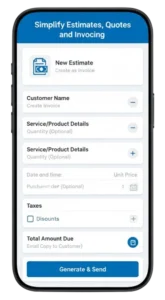
With an interface like TackonFSM's, your techs can pull up pre-built services and generate a professional, branded estimate in seconds. This eliminates the guesswork and ensures every quote that goes out is consistent and profitable. You can see more about how to simplify estimates, quotes, and invoicing here.
Instead of handing the customer a confusing breakdown of hourly rates and part costs, your tech presents a single, clear option: "Replace Run Capacitor: $324." That clarity gives customers the confidence to make a quick decision.
At the end of the day, a winning quote is one that’s profitable for you and easy for your customer to approve. It’s built on solid data, a smart pricing strategy, and a professional delivery. Of course, getting the quote right is just one piece of the puzzle; you also need a steady stream of leads, which is where effective HVAC contractor SEO that drives booked jobs comes in. By automating the math, you let your team focus on what they're best at: doing great work and taking care of customers.
Avoiding the Pricing Mistakes That Sink HVAC Businesses
In the HVAC world, your profit isn't just about the big wins—it's about stopping the small, consistent losses. Most businesses don't go under from one catastrophe. They get sunk by a thousand tiny leaks that slowly drain the life out of their profitability.
These are the subtle, everyday mistakes that a good HVAC price calculator is built to prevent. They’re the kinds of things that probably sound painfully familiar—the stories you and your techs trade that make you just shake your head.
The Hidden Profit Leaks in Every Job
One of the most common ways money vanishes is by underestimating labor on a complex install. A job looks clean on paper, but you get on-site and find weird structural issues or an access point that’s a nightmare. Without a system that accounts for those variables, your tech might quote three hours for a job that takes five. Guess who eats the cost of those extra two hours? You do.
Another classic is forgetting to bill for that unplanned run to the supply house. When a tech has to leave the job to grab a part they didn't have on the truck, you're losing more than just time. You’re burning fuel, putting wear on the vehicle, and paying wages for non-billable drive time. If your pricing doesn't account for this reality, you're basically paying for your own team's trips.
The most dangerous mistakes are the ones that feel insignificant in the moment. A forgotten part, an hour of unbilled labor, or a quote from an old price book can seem minor, but repeated across hundreds of jobs, they can cripple a business.
Using an outdated price book might be the most insidious leak of them all. The cost of a compressor jumps 15% last month, but your team is still quoting from the old price sheet. Just like that, your margin is gone. In a market this volatile, a paper price book is obsolete the second you print it.
Why Even Small Jobs Need Full Costing
One of the biggest mental traps for owners and techs is failing to apply full overhead to a "quick" service call. It's easy to think a 30-minute capacitor swap doesn't need to carry its share of the shop's rent, insurance, or software licenses. But it absolutely does.
Every single job, no matter how small, has to contribute to keeping the lights on. When you skip this step, your bigger jobs end up subsidizing the smaller ones, and you create a business model that's dangerously out of balance.
These are those "aha" moments where you can physically see profit slipping through the cracks. The good news? These leaks are entirely fixable.
- Underestimated Labor: Your pricing tool should have templates for different job complexities.
- Forgotten Parts Runs: An integrated inventory system tells a tech what they need before they leave the shop.
- Outdated Prices: A cloud-based price book updates costs for your entire team in real time.
- Neglected Overhead: Your calculator has to automatically bake overhead into every single quote. No exceptions.
This isn't just about quoting; it's about building a protective shield around your bottom line.
Building Guardrails for Your Profitability
The real, permanent fix is a system with built-in safeguards. Think of a tool like TackonFSM not just as a calculator, but as a set of guardrails for your business. It's designed specifically to head off these costly human errors.
For instance, its minimum margin protection literally makes it impossible for a tech to send a quote that falls below your profit threshold. If they add a discount that pushes the margin too low, the system flags it and forces a review. That one feature is a powerful safety net.
In a market seeing this much growth, you can't afford to be inefficient. The U.S. HVAC services market was valued at USD 17.93 billion in 2025 and is projected to climb to $25.35 billion by 2031. With nearly 90% of U.S. homes running AC and around 400,000 HVACR mechanics in the field, wasting time on double-entry is a massive hidden cost.
Integrated Field Service Management software solves this by connecting estimates directly to jobs and pulling parts from an elastic database automatically. You can learn more about the booming HVAC services market from Mordor Intelligence. This kind of automation is what lets you capture your fair share of that growth, especially in hot areas like energy-efficiency retrofits.
Connecting Your Quote to Your Cashflow

Nailing the price on a quote is just the first step. Getting the customer to say "yes" is a win, for sure, but the real magic of a modern HVAC price calculator is what happens after that approval comes through. True business growth happens when that estimate seamlessly connects to every other part of your operation, turning one piece of data into the engine that drives your entire workflow.
Think of it like this: a disconnected quoting process is like a relay race where each runner stops to write down what just happened before passing the baton. It’s slow, it’s clunky, and it’s a miracle if someone doesn't drop the baton along the way. An integrated system, on the other hand, is one fluid motion from start to finish.
From Digital Signature to Scheduled Job
The journey begins the moment a customer approves your quote. With a system like TackonFSM, they can sign off digitally right from their phone or laptop. The second they tap "approve," the dominoes start to fall in the right direction.
That approved estimate instantly becomes a scheduled job in your system. No re-typing. No printing work orders. No chance for the office to misread a tech’s scribbled notes. The information flows automatically, getting rid of all the administrative friction that bogs down so many shops.
An integrated workflow is the shortest path between a customer’s approval and cash in your bank. It removes the manual steps that introduce errors, waste time, and delay payments.
This isn’t just about making things easier; it’s about being faster and more accurate. The parts listed on the original estimate are automatically reserved from inventory, which means you avoid that dreaded call from a tech who’s missing a critical component on-site. The job details, customer notes, and equipment info all pop up on the technician’s phone, giving them everything they need to get it right before they even start their truck.
The Impact of an Integrated Data Flow
The difference between doing things manually versus using an integrated system is night and day. A manual process is a minefield of delays and potential mistakes. An integrated system creates a smooth, efficient pipeline that takes you straight from quote to cash.
Here's a look at how that plays out in the real world.
Data Flow in a Disconnected vs an Integrated System
| Workflow Step | Disconnected Process (Manual) | Integrated Process (TackonFSM) |
|---|---|---|
| Quote Approval | Customer prints, signs, and scans a PDF back to you. | Customer provides an instant digital signature on any device. |
| Job Creation | Office staff manually re-enters all job details. | The quote converts to a job with a single click. |
| Parts Management | Tech has to manually check van stock or call the shop. | Parts are automatically allocated from inventory. |
| Invoicing | Admin staff creates an invoice from scratch, copying data. | The completed job converts to a pre-filled invoice instantly. |
| Payment | You mail an invoice and wait for a check to arrive. | A payment link is sent via text or email for immediate online payment. |
This seamless flow isn’t just a nice-to-have. It crushes administrative errors, massively cuts down on paperwork, and frees up your team to get more profitable work done each day.
Accelerating Your Quote-to-Cash Cycle
At the end of the day, it's all about getting paid for your work. Once the job is done, your tech can mark it complete, and the system turns it into a finalized invoice with one click. Every line item, part, and labor charge from the original estimate is already there, ensuring the invoice is 100% accurate.
From there, you can text or email the customer a secure payment link so they can pay with a credit card right on the spot. This one change can shrink your payment cycle from weeks to mere hours. This is how your price calculator stops being just a quoting tool and becomes the heart of a lean, efficient, and cash-flow-positive operation. To really connect your quotes to your company's financial health, it's worth checking out a guide to flawless cash flow calculation.
How to Choose the Right HVAC Pricing Software
Picking the right HVAC price calculator isn't just about crunching numbers. It's about finding a system that plugs the profit leaks and makes your whole operation run smoother. When you’re ready to ditch the spreadsheets for good, you need a tool that was actually built for the realities of a service business like yours.
Think of it less as a calculator and more as a business partner. The right software handles the grunt work of pricing, freeing you up to focus on landing bigger jobs and growing the company.
Your Essential Software Checklist
As you start looking at different options, keep the common profit drains we've talked about in mind. Your software shouldn’t just be a standalone tool; it needs to be the central hub that connects your guys in the field with the team back at the office.
Here’s what you absolutely need to look for:
- A Flexible Parts Database: Your parts list is massive and always changing. You need a cloud-based database that makes sure every quote is built on up-to-the-minute pricing, not what a part cost six months ago.
- Customizable Markup Rules: One size never fits all. The software has to let you set different markups and margins for different parts, labor rates, and even specific types of jobs. This is how you stay in control of your profitability.
- Margin Protection: This is your financial safety net. A good system will stop a quote from going out the door if it dips below your minimum required profit. No more accidental low-balling.
- Seamless Estimate-to-Job Conversion: Once a customer says yes, the software should turn that approved estimate into a scheduled job with a single click. This completely cuts out the manual data entry that leads to mistakes.
- Solid Mobile Access: Your techs are your salespeople. They need to be able to build a professional quote, send it to the customer, and get it signed off right there on their phone or tablet.
Finding the Right Fit for Your Business
The global HVAC market is huge, hitting $263.56 billion in 2024, and the U.S. alone accounts for $126.26 billion of that. While the big players like Daikin and Carrier dominate, smaller contractors win by being smarter and more efficient. For owners looking for an alternative to platforms like Jobber or ServiceTitan, the right tool makes all the difference.
TackonFSM is built for teams of 1-20 techs. With a 14-day trial and free migrations, it helps you compete by giving you a 3,000+ part database, automatic markups, and inventory tracking to keep your margins safe. You can explore more about the HVAC market and its leading brands to see where you fit in.
Choosing software isn’t just about features; it’s about finding a partner that understands the unique needs of a small to mid-sized contractor. Simplicity, transparent pricing, and comprehensive support are just as important as the technology itself.
That’s exactly what TackonFSM aims to be. It delivers a powerful, straightforward system that helps you grow without the insane cost or complexity of enterprise-level software. It's the HVAC price calculator built for contractors who are serious about getting profitable. You can see for yourself how the right field service scheduling software saves time and makes your business more efficient.
Got Questions About HVAC Pricing? We’ve Got Answers.
Figuring out your pricing can feel like a moving target, but it doesn't have to be. Let's tackle some of the most common questions HVAC pros ask when they're trying to dial in their numbers.
How Do I Actually Figure Out My Overhead?
Your overhead is everything you spend just to keep the lights on and the trucks running, completely separate from the parts and labor for a specific job. To find your true overhead, you need to add up all of those indirect monthly expenses. This total is the magic number that every single job needs to help pay for.
It's the little things that often get missed but can seriously eat into your profits. Think about everything, including:
- Vehicle insurance, fuel, and routine maintenance
- Monthly software subscriptions (like your field service management tool)
- Office rent, utilities, and even the coffee in the breakroom
- Workers' comp and liability insurance premiums
- Your marketing budget for Google Ads or flyers
What’s a Good Markup for Parts and Labor?
There’s no magic number here. The right markup for your business depends entirely on your overhead and how much profit you need to make. But, we can look at some industry rules of thumb to get you started.
Service and repair work can almost always handle a higher markup than a full system installation. Many successful shops use a 2x-3x markup on smaller, common repair parts, but then apply a much lower, carefully calculated margin on big-ticket items like a new condenser or furnace.
Think of your markup as more than just profit. It’s the engine that covers your overhead, ensuring each job pulls its weight so your company can be stable and grow.
How Do I Keep Up With Constantly Changing Parts Prices?
This is where a modern HVAC price calculator, especially one tied into your main business software, becomes your secret weapon. When your supplier bumps up the price on a capacitor, you don't have to scramble.
You just update that one price in your central parts database. Instantly, that new price is live for everyone on your team. Every quote they build from that moment on will use the correct, current pricing, protecting your profit margins from being wiped out by a surprise invoice.
Ready to build faster, more accurate quotes that protect your profits? TackonFSM’s estimate builder combines an elastic parts database with customizable markups and minimum margin protection to ensure every job is profitable. Discover how TackonFSM can transform your quoting process.