Contractor Job Scheduling Software: Streamline Projects & Boost Profitability
Let’s be honest, for most contractors, the “schedule” is a fragile house of cards. It’s a mix of a chaotic whiteboard, endless spreadsheets, a storm of text messages, and a prayer that everything holds together for one more day. Contractor job scheduling software is the tool that finally brings order to that chaos.
Think of it as the central nervous system for your entire field service business. It’s one place to manage everything from the moment a customer calls to the second their payment hits your account. This isn't just about putting appointments on a calendar; it's about making sure your technicians are at the right place, at the right time, with the right parts to get the job done.
Moving Beyond Manual Chaos
If you're managing a team—whether it's two technicians or twenty—you know the pain of manual scheduling all too well. It’s a constant juggle. A technician gets stuck in traffic, a customer needs to reschedule, an emergency repair call comes in—and suddenly, your perfectly planned day is in shambles. This reactive firefighting doesn't just waste time; it actively bleeds money through lost jobs and inefficiency.
It's like trying to navigate a bustling city with a crumpled paper map. Sure, it gives you a general idea of where you're going, but it can't warn you about a sudden traffic jam or a closed road. You’re essentially driving blind, hoping you don't hit a dead end.
The Digital GPS for Your Business
Contractor job scheduling software is the live, real-time GPS for your entire operation. It gives you a bird's-eye view of everything happening in the field, right now. You can see where every technician is, what job they’re working on, and how their schedule is shaping up for the rest of the day, week, and month.
This technology is far more than just a digital calendar—it's a strategic command center. It pulls every critical piece of your workflow, from dispatch and routing to invoicing and payments, into a single, intelligent system that actually adapts to the unpredictable reality of field service.
Instead of scrambling to put out fires, you can make smart decisions in seconds. Need to squeeze in a high-priority emergency call? A quick look at the digital dispatch board shows you exactly which tech is closest and has the right skills and availability. A customer calls asking for an ETA? The system gives you an accurate answer without you having to interrupt your tech on their current job.
Let's break down how this fundamentally changes the way you operate. The table below illustrates the night-and-day difference between clinging to old methods and embracing a modern scheduling tool.
From Manual Chaos to Automated Control
| Task | The Old Way (Paper and Spreadsheets) | The New Way (Scheduling Software) |
|---|---|---|
| Dispatching Jobs | Frantic phone calls and texts. "Who's free? Where are you?" | Drag-and-drop jobs onto a visual calendar. The system suggests the best tech. |
| Updating the Crew | Manually calling or texting technicians with every change or update. | Technicians get instant updates and job details on their mobile app. |
| Tracking Progress | "Hey, are you done with that job yet?" Hopeful check-in calls. | Real-time job status updates from the field. Office sees progress instantly. |
| Customer Communication | "He should be there sometime this afternoon…" Vague ETAs. | Automated text and email reminders with accurate arrival windows. |
| Invoicing & Payments | Hand-written invoices, trips to the office, chasing checks for weeks. | Digital invoices created on-site. Technicians can capture payment immediately. |
This isn't just about being more organized; it's about gaining control. By embracing this modern command center, you swap guesswork for data-driven decisions. To dig deeper into why this shift is so critical, you can explore the real-world reasons why field service management software matters for any growing trade business.
Ultimately, this technology isn't an expense. It's an investment in efficiency, control, and the future scalability of your business.
The Core Features That Power Your Field Operations
Alright, let's move past the big-picture idea and get into what this software actually does. What are the tools inside the box that solve the real, expensive problems you face every day?
Think of these features less like a random collection of apps and more like the interconnected gears in a high-performance engine. Each gear has a specific job, but they all work together to drive your entire field operation forward, making it more powerful and a whole lot smoother.
These tools are specifically built to eliminate the daily friction points—the frantic phone calls trying to find a tech, the misplaced work orders, and the profit-killing mistakes from re-typing the same information over and over. Let's break down the essential components that turn operational chaos into a real competitive advantage.
Visual Drag-and-Drop Dispatching
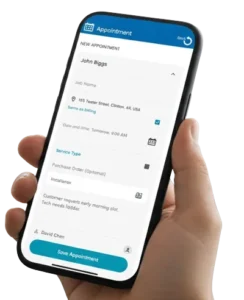
The dispatch board is the heart of any scheduling system. Modern software takes this from a basic calendar and turns it into a living, breathing command center for your entire operation. Imagine looking at a screen that shows your whole day, week, or month, with jobs appearing as color-coded blocks that you can literally drag and drop to reassign or reschedule in seconds.
This visual approach is more than just a convenience; it’s a strategic weapon. When that emergency call comes in about a burst pipe, your dispatcher doesn't have to scramble and make a dozen phone calls to see who’s free. They can see every technician's real-time location, current job status, and upcoming schedule at a single glance. This means they can dispatch the closest, most qualified plumber instantly.

This kind of clarity allows dispatchers to optimize routes on the fly, squeeze more jobs into the day, and handle last-minute customer requests without throwing the entire schedule into disarray.
The Technician Mobile App
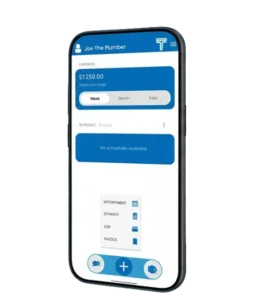
Your technicians are the face of your business, but they can't do their best work if they're tethered to the office by constant phone calls and paperwork. A good mobile app turns their smartphone or tablet into a mobile workstation, giving them everything they need to operate professionally and with confidence.
With a mobile app, your techs can finally:
- See the full picture: They get complete work orders with customer history, critical site notes, and the exact parts list right on their device. No more guessing games.
- Update the office in real-time: A simple tap to mark a job as "en route," "started," or "finished" keeps everyone in the loop without a single phone call.
- Capture photos and notes: Techs can snap pictures of the completed work or a problem area and add notes, creating a bulletproof record for your files and for the customer.
- Get paid on the spot: Forget chasing invoices. The app lets them process credit card payments or capture a signature right then and there, as soon as the job is done.
Putting this power in your techs' hands is a total game-changer. It cuts down on the endless back-and-forth between the field and the office, freeing up your technicians to focus on the work and your dispatchers to focus on scheduling more jobs.
Integrated Estimating and Invoicing
Let’s be honest: how much time does your team burn re-typing information from an estimate into a work order, and then from the work order into an invoice? This isn’t just slow; it’s a breeding ground for typos and errors that can cost you real money.
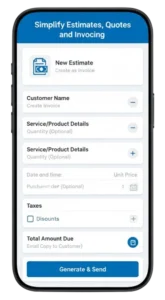
Job scheduling software with built-in estimating and invoicing closes these gaps for good. You can create a professional-looking estimate using your pre-loaded parts and labor rates, email it to the customer for digital approval, and then—with a single click—convert that approved estimate into a work order.
Once the job’s done, that work order turns into an invoice just as easily. For a closer look at how this works, you can learn more about how to simplify estimates, quotes, and invoicing.
The impact of this kind of integration is huge. The market for project management and scheduling tools was valued at USD 3.43 billion in 2024, with a staggering 49.20% of construction firms already using software specifically for project scheduling. When half the industry adopts a tool, it’s no longer a luxury—it’s a necessity for staying competitive and profitable.
How Smart Scheduling Drives Real Profitability
Let's be honest, the real appeal of contractor job scheduling software isn't just about making your day less chaotic—it's about how that newfound order fattens your wallet. Beyond the fancy features, smart scheduling is a profit-generating machine. It systematically finds and plugs the hidden leaks that drain money from your business every single day.
When your operations run like a well-oiled machine, every other part of your business gets a lift. You stop burning cash on wasted fuel, you prevent costly mistakes, and you give your team the tools to be more productive. Let's break down how this translates into a real return on investment across four key areas.

Increase Your Daily Job Capacity
Ever wonder how many more jobs your best tech could handle if they weren't stuck in traffic for an hour every day? With route optimization and intelligent dispatching, your team spends less time behind the wheel and more time on the tools. This isn't about pushing your guys to work faster; it's about helping them work smarter.
By organizing schedules visually and assigning the closest tech to the next job, you can often squeeze one or two extra high-margin jobs into each day. Over a month, that adds up to a serious revenue boost, all without adding a single truck to your fleet.
Protect Your Profit Margins
Underbidding a job is one of the quickest ways to lose your shirt. We've all been there. Manual estimates are riddled with potential errors, from forgetting a crucial part to miscalculating labor. Integrated estimating tools built into scheduling software put an end to that guesswork.
You can build quotes from a pre-loaded catalog of parts and labor rates, apply consistent markups, and even set minimum profit margins.
When an approved estimate instantly becomes a work order and then an invoice, you kill the risk of human error. This seamless flow guarantees you bill for every part and every minute of labor, protecting your margins on every single job.
This digital shift is becoming essential. The construction management software market is expected to hit a staggering USD 17.72 billion by 2031, which tells you that smart contractors are investing heavily in tools that protect their bottom line.
Reduce Crippling Administrative Overhead
Take a second and think about how much time your office staff burns on repetitive, low-value tasks. Chasing down paperwork from techs, manually punching job details into QuickBooks, and answering the same "Where's my technician?" phone calls over and over. This administrative drag is a massive hidden cost.
Contractor job scheduling software automates these headaches:
- Automated Notifications: Customers get a text when their tech is on the way, which drastically cuts down on inbound calls to your office.
- Digital Workflows: Technicians submit digital work orders, photos, and notes right from the field, so you can say goodbye to messy, lost paperwork.
- Accounting Sync: Job and invoice data flows right into your accounting software, saving hours of mind-numbing data entry every week.
This automation frees up your office team to focus on things that actually grow the business, like improving customer service, marketing, or strategic planning.
Dramatically Improve Your Cash Flow
Waiting 30, 60, or even 90 days to get paid puts an incredible strain on your business. The old-school process of mailing paper invoices and waiting for a check to arrive is a cash flow killer. Modern scheduling software closes this gap by helping you get paid in days, not weeks.
With an integrated mobile app, your technicians can generate a digital invoice right on-site and take a credit card payment the second the work is done. For those customers who need to pay later, you can send a secure payment link via text or email. Getting paid faster means you have the cash on hand to make payroll, buy materials, and invest back into your company. For a closer look, see how field service scheduling software saves you time and money.
Of course, while efficient scheduling is the key to internal profitability, growing your trade business also requires a solid marketing game. You can explore some valuable contractor marketing tips to pair with your new operational firepower.
Choosing The Right Software For Your Trade Business
Picking the right contractor job scheduling software can be overwhelming. You're hit with a dozen different options, each one promising to be the magic bullet for your business. It's enough to make you want to stick with your old whiteboard and spreadsheets.
But finding the right fit doesn't have to be a headache. The trick is to ignore the flashy sales pitches and focus on what will actually make a difference for your HVAC, plumbing, or electrical team day in and day out. It’s not about finding the software with the longest feature list; it’s about finding the one with the right features that your team will actually use.
Let’s break down how to evaluate your options and make a smart choice that will feel less like an expense and more like an investment in your company's future.
H3: Focus On Simplicity And Ease Of Use
Here’s the hard truth: if the software isn't easy to use, your team won't use it. Period. The most powerful system in the world is worthless if your technicians and office staff find it confusing or clunky.
You need something with a clean, intuitive layout that just makes sense. A good way to test this is to get a free trial and see what you can do without cracking open a manual. Can your dispatcher create and assign a job in under a minute? Can a tech pull up the mobile app and instantly see what they need for the day? If the basics aren’t obvious, that’s a huge red flag.
H3: Prioritize Powerful Mobile Functionality
Your technicians are the face of your business, and their efficiency on the road directly impacts your bottom line. The mobile app they use every single day should be a tool that helps them, not one that gets in their way. A slow, buggy, or complicated app is a recipe for frustration and wasted time.
When looking at the mobile side, here are the absolute non-negotiables:
- Offline Capability: Your techs are constantly in basements, rural areas, or new construction sites with spotty service. The app has to work offline and sync up automatically when a connection is available again. No excuses.
- Real-Time Updates: The office needs to be able to push a last-minute schedule change and know the tech will see it instantly. The app should also give techs immediate access to the full customer history and work order details.
- On-Site Payments: Giving your techs the ability to create an invoice and take a credit card payment right on the spot is a game-changer for cash flow.
A great mobile experience means fewer frantic calls between the field and the office, which frees up everyone to focus on their real jobs.
H3: Verify Critical Integration Capabilities
Modern software shouldn’t exist on an island. Your scheduling platform has to connect smoothly with the other tools you depend on, especially your accounting software. If it doesn't, you're just swapping one manual headache for another by forcing your team into hours of double data entry.
The most crucial integration for any trade business is with accounting software like QuickBooks. A seamless, two-way sync ensures that when an invoice is created or paid in your scheduling software, the information flows directly into your financial records without anyone having to lift a finger.
This kind of automation doesn't just save a ton of admin time; it also wipes out the costly human errors that creep in when you're manually re-typing numbers. As you explore options, this comprehensive guide to small business scheduling software can offer more perspective on what features drive growth.
H3: Demand Transparent And Fair Pricing
Finally, you need to dig into the pricing model. A lot of software companies will hook you with a low price, then sting you with hidden fees for things you actually need—like more users, critical features, or even customer support.
Always look for a provider with simple, transparent pricing. Ask them these questions directly:
- Are there any setup fees or mandatory implementation costs?
- Is training and ongoing customer support included in our plan?
- Does the price change based on how many jobs we book or how many customers we have?
You want a plan that fits your business today but can easily scale with you as you bring on more trucks and techs. Don't get locked into a long-term contract or pay for a bloated "enterprise" system full of features you’ll never touch. Find a partner whose success is tied to yours.
Essential Software Evaluation Checklist for Contractors
Choosing the right software is a major decision. This checklist will help you systematically compare different platforms and ensure you’re asking the right questions to find a solution that truly fits your business needs.
| Feature or Consideration | Why It Matters to Your Business | Key Questions to Ask Vendors |
|---|---|---|
| Intuitive User Interface | If it's hard to use, your team won't adopt it. Simplicity reduces training time and increases efficiency from day one. | Can we get a live demo with our team? How long does it typically take for a new dispatcher or technician to get up to speed? |
| Mobile App Performance | Your field team lives on the mobile app. It must be fast, reliable, and fully functional, even without an internet connection. | Does the mobile app work completely offline? Can techs process payments, add photos, and update job notes without a signal? |
| Accounting Integration | Manual data entry between your field service software and accounting platform wastes time and leads to costly errors. | Do you offer a two-way sync with QuickBooks (Online/Desktop)? How "real-time" is the data sync for invoices, payments, and customers? |
| Scheduling & Dispatch | The core of the software. A visual, drag-and-drop calendar is essential for managing your team and responding to emergency calls. | Can we see tech locations on a map? How does the software handle recurring jobs or multi-day projects? |
| Invoicing & Payments | Getting paid faster is critical for cash flow. On-site invoicing and payment processing streamlines the entire process. | What payment processors do you integrate with? What are the transaction fees? Can we customize our invoice templates? |
| Customer Support | When you have a problem, you need help from a real person who understands your business, not a chatbot or a generic help forum. | Is live phone/chat support included in our plan? What are your support hours? Do you offer personalized onboarding and training? |
| Scalable Pricing | Your software should grow with you. Avoid plans with hidden fees or ones that penalize you for adding new users or scheduling more jobs. | Is pricing based on users, jobs, or features? Are there any setup fees or long-term contracts required? What's not included in the price? |
By using this checklist, you can move beyond the sales pitch and focus on the practical, real-world value each software can bring to your operations. A thorough evaluation now will pay dividends for years to come.
A Simple Plan For Implementation and Data Migration
Let's be honest. The number one reason contractors stick with clunky spreadsheets or outdated software isn't the cost of a new system—it's the fear of the switch. Just thinking about moving years of customer data, job histories, and parts lists is enough to give anyone a headache. It feels overwhelming, so you put it off.
But making the move doesn't have to be a nightmare. With a solid plan and the right partner, the transition can be surprisingly smooth. Think of it less like a chaotic, risky overhaul and more like moving into a bigger, better-organized workshop. You wouldn't just throw your tools in a heap; you’d label the boxes and have a plan. The same idea applies here.

The best part? You don't have to figure this out on your own. A good software provider acts like your dedicated moving crew, offering hands-on help to get your data from point A to point B, safe and sound.
Prepare Your Existing Data
First things first, you need to get your house in order. Before you can move anything, you have to know what you’ve got. This is actually a great excuse to do some digital spring cleaning.
Start by exporting your core data—customer lists, parts inventory, job history—from wherever it currently lives. That could be QuickBooks, another software, or a pile of spreadsheets. Comb through it. Look for duplicate entries, old client info you don’t need, or outdated pricing on parts. Cleaning this up now means you’re not bringing old messes into your shiny new system.
Set Up Your Team and Permissions
Once your data is clean, it's time to build the new digital workspace for your crew inside the contractor job scheduling software. This means creating accounts for every single person, from the office staff to the techs in the field.
But here’s a critical detail: not everyone needs the keys to the entire kingdom. Setting up user permissions is a must. This allows your technicians to see their schedules and job notes without being distracted by billing reports, while your office manager has everything they need to run the back end.
This isn't just about security; it’s about focus. Giving each person a view tailored to their role cuts down on clutter and confusion. It makes the software feel intuitive from day one and helps everyone get up to speed much faster.
Run a Pilot Test Before Going Live
You wouldn't buy a new truck and immediately send it out on a full day of calls without a test drive, right? Apply that same common sense to your new software. Before you flip the switch for the whole company, run a small pilot test.
Pick one trusted technician and one dispatcher. Have them run a few real-world jobs through the new system for a day or two. This simple test drive helps you:
- Spot workflow gaps: Find any confusing steps or snags before they impact the whole team.
- Check data accuracy: Make sure customer info and job notes are showing up correctly on the mobile app.
- Create a champion: Your pilot testers become your in-house experts who can help their coworkers get comfortable.
This small step catches minor hiccups before they become major headaches, making the full launch go off without a hitch.
Schedule Dedicated Team Training
Finally, block out dedicated time to get your entire team trained up. Don't try to cram it in between jobs or at the end of a long Friday. A focused session where people can actually pay attention and ask questions is essential for getting everyone on board.
The best software partners know this. That's why at TackonFSM, we provide free, hands-on onboarding to make this step painless. We'll walk your team through the new workflows until everyone feels confident and ready to hit the ground running.
Answers To Your Top Scheduling Software Questions
Making the jump to new software always brings up some practical questions. It's one thing to talk about features and benefits, but you need to know how it's actually going to affect your team's day-to-day. Let’s tackle the most common concerns we hear from contractors thinking about making the switch.
Our goal here is to give you straight answers, helping you move from wondering if it's worth it to knowing you're making the right call.
How Long Does It Take To Train My Team?
This is the number one question we get, and the answer is surprisingly simple: less time than you think. Modern scheduling software is built to be easy to pick up, especially for people who use a smartphone every day. While every company is a little different, we find that most office staff and technicians get the hang of the core functions—like dispatching jobs and updating work orders—in just a few hours.
A good software partner doesn't just hand over the login and disappear. They should offer hands-on onboarding that's specific to your team's roles. For instance, a dispatcher might spend a couple of hours learning the visual schedule, while your techs can usually master the mobile app in under an hour.
Is This Software Affordable For A Small Business?
Absolutely. The idea that this kind of tool is only for massive, enterprise-level companies is a total myth. Many platforms, including TackonFSM, have flexible pricing plans built specifically for small and medium-sized businesses, whether you have two trucks on the road or twenty.
The key is finding transparent pricing without a bunch of hidden fees or scary long-term contracts. The monthly cost should be a small, predictable investment that’s quickly paid back by the money you save on admin time and the extra cash flow from getting paid faster.
Think of it this way: if the software helps you squeeze in just one or two extra jobs a month, it has likely already paid for itself.
How Do I Get My Techs To Actually Use It?
Getting your technicians on board is make-or-break, and it all comes down to one thing: does it make their job easier, not harder? Field techs will fight any tool that feels clunky, slow, or adds more paperwork to their day. A really well-designed mobile app is the answer here.
When your techs realize the app gives them the entire customer history, parts info, and directions all in one place—so no more frantic calls back to the office—they'll come around fast. The best apps work even without a great signal, let them snap photos of the job, and take payment right on the spot. When the tool clearly makes their day less of a headache, adoption just happens.
Does It Integrate With QuickBooks?
Yes, and honestly, this should be a non-negotiable feature for any contractor. Double-entering invoice details from your scheduling platform into QuickBooks is a huge time-waster and a perfect recipe for expensive mistakes.
A solid contractor scheduling software will offer a seamless, two-way sync with your accounting system. This means when a job is finished and invoiced in the field, all the customer and payment information flows right into QuickBooks automatically. This one connection can easily save your office staff hours of mind-numbing data entry every single week, and it keeps your financial records accurate.
Ready to see how a modern, easy-to-use platform can solve these challenges and help your business grow? TackonFSM was built from the ground up for trade contractors who need powerful tools without all the complexity. Explore TackonFSM and start your free trial today.