
A Complete Guide to Work Order Management Systems
Ever felt like you're juggling a dozen different things just to get one job done? You've got customer calls, technician schedules, parts orders, and invoices all flying around. A work order management system is the tool that finally gets everything in one place.
Think of it as the central nervous system for your field service business. It’s a digital platform that takes a job from the first phone call straight through to the final payment, connecting every step along the way. It gets you away from messy paper stacks, confusing spreadsheets, and the constant back-and-forth phone tag that wastes everyone's time.
The Conductor of Your Business Orchestra
Running a field service business without a central system is a bit like an orchestra trying to play without a conductor. Your technicians in the field are the brass section, the office dispatchers are the strings, and the inventory manager is on percussion. Without someone to lead, they're all playing their own tune, and the result is just noise.
The old way of doing things is exactly that kind of chaos. It’s built on a shaky foundation of:
- Paper Invoices: Easily lost, smudged, or misread, which means billing mistakes and chasing down payments.
- Sticky Notes: Great for a quick reminder, but terrible for tracking an urgent job that gets buried under a pile of other notes.
- Whiteboards: A dispatcher’s best attempt to visualize the day, but totally invisible to the techs who are actually out on the road.
- Endless Phone Calls: "Where are you?" "Did you finish the job?" "Do you have the right part?" It's a constant, inefficient stream of check-ins.
This disjointed approach creates friction everywhere. Techs show up unprepared, customers have no idea when to expect them, and your office staff are left trying to piece together scribbled notes to create an accurate invoice. It’s exhausting and unprofitable.
From Chaos to Coordinated Action
A work order management system steps in as the conductor, bringing a sense of rhythm and harmony to your entire operation. It creates a single hub where every piece of information about a job—customer history, required parts, job status, final payment—lives and breathes.
A work order acts as the bridge between identifying a need and completing the work, whether it’s fixing equipment, performing preventive maintenance tasks, or managing facilities services. It transforms a request into an actionable, trackable job.
This isn't just a minor upgrade; it's where the entire industry is heading. The global market for these systems was valued at US$ 745 million in 2023 and is expected to skyrocket to US$ 1,662.66 million by 2031.
This massive growth signals a clear shift. Contractors are moving away from outdated, manual methods and embracing digital tools to stay competitive. For HVAC, plumbing, and electrical businesses, a modern platform isn't a luxury anymore—it's essential for survival and growth. You can learn more about why field service management software matters for today's contractors.
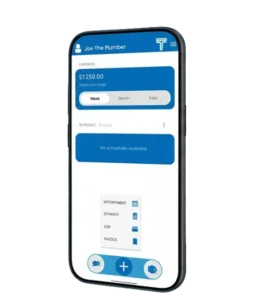
By connecting your team, the system ensures that when a customer calls, your entire "orchestra" is ready to play in perfect sync. The dispatcher instantly sees who's available, the tech gets all the job details on their phone, and the invoice is automatically generated the moment the work is done. It's a fundamental improvement in how you run your business.
Manual vs. Automated Work Order Management
The difference between the old way and the new way is night and day. While manual methods might feel familiar, they come with hidden costs in the form of inefficiency, errors, and poor customer experiences. A dedicated system introduces clarity and control.
Here’s a direct comparison of the two approaches:
| Process | Manual Method (Paper & Spreadsheets) | Work Order Management System (e.g., TackonFSM) |
|---|---|---|
| Job Creation | Handwritten notes, emails, or spreadsheet entries. Prone to missed details. | Standardized digital forms capture all required info from the first call. |
| Dispatching | Phone calls, text messages, and guesswork based on a whiteboard schedule. | Automated, optimized scheduling based on tech availability, location, and skills. |
| Field Updates | Techs call the office to report progress or problems. No real-time visibility. | Techs update job status, add notes, and upload photos directly from a mobile app. |
| Invoicing | Office staff manually create invoices from handwritten notes, often days later. | Invoices are generated automatically from the digital work order and sent instantly. |
| Customer History | Scattered across file cabinets or multiple spreadsheets. Hard to access quickly. | Centralized customer database with complete service history available in a few clicks. |
Ultimately, sticking with manual processes means you're constantly reacting to problems. A modern work order management system allows you to be proactive, giving you the tools to manage your business efficiently and set it up for future growth.
What’s Really Inside a Work Order Management System?
Think of a modern work order management system less like a simple digital notebook and more like a central command hub for your entire operation. It’s a complete toolkit where every feature is designed to solve a real, everyday headache. These tools connect your office staff, your techs in the field, and your customers, turning the daily scramble into a smooth, well-oiled machine.
Getting a handle on these core features is the key to understanding just how much this technology can boost your efficiency and, ultimately, your bottom line.
The difference between running your business on paper versus a dedicated system is night and day. One is pure chaos; the other is controlled efficiency.

This image says it all. You’re moving from a tangled mess of phone calls and paperwork to a single, unified platform where everything just works.
Your Scheduling and Dispatching Hub
The schedule is the heartbeat of any service business. A solid work order management system turns your old whiteboard or clunky spreadsheet into a live, dynamic hub. Your dispatcher gets a bird's-eye view of every tech—where they are, what they’re doing, and who’s free—all in real time.
Picture this: a frantic customer calls with a burst pipe. Instead of frantically calling technicians to see who's nearby, your dispatcher just glances at a map on their screen. They see the closest available plumber, drag the job onto their schedule, and boom—it's assigned. The system instantly pings the tech’s phone with all the job details. This isn't just about faster response times; it's about smarter routes, less wasted gas, and more jobs squeezed into every day.
The Tech's Best Friend: The Mobile App
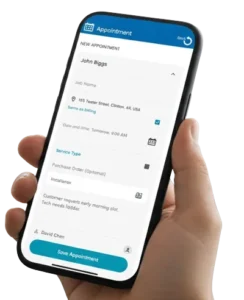
Out in the field, the mobile app becomes your technician's most powerful tool. It’s their office, their file cabinet, and their direct line to everything they need, all in their pocket. No more clumsy clipboards, no more "let me call the office," and no more driving back to grab forgotten paperwork.
Here’s what a tech can do right from their phone or tablet:
- Get the full story: Pull up the customer’s entire service history, site notes, and a list of needed parts before they even knock on the door.
- Follow digital checklists: For complex installations or safety checks, standardized checklists ensure no step is ever missed. This means higher quality work and fewer callbacks.
- Capture proof of work: Snap photos of the completed job to document everything. This protects your business from disputes and shows the customer exactly what was done.
- Update job status instantly: A quick tap lets the office and the customer know they’ve started, paused, or finished the job.
This puts real power in your technicians' hands. They can work more autonomously and efficiently because they aren't bogged down by administrative tasks.
From Quote to Cash, All in One Place
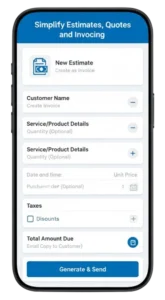
The gap between finishing a job and getting paid is where so many businesses bleed time and money. A good system closes that gap completely by tying the whole financial process together. Your techs can build a professional quote right on their tablet, pulling from a pre-set list of your parts and services.
Once the customer gives the thumbs-up on the quote, it instantly flips into a work order. When the job’s done, another click turns that work order into a finalized invoice. All the manual data entry—and the errors that come with it—is gone.
This massively speeds up your billing cycle. Instead of waiting for a tech to drop off paperwork that then sits in a pile for a week, you can text or email the invoice with a payment link the second the tools are packed up. Industry data shows that even an hour of unplanned downtime can cost a business $25,000 or more, and slow, inefficient billing is a major source of financial downtime. You can learn more in this guide on field service scheduling software that saves time. Getting paid faster means healthier cash flow, which is the fuel that keeps any trades business growing.
How a Work Order System Boosts Your Bottom Line
A powerful work order management system does more than just organize your schedule; it directly fattens your wallet. Every feature is built to plug financial leaks, capture revenue you might be missing, and create efficiencies that show up right on your balance sheet. This isn't about getting fancy software—it’s about making and keeping more money on every single job.
The real magic happens when you connect the system's tools to real-world business results. Think of it this way: every minute your office staff spends on the phone giving a customer a status update is a minute they aren't sending invoices or following up on quotes. Every trip a technician makes back to the shop for a forgotten part is a direct hit to that job's profitability.
A good, unified platform attacks these hidden costs head-on. It’s about turning your day-to-day operations into a well-oiled, revenue-generating machine.

Eliminate Profit Leaks from Wasted Time and Materials
One of the biggest silent killers in any trade business is inefficiency. A work order management system acts like a financial watchdog, spotting and stopping these leaks before they get out of hand.
- Slash "Windshield Time": Smart scheduling and dispatching tools make sure you send the nearest available technician, cutting down on fuel and travel time. This means your techs spend more of their day doing billable work, not sitting in traffic.
- Prevent Unnecessary Supply Runs: With real-time inventory tracking, your team knows exactly what parts are on each truck. This one feature puts an end to those last-minute trips to the supply house, which can easily burn an hour of a tech's time and throw the whole day's schedule off.
- Stop the Status Update Calls: Automated text and email notifications keep customers in the loop at every stage—when the tech is on the way, when the job starts, and when it’s done. This simple automation frees up your office staff from handling countless "Where's your technician?" calls, letting them focus on tasks that actually make money.
This obsession with efficiency is critical across the board. For businesses like those providing pest control services, a solid work order management system is the difference between chaos and profitability.
Complete More Jobs and Get Paid Faster
In the trades, speed is money. The faster you can complete jobs and turn them into cash in the bank, the healthier your business will be. A work order management system accelerates this entire cycle, from the initial call to the final payment.
This is a massive opportunity. The market for work order management systems is expected to balloon from USD 18.31 billion in 2024 to a staggering USD 50.79 billion by 2035. For contractors, using a system like TackonFSM to track inventory across multiple trucks or warehouses can stop double-ordering, a problem that costs businesses 5-10% in losses each year. Making decisions based on real data has been shown to cut operational downtime by as much as 30%—a game-changer for any growing shop.
The goal isn't just to work harder; it's to work smarter. By getting rid of administrative bottlenecks, your team can realistically fit one or more extra jobs into their day without piling on overtime.
This speed boost doesn't stop when the tools are packed up. With integrated invoicing and payments, you can kill the delay between finishing a job and getting paid.
- Instant Invoicing: The moment they're done, technicians can generate and send a professional invoice right from their phone or tablet.
- On-the-Spot Payments: Equip your team to accept credit cards in the field or send a secure payment link via text. This dramatically improves cash flow compared to the old way of waiting for a check in the mail. If you're looking for more info, check out our guide on how to simplify estimates quotes and invoicing.
By closing the gap between service and payment, you ensure the money you've earned gets into your bank account faster, giving you the capital you need to fuel your growth.
Your Guide to a Smooth Implementation Process
Switching to a new work order management system is a huge step forward for any contracting business. But it doesn't have to be a painful one. With a solid plan, you can make the move from paper chaos and clunky spreadsheets to a slick digital hub feel less like a massive project and more like a series of simple, smart upgrades.
Let's walk through that roadmap. Think of this not as a technical hurdle, but as a total business overhaul—one that makes everyone's job easier and your company more profitable.

Start by Auditing Your Current Workflow
Before you can fix the problems, you have to get painfully honest about what they are. Take a hard look at your day-to-day operations. Where do things grind to a halt?
Is it the time your dispatcher spends trying to piece together a schedule like a jigsaw puzzle? Or maybe it’s the hours your office manager wastes trying to read a tech’s handwriting on a crumpled invoice. Pinpointing these exact moments of frustration gives you a clear checklist of what a work order management system absolutely must solve for you.
This audit is your blueprint. It ensures you don't just buy a piece of software; you invest in a solution that’s built for the real-world messes you deal with every day.
Choosing the Right Software Partner
Once you know what you need, it's time to find a software provider that acts more like a partner than a salesperson. Look past the fancy feature lists and focus on what will actually make this transition work for your crew.
Here's what you should be looking for:
- Free Trials: This is non-negotiable. You need to get your hands dirty and test the software with your own team and real jobs before you spend a dime.
- No-Contract Plans: Steer clear of anyone trying to lock you into a long, expensive contract. A provider offering flexible, month-to-month plans is confident you'll stick around because their product delivers value.
- Dedicated Onboarding: The best companies don't just hand you the keys and walk away. They offer real, human support to help you move your data and get your team trained up.
The right partner knows their success is directly tied to yours. They’ll give you the tools and support to make sure you hit the ground running.
Demystifying Data Migration
The idea of moving all your customer lists, parts inventory, and job histories can sound like a nightmare. But with a modern platform, it's surprisingly painless. You're not starting from zero.
Your existing data is a goldmine. A good implementation process isn't about starting over—it's about migrating all that valuable information into the new system so your team has a complete history from day one.
A good software provider will walk you through exporting data from old systems, whether it's QuickBooks or just a collection of well-organized spreadsheets. They’ll then help you import it directly into the new platform, ensuring your customer database and service records are ready to go.
Drive Team Training and Adoption
Here's the bottom line: the best software on the planet is worthless if your team won't use it. Success all comes down to showing each person how this new tool makes their specific job less of a headache. It's not just about teaching them how to use it, but why they should want to.
For your techs in the field, highlight what's in it for them:
- Less Paperwork: No more lost invoices or clipboards sliding around the truck.
- Clearer Job Details: Full customer history and notes right on their phone.
- Faster Payments: Get customer sign-offs and process payments on the spot.
For the office staff, focus on the time they'll save with automated scheduling, invoicing, and customer reminders. This shift is happening everywhere. The work order management systems market, which was USD 760.4 million in 2024, is expected to hit USD 1,187 million by 2030. That growth is fueled by shops like yours moving to platforms that simplify every part of the job—a benefit your entire team will feel. You can read more about these market insights on Grand View Research.
With the right training and a clear focus on the "what's in it for me," your team will quickly get on board.
Jumping into a new system can feel like a lot, but breaking it down into these phases makes it manageable. This checklist outlines the key steps to follow for a smooth and successful rollout.
Your Work Order System Implementation Checklist
| Phase | Key Action | Pro Tip |
|---|---|---|
| 1. Discovery & Audit | Map out your current process from first call to final payment. Identify all major pain points. | Involve your team! Ask your techs, dispatchers, and office manager what their biggest daily frustrations are. |
| 2. Research & Selection | Shortlist 2-3 software providers. Schedule demos and start a free trial with your top choice. | Focus on partners that offer no-contract plans and dedicated onboarding support. |
| 3. Data Migration | Work with your chosen provider to export customer lists, inventory, and job history from your old system. | Clean up your data before you export it. A little housekeeping now will save you major headaches later. |
| 4. Team Training | Hold dedicated training sessions for office staff and field technicians, focusing on their specific roles. | Frame the training around benefits, not just features. Show them how it makes their job easier, not harder. |
| 5. Launch & Adoption | Go live! Start with a small group of techs or a specific service type to work out any kinks. | Have a designated "go-to" person for questions during the first few weeks to keep things running smoothly. |
| 6. Review & Optimize | After 30 days, gather feedback from the team. Identify areas for improvement and further customization. | A good system grows with you. Use the feedback to fine-tune workflows and explore more advanced features. |
Following these steps methodically will help ensure your investment pays off, transforming your operations from the ground up without disrupting your business.
Common Mistakes to Avoid When Choosing a System
Picking the right work order management system is a huge deal. It can either become the engine that drives your business forward or an expensive piece of software that just collects dust. Getting it right isn't just about picking fancy features; it's about sidestepping the common traps that trip up so many contractors.
Make the right call, and you'll get a system that solves today's problems and grows with you tomorrow. But a wrong turn can lead to a ton of frustration, wasted cash, and a team that falls right back into its old, inefficient habits. The secret is to avoid the impulse buys and think hard about what your daily operations actually look like.
Overbuying on Unnecessary Features
I've seen it a hundred times: a contractor gets wowed by a demo for some massive, enterprise-level software and ends up paying for features they'll never, ever use. Those complex reporting dashboards and predictive analytics look cool, but if you're running a five-truck plumbing company, do you really need a system built for a global logistics firm?
This mistake doesn't just drain your bank account—it makes the software a nightmare to use. When your techs and office staff have to click through dozens of menus they don't need just to create an invoice, they'll get fed up. Complexity kills adoption faster than anything.
The best system isn't the one with the most features. It's the one with the right features, laid out so simply that it makes your team's job easier, not harder.
Instead of getting hypnotized by a giant feature list, stick to the fundamentals. Does it nail scheduling, dispatching, invoicing, and inventory? For most trade businesses, getting those core four right is way more valuable than paying for a hundred extras that nobody ever touches.
Ignoring Key Software Integrations
Another classic blunder is picking a system that doesn't play well with others. Your new work order software has to talk to the other tools you already use every day, especially your accounting software. If your system can't automatically send invoices and payments over to QuickBooks, you’re not saving time—you’re just creating more busywork.
Without that connection, someone on your team is stuck manually exporting data and typing it all in again. That completely defeats the purpose of the new system and opens the door wide for costly mistakes. Before you sign anything, get a clear "yes" that the system integrates flawlessly with your financial platform.
Neglecting the Mobile Experience
Let's be clear: the mobile app isn't just a nice-to-have feature anymore. It's the absolute heart of a modern work order management system. Your technicians are out in the field all day, every day. If the app on their phone is slow, buggy, or hard to figure out, they just won't use it. It’s that simple.
A bad mobile experience will sink your entire investment. On the flip side, a great one gives your techs a superpower, putting everything from customer history and parts info to digital checklists right in their pocket. Always, always put the mobile app through its paces during a free trial. If it isn't lightning-fast and dead simple to use, keep looking.
Moving Your Business Beyond Spreadsheets for Good
Let's be honest. If you're running a modern trades business, clinging to paper stacks, messy spreadsheets, and endless phone tag isn't just inefficient—it's a liability. Those old-school methods are actively holding your company back from what it could be.
Switching to a dedicated work order management system isn't just another software subscription. It's a foundational investment in your company's future. This is about finally getting a grip on your daily operations and building a business that’s resilient, scalable, and ready to grow.
The True Transformation
When you finally ditch the manual chaos, you unlock a chain reaction of benefits that touches every corner of your business. We're not talking about minor tweaks; this is a full operational upgrade with real, measurable results.
- Heightened Efficiency: Imagine your team completing more jobs every single day. That's what happens when you slash wasted time on unnecessary travel, constant supply runs, and administrative busywork.
- Stronger Profitability: You start protecting your margins with dead-on accurate quotes, complete control over your parts inventory, and a much faster cash flow from quick, on-the-spot payments.
- Superior Customer Service: Automated job updates and a polished, professional process create the kind of five-star experiences that generate repeat business and word-of-mouth referrals.
- Total Operational Control: You get a single source of truth. This gives you a clear, real-time view of everything—from individual technician performance all the way to job-by-job profitability.
Adopting a work order management system is the single most impactful decision you can make to move from constantly reacting to problems to proactively driving your business forward. It provides the structure needed to scale without the chaos.
This shift toward smarter, more connected tools is happening everywhere. In the same way a work order system overhauls your core operations, other modern tools like mobile POS systems are transforming other business functions, making them faster and more efficient.
The path forward is clear. By centralizing your operations, you empower your team, delight your customers, and build a more profitable, sustainable company. The tools are here to help you stop juggling and start growing. Now is the time to take that first step.
Frequently Asked Questions
Even with all the benefits laid out, it's smart to have a few last questions before you pull the trigger on a new work order management system. Here are some of the most common things we hear from business owners, with straight-up answers to help you decide what’s right for your company.
How Much Does a Work Order Management System Cost?
The price tag can be all over the map, but thankfully, most modern providers have ditched the confusing, unpredictable pricing of the past. Today, you'll mostly see a couple of straightforward models. Some platforms charge a flat monthly fee for a set number of users, while others go with a simple per-user, per-month price. A basic plan, for instance, might kick off around $50 per month for a small crew and go up from there.
The real key is transparency. You want to steer clear of providers that try to lock you into a long-term contract or surprise you with hidden fees for things like setup, training, or moving your data over. The best partners have simple, predictable pricing so you can actually budget without getting a nasty surprise on your next invoice.
Is It Hard to Switch from a Different Software?
I get it—switching systems sounds like a massive headache. But it's almost always a much smoother process than people imagine. Good software providers know your historical data is gold—all those customer lists, service histories, and parts catalogs. They've built clear, simple processes to make the migration feel less like a chore.
Usually, it's a matter of exporting your data from your old system (whether that's QuickBooks, ServiceTitan, or just a collection of spreadsheets) into a standard file format. From there, your new provider will help you pull that data right into their platform.
A quality onboarding process is designed to get you up and running quickly, not make you start from scratch. Your customer and job history should be ready for your team from day one, ensuring a seamless transition without disrupting your operations.
This guided approach saves you from the nightmare of manual data entry and makes sure your team has everything they need to do their jobs the moment you flip the switch.
How Do I Get My Technicians to Actually Use the App?
This is the million-dollar question, isn't it? A system is useless if your team won't adopt it. The secret isn't about forcing them to use a new tool; it's about giving them something that genuinely makes their day-to-day work easier.
Getting your techs on board really boils down to three things:
- User-Friendly Design: The mobile app has to be dead simple. If a tech can't figure out how to update a job in a couple of taps, they’ll just go back to what they know.
- Offline Functionality: Your techs are constantly in basements, rural areas, and new construction sites with spotty or no cell service. The app has to work offline and then sync up automatically when they get a signal again. No excuses.
- Clear Benefits for Them: Don't just tell them it's a new rule. Show them what's in it for them. Talk about less paperwork to haul around, no more driving back to the shop for a form they forgot, and having a customer's entire history right in their pocket.
When your techs realize the app helps them get more done with less hassle, getting them to use it stops being a battle and starts becoming a no-brainer.
Ready to see how a modern work order system can solve these challenges and more? TackonFSM offers simple, predictable pricing, free onboarding with data migration, and an easy-to-use mobile app your team will actually love. Start your free 14-day trial and see the difference for yourself.