
Average Plumbing Costs: Your Guide to Accurate Estimates average plumbing costs

When homeowners call for a plumbing repair, they can expect to pay anywhere from $175 to $450 on average. But that number is just a starting point. The final bill can swing from a simple $99 fix for a stubborn clog to a major pipe replacement that easily clears the $1,000 mark.
Unpacking the True Average Plumbing Costs
Trying to pin down a single "average" plumbing cost is a bit like trying to hit a moving target. A running toilet and a burst pipe in the basement are two entirely different animals, and their costs reflect that. The real key to understanding pricing is to look at what actually goes into the final bill.
Every plumbing invoice is really just a mix of three key ingredients:
- Labor: This is almost always the biggest chunk of the cost. You're paying for the plumber's time on-site, their expertise, and the years of training it took to troubleshoot your problem correctly.
- Materials: This bucket includes all the physical parts—the pipes, fittings, valves, or new fixtures like a faucet or garbage disposal. The cost here depends entirely on the quality and type of parts needed for the job.
- Overhead and Service Fees: This is the cost of keeping the lights on. It covers things like truck maintenance, insurance, specialized tools, and often includes a standard trip charge just to get a qualified plumber to your door.
A Baseline for Common Repairs
To put some real numbers on the table, a standard plumbing repair in most major U.S. markets will land somewhere around $338. Of course, that’s a middle ground. Simpler jobs might be as low as $99, while more involved work can push past $974.
Let's look at some of the most frequent calls:
- Clearing a clogged drain: $95–$500
- Replacing a kitchen or bathroom faucet: $150–$600
- Fixing a leaking pipe: $175–$550
Here’s a quick-reference table to give you a sense of what to expect for some of the most common jobs.
Average Cost for Common Plumbing Repairs at a Glance
| Plumbing Service | Low-End Cost Estimate | High-End Cost Estimate |
|---|---|---|
| Unclog a Drain | $95 | $500 |
| Faucet Replacement | $150 | $600 |
| Leaking Pipe Repair | $175 | $550 |
| Toilet Repair/Installation | $150 | $750 |
| Water Heater Repair | $220 | $990 |
| Sump Pump Repair | $350 | $850 |
These prices are a solid starting point for quotes, but they're not set in stone.
Keep in mind: these ranges are for standard, scheduled service calls. If you need a plumber on a weekend or in the middle of the night, expect to pay a premium—often 50% to 100% higher than normal rates.
This is just the beginning, though. A simple average doesn't tell the whole story. Factors like your geographic location, how hard it is to access the plumbing, and whether the job requires a permit can all dramatically affect the final price. To get a more accurate picture, it helps to understand how to calculate weighted averages, which gives a clearer view by placing more importance on the most common types of jobs.
A Job-by-Job Plumbing Price Guide
Throwing out a single "average plumbing cost" is like saying the average cost of a car—it doesn't tell you if you're buying a basic sedan or a luxury SUV. To build estimates that are both fair to your customers and profitable for your business, you have to get specific. Every job has its own DNA, a unique mix of labor, parts, and potential headaches.
Think of it this way: a chef doesn't price a simple garden salad the same as a five-course tasting menu. The ingredients, skill, and time involved are worlds apart. It’s no different in our trade. A leaky faucet fix and a full-home repipe are both "plumbing," but they live on completely different planets when it comes to pricing.
Let's break down the real-world costs for the most common jobs you'll encounter, from quick fixes to major overhauls. This will give you a solid foundation for your own pricing.
The chart below gives you a quick snapshot of the price ranges for some of the most frequent service calls.
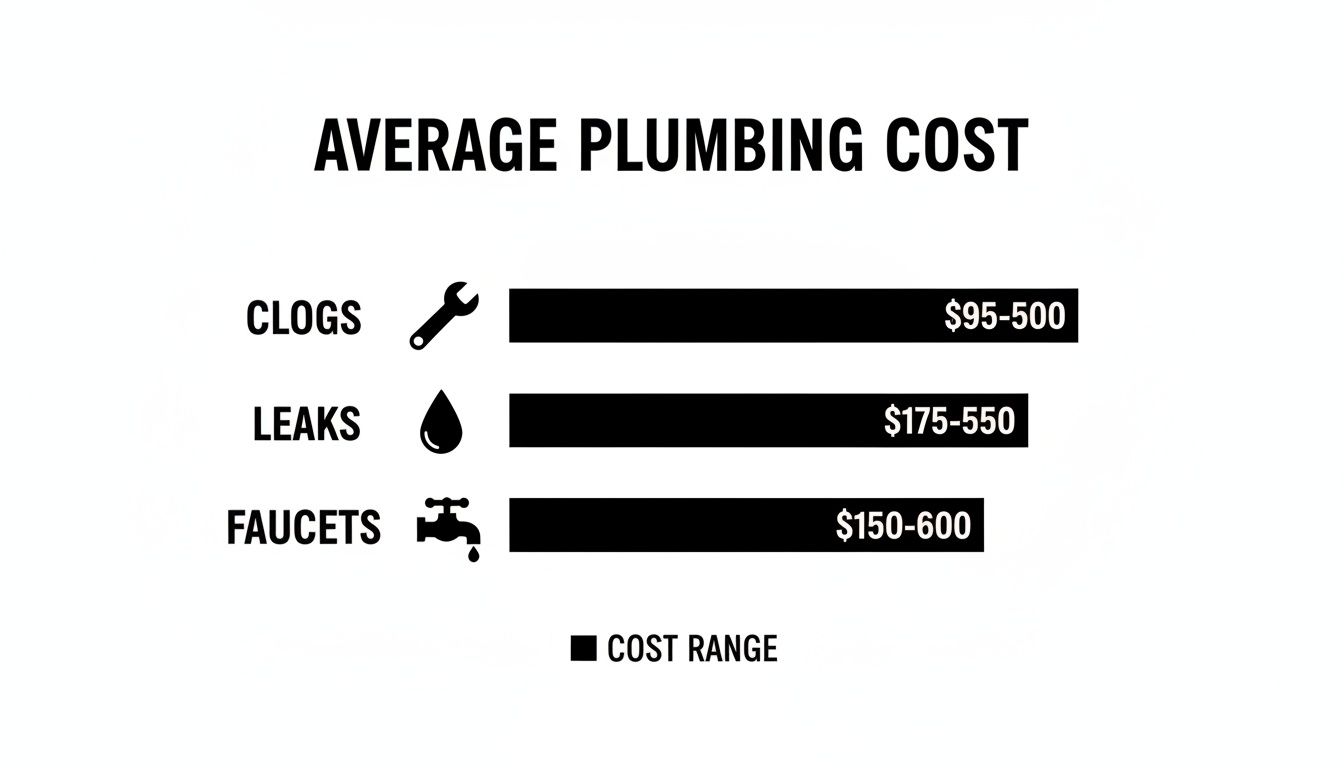
As you can see, even everyday repairs have a pretty wide cost window, which usually comes down to how severe the problem is and what parts are needed to make it right.
Small-Scale Repairs and Installations
These are the bread-and-butter calls, the jobs that keep the schedule full and the cash flowing. They might seem small, but they're the bedrock of a healthy plumbing business.
- Toilet Repair: A straightforward fix, like a new flapper or fill valve, will usually land between $150 and $350. The parts themselves are cheap—often under $40—so the customer is mostly paying for your time (one to two hours) and the service call fee.
- Faucet Installation: Swapping out a kitchen or bathroom faucet typically runs from $150 to $600. The faucet itself is the biggest variable; a basic model from a big-box store might be $50, while a high-end designer fixture could top $500. The labor is usually an hour or two, but you know how it goes—a single corroded fitting can easily add more time to the clock.
- Garbage Disposal Replacement: Putting in a new disposal usually costs between $250 and $650. The unit itself can range from $100 for a standard model to $400 for a beefier, quieter one. Labor involves wrestling the old one out, mounting the new one, and hooking up the plumbing and electrical, which is generally a one to three-hour job.
Mid-Sized Projects and Upgrades
Now we're getting into more involved work. These jobs take more time, sometimes require specialized tools, and involve a bigger investment in materials. For the homeowner, it's a significant upgrade; for you, it's a substantial project.
A perfect example is a water heater installation. Nothing illustrates the cost difference between old and new tech better.
Installing a standard 50-gallon tank water heater might run a homeowner anywhere from $1,200 to $2,500. But if they upgrade to a tankless water heater, the price jumps to $3,000 to $6,000. That difference is all about the higher cost of the unit itself and the more complex venting and gas line work involved.
Let's look at another common mid-sized job:
- Sump Pump Installation: Setting up or replacing a sump pump is typically a $600 to $1,800 job. A good pump costs $200 to $500, and the rest covers the labor to get it in the pit, run the discharge piping outside, and make sure everything is working before the next downpour.
Large-Scale Plumbing Overhauls
These are the big ones—the projects that can define a quarter. They are complex, physically demanding, and demand meticulous planning from start to finish.
Repiping an entire house is one of the biggest jobs a residential plumber can tackle. You'll see this a lot in older homes where the original galvanized or polybutylene pipes are finally giving up the ghost.
- Whole-Home Repiping: The cost to repipe a house has a huge range, from $4,500 to over $20,000. The final price tag depends on the home's size, the number of bathrooms and fixtures, and how much of a fight the walls put up.
- Material Choice is Key: Using PEX tubing is the more affordable route, usually landing in the $4,500 to $8,000 range. If the homeowner wants copper, get ready for a much higher bill—the material and labor costs can easily push the total into $10,000 to $20,000+ territory.
- It's More Than Just Pipe: The labor here isn't just about connecting fittings. It’s about careful demolition—opening up walls and ceilings—running all the new lines, connecting every single fixture, and then patching the drywall. A two-person crew can be tied up for several days or even a full week.
To give you a clearer picture of how these big-ticket items break down, here’s a more detailed look at the numbers.
Detailed Cost Breakdown for Major Plumbing Projects
| Project Type | Average Material Cost | Average Labor Cost | Total Estimated Project Cost |
|---|---|---|---|
| Tank Water Heater Install | $500 – $1,500 | $700 – $1,000 | $1,200 – $2,500 |
| Tankless Water Heater Install | $1,500 – $4,000 | $1,500 – $2,000 | $3,000 – $6,000 |
| Whole-Home Repipe (PEX) | $1,500 – $3,000 | $3,000 – $5,000 | $4,500 – $8,000 |
| Whole-Home Repipe (Copper) | $4,000 – $8,000 | $6,000 – $12,000 | $10,000 – $20,000 |
When you really get a handle on these job-specific costs, you can write estimates with confidence. You'll be able to clearly explain the "why" behind your price to a customer and, most importantly, make sure every job you take on is a profitable one.
What Goes Into the Final Price? Key Factors That Influence Your Estimate
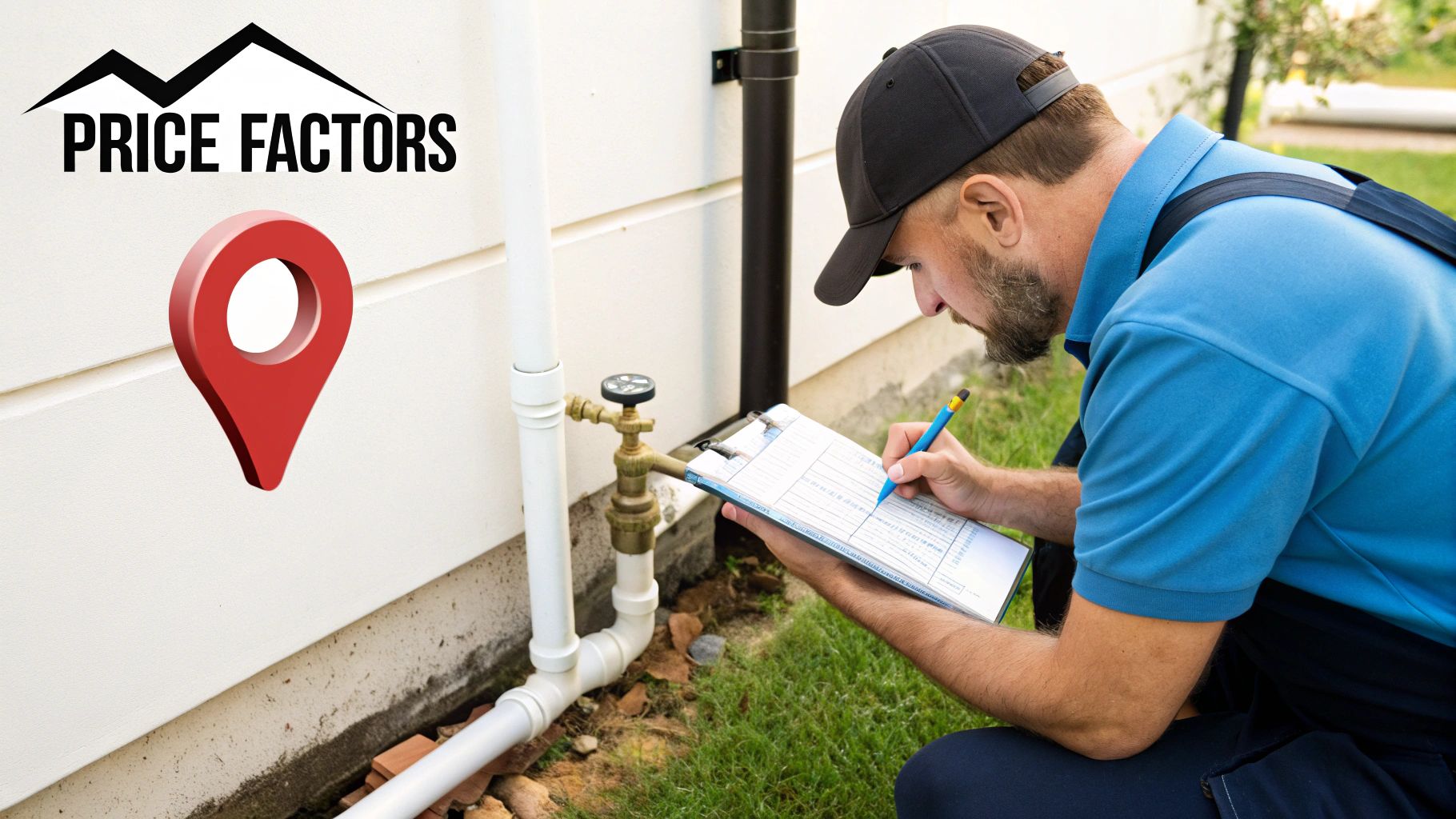
Ever look at two quotes for what seems like the same job and wonder why the numbers are so far apart? The final price on a plumbing estimate is never just a number pulled out of a hat. It's a careful calculation based on several critical factors that can swing the average plumbing costs one way or another.
Think of it like getting a car repaired. Replacing a headlight bulb is one thing. Replacing the entire wiring harness that's buried deep in the engine bay is something else entirely. Both fix the same problem—a light that won't turn on—but the path to get there is worlds apart. Plumbing works the same way.
Location and Local Economics
Your zip code is probably the single biggest variable. A plumber working in a high-cost area like Fairfield County, Connecticut, has to cover much higher overhead—think insurance, gas, and competitive wages—than a counterpart in a quiet rural town. Those costs naturally get reflected in their rates.
For instance, a bathroom remodel in Fairfield County might start around $21,000, but that same job could come in much lower somewhere with a more modest cost of living. It's just the reality of doing business in different markets.
Job Complexity and Accessibility
Not all pipes are created equal, and where they're located matters. Swapping out a faucet on an open pedestal sink is a quick job. But if that same faucet is tucked away behind a deep sink cabinet with corroded, frozen-on nuts, the job just got three times harder and will take three times as long. That’s the accessibility factor at play.
Here’s a quick comparison:
- Easy Access: Fixing a leaky pipe that’s fully exposed in an unfinished basement.
- Difficult Access: Chasing that same leak inside a finished wall, which means cutting drywall, making the repair, patching the hole, and matching paint.
The second job involves more labor, more materials, and frankly, more headaches. It’s also why giving a firm quote over the phone is so risky; you never really know what you’re up against until you see it in person.
A hidden pipe behind a tiled shower wall transforms a simple repair into a minor demolition project. Always assess the "how" and "where" of the job, not just the "what," when building your estimate.
The Emergency Service Premium
Let’s be honest, pipes don't burst on a Tuesday afternoon. They wait until 3 AM on a holiday weekend. That’s why emergency calls carry a premium. You can expect emergency rates to be 1.5 to 2 times higher than a standard service call, and for good reason. It means dropping everything, paying a tech overtime, and getting someone out there now.
This premium is for the "on-demand" nature of the service. You're not just paying for a repair; you're paying for the immediate response that prevents a small leak from turning into thousands of dollars in water damage.
Material Quality Choices
The parts you choose make a huge difference in the final tally. When repiping a house, for example, flexible PEX tubing is almost always cheaper and faster to install than traditional rigid copper pipes. Copper itself costs more, and the labor-intensive soldering work adds to the clock.
This applies to fixtures, too. A basic, builder-grade toilet is a world away from a high-efficiency, custom-color designer model. By offering clients a "good, better, best" set of options, you let them steer the project toward their budget. To manage this effectively, you need a system, which is why it helps to understand how field service management software matters for keeping your parts and prices straight.
Navigating Permits and Regulations
Finally, don't forget the red tape. Many jobs—especially bigger projects like installing a new water heater or running a gas line—require a permit from the city or county. This is to make sure all work is up to code, safe, and done correctly.
Permit fees can run anywhere from $50 to over $500, depending on your local regulations and the job's scope. It's a non-negotiable cost that has to be baked into the estimate, and it protects both the customer and your business by keeping everything above board.
How to Create Accurate Estimates and Protect Your Margins
Crafting a plumbing estimate is part science, part gut instinct honed over years of experience. But when you get it wrong, it can be the single thing that tanks your profits for the month. A good estimate pulls off a delicate balancing act: it’s competitive enough to win you the job but solid enough to protect your bottom line. It stops being just a price tag and becomes a critical business tool.
The bedrock of any bulletproof estimate is getting your boots on the ground for a thorough site assessment. Quoting a job over the phone is one of the quickest ways to lose your shirt. You have to see it for yourself to truly grasp the scope. You’re looking for the hidden gremlins—the corrosion behind the wall, the impossibly tight access panel, or the ancient galvanized pipes that will crumble if you look at them wrong.
That initial visit is your intelligence-gathering mission. Snap photos, take measurements, and identify every potential snag before a single dollar is put on paper. This isn't just about being careful; it's about preventing a simple fix from spiraling into a three-day nightmare.
The Anatomy of a Profitable Estimate
A truly solid estimate dissects a job into its core financial components. Think of it like building with LEGOs: you have your material blocks, your labor blocks, and your overhead blocks. Each one needs to be calculated with precision for the final structure to stand strong.
Let's start with the parts. The global market for plumbing fixtures and fittings has blown past $107.62 billion, which tells you that materials are a massive—and growing—piece of the puzzle. Here in the U.S., a straightforward faucet replacement can run anywhere from $150–$600, and the cost of the fixture itself is often the biggest wildcard. You can see how these numbers play out across the board by checking out some key plumbing industry statistics.
Here’s a simple, repeatable process for building your quote:
-
Calculate Material Costs with Markup: List every single thing you’ll need, from the main appliance down to the last fitting, tube of caulk, and roll of Teflon tape. Apply a consistent markup (usually somewhere between 20% and 50%) to your cost. This isn't pure profit; it covers your time sourcing parts, managing inventory, and picking them up.
-
Estimate Labor Hours Accurately: Break the job down into logical steps and assign a time for each. Be realistic. Is this a quick one-man job for an apprentice, or does it require a master plumber and a helper? And don't forget to account for travel time and potential runs to the supply house.
-
Factor in Overhead Costs: Every shop has overhead. It's the truck insurance, the gas, the tool maintenance, the software you use, and the salary for the person answering the phones. A slice of these costs has to be baked into every single job. A common way to do this is to add a percentage (say, 15-25%) to your combined labor and material costs.
Key Takeaway: Forgetting to account for "non-billable" time and miscellaneous parts is a classic profit-killing mistake. Your estimate must cover every minute and every screw to be truly accurate.
Mini Case Study: Pricing a Water Heater Swap
Let's walk through a real-world example. You get a call to quote a standard 50-gallon tank water heater replacement. Here's how the numbers might break down:
-
Materials:
- New 50-gallon water heater: $600 (your cost)
- Expansion tank, fittings, flex lines, solder: $100 (your cost)
- Total Material Cost: $700
- Material Cost with a 30% Markup: $700 x 1.30 = $910
-
Labor:
- Estimated time for removal and installation: 3 hours
- Your plumber's loaded hourly rate (wage, taxes, benefits): $75/hour
- Total Labor Cost: 3 hours x $75 = $225
-
Overhead & Profit:
- Combined Material + Labor Cost: $910 + $225 = $1,135
- Apply a 20% margin for overhead & profit: $1,135 x 1.20 = $1,362
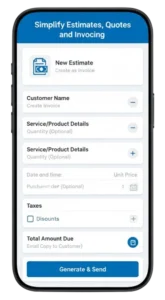
Your final estimate for the customer is $1,362. This detailed approach confirms you’ve covered every cost, paid your tech what they're worth, and built a healthy profit into the job. Using the right tools to simplify estimates quotes and invoicing makes this process fast, consistent, and repeatable for every call that comes in.
Ditch the Clipboard and Streamline Your Estimating with Software
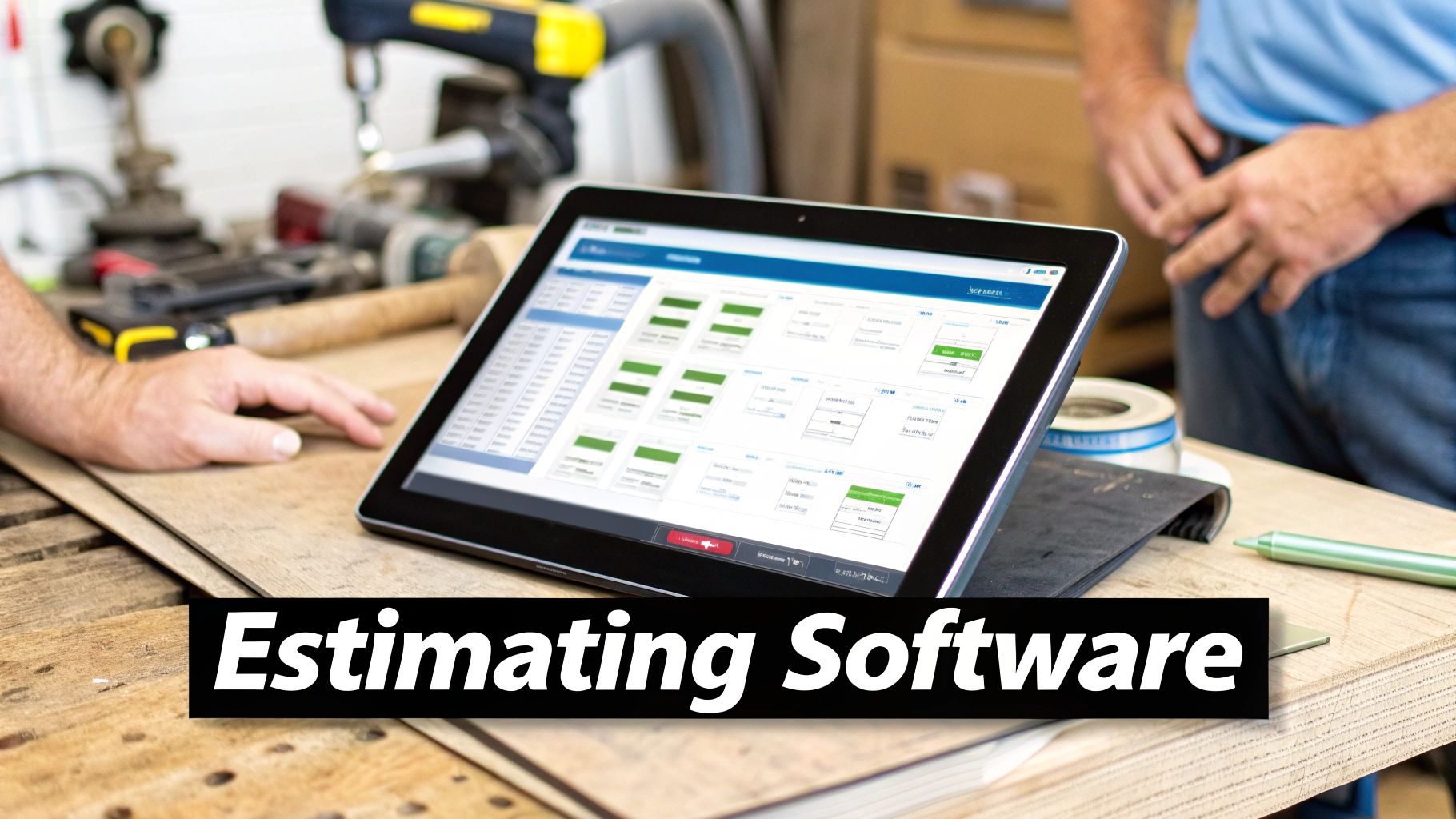
Knowing how to build an estimate by hand is a crucial skill, but let's be honest—relying on a pen and paper in this day and age is like using a hand wrench when you've got an impact driver sitting in the truck. It works, sure, but it’s slow, leaves room for mistakes, and costs you valuable time and money. This is where modern field service management (FSM) software really changes the game for calculating average plumbing costs and protecting your bottom line.
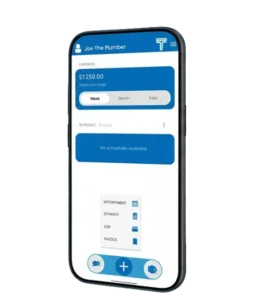
Think of a system like TackonFSM as the digital brain for your entire estimating and job management process. It swaps guesswork for a structured, repeatable system. No more digging through supplier catalogs or old invoices; you can build polished, professional quotes in just a few minutes.
Build Faster, More Accurate Quotes
The heart of any good estimating tool is its parts database. With FSM software, you can build a digital library of all the materials you use and the labor rates you charge.
- Standardized Parts: Every single part, from a simple P-trap to a high-end water heater, gets stored with your cost and a pre-set markup.
- Consistent Labor Rates: You can add flat-rate or hourly labor tasks to make sure every technician quotes jobs the exact same way.
- Instant Quote Generation: Just pull these items into a quote, and the software handles all the math instantly. Those little calculation errors that eat into profits? Gone.
This means you can hand the customer a detailed, professional-looking estimate on a tablet right there in their home and get their approval on the spot. To really dial this in, checking out the best estimating software for contractors can give you a solid overview of what different platforms have to offer.
From Estimate to Job in a Single Click
One of the biggest time-wasters in a plumbing shop is the double-entry of information. Taking the details from an approved quote and manually typing them into a schedule or an invoice is a recipe for mistakes and wasted hours.
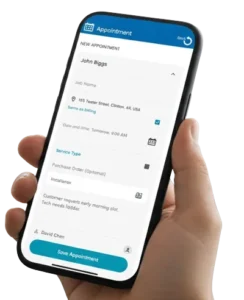
Modern software closes that loop. Once a customer gives the green light on an estimate, you can convert it into a scheduled job with one click. All the vital information—job details, parts lists, customer info—transfers over without a hitch.
A seamless workflow from estimate to invoice is more than just a nice feature—it's a direct route to better profitability. It cuts down on hours of admin work, reduces errors, and gets your team focused on what they do best: completing billable work.
Protect Your Margins with Real-Time Inventory
How many times has a job stalled because a tech was sure a part was on their truck, but it wasn't? That’s a hidden killer of your profit margins, burning up time and forcing extra trips to the supply house.
FSM software with built-in inventory tracking puts an end to that. When parts are added to a job from the estimate, they're automatically assigned from your van or warehouse stock. Everyone on the team gets a live look at what's available and where it is. This feature is a huge part of what makes field service scheduling software that saves time so effective.
By bringing this kind of technology into your business, estimating stops being a chore and becomes a powerful tool that boosts efficiency, accuracy, and profitability across your entire operation.
Plumbing Cost Questions Answered
Even with a good handle on job types and pricing factors, people always have more specific questions about plumbing costs. Answering these common queries head-on is a win-win: it helps contractors justify their value and gives clients a clear picture of what they’re paying for. Here are the straight answers to the questions we get asked the most.
Hourly Rate vs. Flat Fee: Which Is Better?
This is the classic pricing debate, and honestly, there’s no single right answer. The best approach really hinges on the nature of the job.
An hourly rate, which you’ll typically see anywhere from $45 to $200 per hour, makes the most sense for troubleshooting or repairs where the scope is a big question mark. When you're on a mission to find a mystery leak hidden in a wall, charging by the hour ensures you’re paid for every minute of that detective work, however long it takes.
On the flip side, flat-rate pricing gives the customer peace of mind on straightforward, predictable jobs. For a standard water heater swap or a simple faucet replacement, a flat fee means the customer isn't anxiously watching the clock. The key for contractors is to nail that flat rate by factoring in materials, the average time it takes, and a little cushion for the unexpected curveball.
What's the Real Cost of an Emergency Plumbing Visit?
When a pipe lets go at 2 AM on a Sunday, the pricing model shifts—and for good reason. Emergency service commands a premium because it means a technician has to drop everything and rush out, usually well outside of normal working hours.
You can expect a higher upfront service fee, often between $200 and $400, just for the truck to roll up to your door. That covers the immediate dispatch and travel time. From there, the hourly labor rate is usually jacked up, sometimes by 1.5 to 2 times the standard rate. This isn't price gouging; it covers overtime for the tech and the cost of pulling them away from their family or a planned schedule. It’s what ensures a pro is ready to go when things go sideways.
What Should a Professional Plumbing Estimate Actually Include?
A real, professional estimate is much more than just a number scribbled on a notepad. It’s a foundational document that builds trust and sets crystal-clear expectations for everyone involved.
Think of a detailed, transparent estimate as one of your best sales tools. It screams professionalism, justifies your price, and becomes a solid agreement that prevents headaches and disputes later on.
A quality estimate should always lay out:
- A Detailed Scope of Work: A plain-English description of the problem and the exact steps you’ll take to fix it.
- Itemized Parts and Materials: A list of all the major components needed and what they cost.
- Estimated Labor Costs: A clear breakdown of the hours and the rate for the job.
- Payment Terms: Simple details on when payment is due and how you accept it.
- Company Information: Your business name, address, phone number, and license info.
- An Expiration Date: A note on how long the quote is good for.
Can I Really Get a Plumbing Estimate Over the Phone?
It’s completely understandable why customers ask for a price over the phone, but for anything more complex than a basic service call, it’s a recipe for trouble. A "guesstimate" given without seeing the site is almost always inaccurate because it can’t possibly account for all the hidden variables.
There's just no substitute for an on-site inspection. It's the only way a plumber can see critical factors like how hard the pipes are to get to, the condition of the existing plumbing, and any code issues that have to be brought up to standard. The best way to handle this is to frame the on-site visit as a crucial step toward getting a fair and accurate price—it manages expectations and saves everyone from frustrating surprises down the line.
Ready to stop wrestling with spreadsheets and start creating professional, profitable estimates in a fraction of the time? TackonFSM puts all the tools you need to manage your parts, labor rates, and inventory in one spot. You can build accurate quotes that protect your margins and help you land more jobs. Learn how TackonFSM can help you take control of your business.