HVAC Dispatch Software That Wins Jobs And Boosts Profit
At its heart, HVAC dispatch software is the nerve center of your field operations. It takes the messy web of spreadsheets, frantic phone calls, and sticky notes and replaces it with a single, intelligent system. This software is built specifically to organize schedules, map out the smartest routes for your techs, and keep the lines of communication open between the office, your crew, and your customers.
Think of it as the ultimate GPS for your business—guiding every single job from the initial call to the final invoice.
From Chaos Coordinator To Profit Optimizer
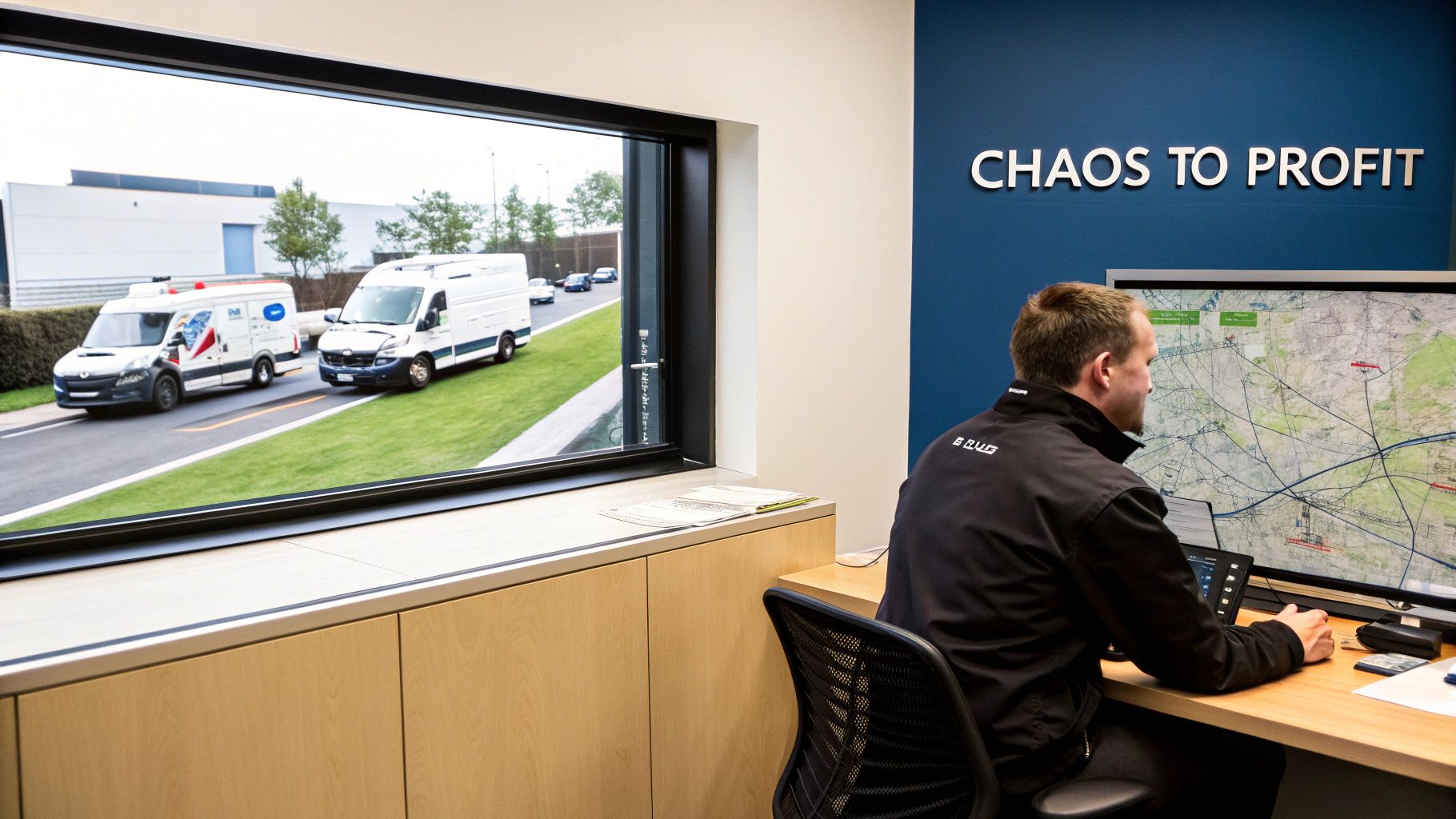
Let's be honest. For many HVAC shops, the dispatch board feels more like an air traffic control tower during a thunderstorm. You're trying to land planes with hand signals—relying on gut feelings, messy whiteboards, and a constant stream of calls to juggle your technicians. This manual approach isn't just stressful; it’s a killer for your bottom line, leading directly to wasted fuel, missed appointments, and unhappy customers.
HVAC dispatch software clears the storm. It turns that chaos into a calm, modern command center, giving you a real-time, bird's-eye view of your entire operation. It digitally connects every moving piece of your business, solving the exact problems that keep most small-to-midsize contractors from scaling up.
Turning Problems into Profits
Instead of just reacting to the phone ringing off the hook, a dedicated software platform lets you get ahead of the game. It helps you manage your resources strategically to squeeze the most value out of every single day.
- Kill the Clutter: All your customer history, job notes, and schedules live in one clean, accessible place. No more digging through filing cabinets for old invoices or trying to decipher a tech's handwriting.
- Slash Windshield Time: Smart routing and GPS tracking get your technicians from job A to job B using the most efficient route possible. That means less time in traffic and more time earning.
- Plug Revenue Leaks: When your techs have mobile tools to create estimates and invoices on the spot, every service call becomes a potential sales opportunity.
This is exactly why the market is booming. The HVAC service management software space was valued at USD 1.09 billion and is on track to hit USD 4.57 billion by 2033. The numbers don't lie—studies show that optimized dispatching can increase the number of jobs completed per technician by 20-25%. That’s a direct injection of cash flow.
A well-implemented dispatch system is more than a tool; it's the foundational structure that allows a service business to scale without collapsing under its own weight. It turns reactive firefighting into predictable, profitable workflows.
For owners, this is about getting your time back and building a business that can grow without breaking. To see how these systems fuel expansion, check out this complete guide to franchise software for scaling. The right platform isn't just another expense; it’s an investment that pays for itself, often in just a few months. For a closer look at the impact, it's worth understanding why field service management software matters so much to modern contractors.
The Core Features That Fuel Your Bottom Line
When you get your hands on a good piece of HVAC dispatch software, you’re not just buying another program. You're investing in a powerful engine built to drive your business. Each feature is like a gear in a well-oiled machine, working together to boost your efficiency, cut down on waste, and ultimately, put more money in your pocket.
Let’s break down the essential components that transform the daily operational chaos into a smooth-running profit center. The core ideas here aren't new; understanding how logistics teams centralize driver and dispatch communication shows how a single, unified system can completely change the game for any field service operation.
Smart Scheduling and The Visual Dispatch Board
It's time to ditch the messy whiteboards and complicated spreadsheets for good. The real heart of any modern dispatch software is the visual dispatch board. Think of it as your shop's air traffic control—instead of planes, you’re guiding technicians with simple drag-and-drop moves. It gives you a complete, real-time picture of your entire day on one screen.
A last-minute cancellation doesn't have to be a lost revenue slot anymore. With a visual board, you can instantly see which tech is nearby and available to fill that gap, turning a potential loss into a profitable job.
- Drag-and-Drop Simplicity: Assigning and reassigning jobs is as easy as moving a digital sticky note. This lets your dispatcher react instantly to changes without a dozen frantic phone calls.
- Optimized Routing: The software figures out the best routes automatically, which means less time staring through a windshield and lower fuel bills. Your techs spend more of their day on billable work.
- Skill-Based Assignments: You can finally make sure the right tech goes to the right job, every time. Tag your technicians by their specialties—like commercial refrigeration or high-efficiency furnace repair—and match them perfectly with the job's needs.
By visualizing your entire day, you move from just putting out fires to proactively planning for profit. The dispatch board isn’t just about scheduling; it's about squeezing every bit of earning potential out of every hour.
The Technician Mobile App: A Field Office in Their Pocket
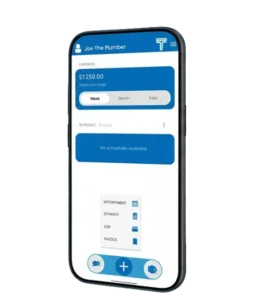
Your technicians are the face of your company, and giving them the right tools isn't optional. A dedicated mobile app turns their smartphone or tablet into a powerful field office, connecting them directly to your dispatch system. This simple change eliminates the communication gaps that lead to delays and unhappy customers.
With a mobile app, your techs show up to the job fully prepared. They can pull up the customer’s complete service history, see notes from past visits, and know exactly what equipment they’ll be working on before they even knock on the door. This level of prep work dramatically increases the chances of fixing the problem on the first visit. For more on this, our guide on
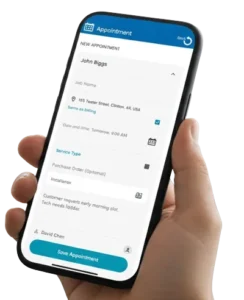
offers deeper insights.
Seamless Quoting and Invoicing
The time between finishing a job and getting paid is where cash flow problems are born. Good HVAC software closes this gap by building quoting and invoicing right into the workflow. Your techs can create professional, itemized quotes right on the spot using a pre-loaded pricebook that already has your correct markups.
Once the customer gives a digital signature to approve the quote, it instantly becomes a work order. When the job is done, it flips into an invoice. This seamless process cuts out hours of tedious data entry back at the office and pretty much eliminates the risk of human error.
Even better, it speeds up how quickly you get paid. With mobile payment options, techs can take credit card payments in the field, making sure you get your money the moment the work is finished. For many contractors, this single feature improves cash flow by up to 35%.
Real-Time Parts and Inventory Control
Nothing kills a day's productivity faster than a tech realizing they don't have the right part on their truck. That means a time-wasting trip to the supply house, a rescheduled appointment, and a customer who isn't too happy.
Modern HVAC software solves this with solid inventory management, giving you a live look at parts across every van and your warehouse.
- Live Van Stock: Know exactly what's on each truck at all times. No more guessing.
- Automated Part Allocation: When a part is used on a job, it's automatically taken out of inventory and added to the invoice, so nothing gets missed.
- Low-Stock Alerts: Set up automatic notifications to tell you when it’s time to reorder critical parts, stopping stockouts before they happen.
This level of control doesn't just boost your first-time fix rate. It also cuts down on parts going missing and stops you from over-ordering, putting that money right back where it belongs—in your business.
From Manual Chaos to Software Control
The jump from traditional methods to a dedicated software platform is a big one. It’s not just about going digital; it’s about fundamentally changing how your business operates for the better. This table breaks down the before-and-after picture of daily tasks.
| Operational Task | Legacy Method (Paper & Spreadsheets) | With HVAC Dispatch Software |
|---|---|---|
| Scheduling | Manual entries on a whiteboard or Excel; prone to errors and double-bookings. | Drag-and-drop visual board with real-time tech availability and GPS tracking. |
| Dispatching | Constant phone calls and texts to update techs; inefficient route planning. | Automated, optimized routes sent directly to a tech's mobile app. |
| Job Information | Paper work orders with handwritten notes; often lost, incomplete, or illegible. | Full job details, customer history, and equipment info accessible on a mobile device. |
| Invoicing | Manual invoice creation back at the office; delays in billing and payment. | Instant invoice generation on-site with mobile payment collection. |
| Inventory | Guesswork on van stock; frequent, costly trips to supply houses. | Real-time tracking of parts on every truck with automated reorder alerts. |
As you can see, the software doesn't just replace old tools—it introduces a level of control and visibility that simply wasn't possible before. It turns reactive, chaotic workflows into proactive, predictable systems.
Calculating The Real-World Return On Your Investment
Investing in HVAC dispatch software isn't just about adding fancy features; it's about seeing real, measurable results that hit your bottom line. Forget the tech jargon for a moment. The true value comes from how this tool impacts your time, your money, and your ability to grow. The return on investment (ROI) isn't some fuzzy concept—it’s found in the hours you get back, the extra revenue you earn daily, and the solid foundation you build for the future.
Let's get practical and look at the actual financial impact. Think about all the time your team sinks into administrative quicksand—trying to read handwritten notes, manually punching in invoices, or playing phone tag with techs in the field. This software automates those tedious jobs, freeing up your office staff to focus on things that actually make money, like stellar customer service and following up on new leads.
Reclaiming Your Most Valuable Asset: Time
Every minute you save is a minute you can put toward a profit-generating activity. For most HVAC contractors, the two biggest time-killers are inefficient travel and manual paperwork. A smart dispatching system tackles both head-on.
- Smarter Routing: The software automatically maps out the most efficient routes between jobs, which means less "windshield time" for your techs. That's less money spent on fuel and more time spent on billable work.
- Less Admin Headaches: By getting rid of double-entry and automating your invoicing, you can reclaim hours every single week. A task that used to eat up an entire afternoon can now be handled in minutes.
The chart below shows the night-and-day difference between a business drowning in manual chaos and one operating with software-driven control.
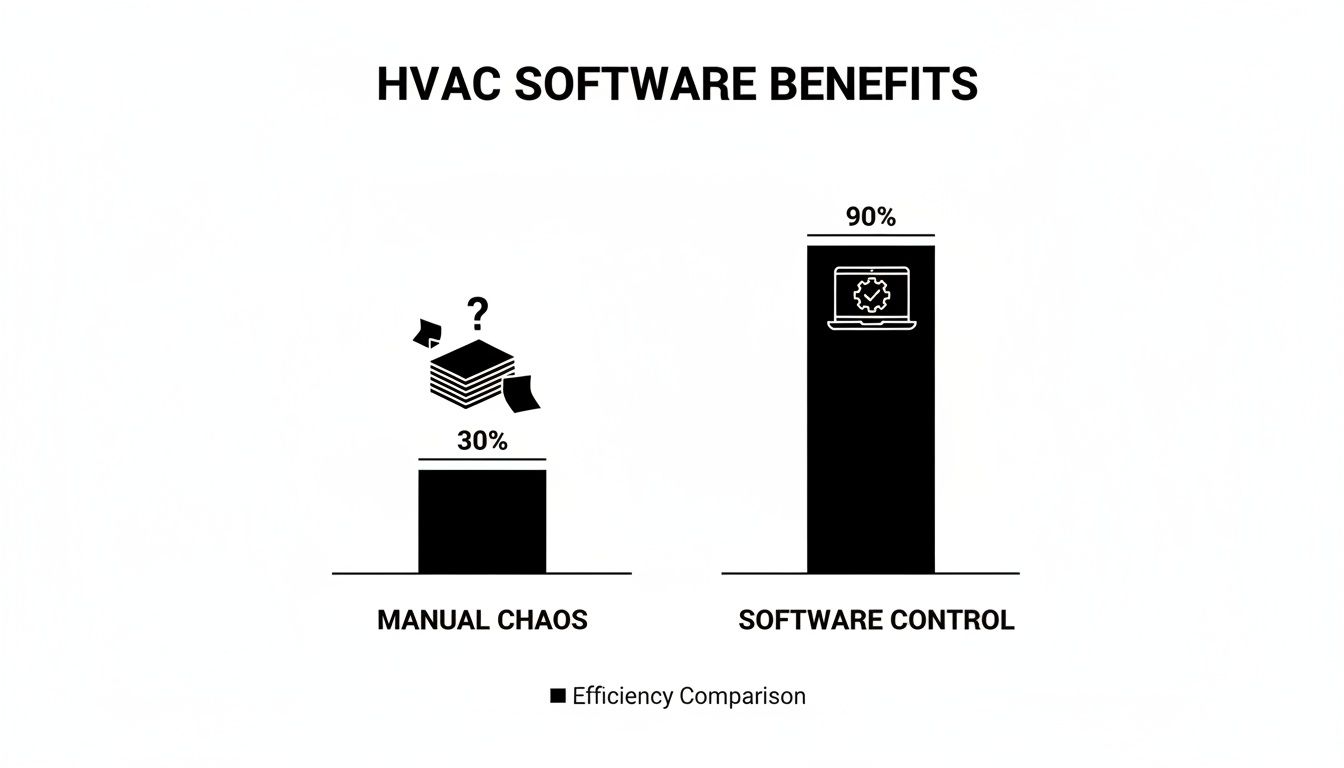
It’s a powerful visual of how the right tool acts as a force multiplier, taking your operational efficiency from sluggish to supercharged.
Quantifying The Financial Gains
The financial perks go way beyond just saving time. Those efficiency gains lead directly to more completed jobs and faster cash flow, creating a positive ripple effect across your entire operation.
Think about what happens if you can fit just one extra job into each technician's day. If an average service call brings in $300, and you have five techs on the road, that’s an extra $1,500 in revenue per day. That simple boost in efficiency adds up to a serious chunk of change over a month.
A streamlined system isn't just about doing the same work faster. It's about creating the capacity to do more work without adding more overhead. That's the secret to profitable growth.
This is exactly why the market for tools like this is booming. The HVAC software market, valued at USD 764.73 million, is expected to skyrocket to USD 2,840.1 million by 2032, according to one HVAC software market analysis. In the U.S. alone, smart routing is cutting drive times by 15-20%, allowing technicians to handle 25% more calls daily. Companies are also reporting 35% faster invoicing and 28% less downtime thanks to better parts management—a huge deal when inventory shrinkage hits 40% of businesses still using manual tracking.
Building The Foundation For Sustainable Growth
Maybe the most important return you'll see is the ability to finally scale your business. So many HVAC owners hit a growth ceiling where they know they can't add another truck without the whole operation falling apart. The manual system that worked for two technicians becomes a chaotic mess with five.
HVAC dispatch software gives you the scalable framework you need to break through that ceiling. It ensures your processes for scheduling, invoicing, and inventory are solid and repeatable, whether you're running two trucks or twenty. Our guide on how to
goes deeper into this. This organized approach is what prevents the operational meltdowns that keep good contractors from reaching their full potential.
How To Choose The Right Software For Your Business
The market for HVAC dispatch software can feel like a crowded, noisy room. Every vendor promises to fix all your problems, making it incredibly easy to get overwhelmed—or worse, locked into a system that just doesn't fit how you actually run your business. The goal isn’t to just buy a product; it’s to find a true partner for your growth.
Choosing the right platform really boils down to answering a few practical questions. Cut through the flashy sales pitches and get down to what will actually make a difference for your team and your bottom line. This simple checklist will help you filter out the noise and make a decision you can feel good about.
Solve Your Biggest Headaches First
Before you even start looking at software demos, grab a notepad. Seriously. Write down the top three things that drive you crazy in your day-to-day operations. Is it constant scheduling conflicts and technicians crossing paths? Is it the sheer amount of wasted drive time? Or maybe it’s the black hole where your service van inventory seems to disappear?
The right software for you is the one that directly attacks those specific problems. If tracking parts is your nightmare, then real-time inventory management should be a dealbreaker. If your dispatcher is drowning in "where's my tech?" calls, automated customer notifications are what you need. Don't get distracted by shiny features you'll never touch.
Prioritize Simplicity And Team Adoption
The most feature-packed software on the planet is worthless if your team hates using it. Your techs are out in the field trying to get work done, not fiddle with a clunky app that slows them down. Your dispatcher needs a visual board that makes sense the moment they log in, not one that requires a PhD to operate.
The true test of good software isn't how many features it has, but how quickly your team can adopt it and make it part of their daily routine. A simple, user-friendly system will always deliver a better ROI than a complex one that gathers digital dust.
Look for providers that obsess over ease of use. Is the interface clean and uncluttered? Does the mobile app work even when there's no cell service? Insist on a live demo and picture your least tech-savvy employee trying to use it. If it seems confusing to you, it will be a disaster for them.
Find A Partner That Can Grow With You
The software that works for your three-truck operation today needs to work for you in five years when you have ten. Scalability is everything. You need a system that can handle more techs, more customers, and a much bigger job volume without grinding to a halt or costing a fortune.
When you talk to potential vendors, ask them how their platform supports growing companies.
- Flexible Tiers: Do they offer different pricing plans that let you add users and features as you expand?
- Data Capacity: Can their system handle a huge customer database and years of job history without lagging?
- Feature Roadmap: Are they constantly improving the software and adding new tools that will help you down the road?
Demand Transparent Pricing And Real Support
Nothing sours a new investment faster than hidden fees, long-term contracts, and surprise upcharges. Look for companies with clear, straightforward pricing. A month-to-month plan is a huge green flag—it shows the provider is confident you'll stick around because you love the product, not because you're legally trapped.
Finally, think about the human side of things. When you run into an issue at 8 AM on a busy Monday, you need a real person on the phone who can help you, fast. Find out what their customer support is really like. Do they offer free onboarding and data migration? Will they actually help train your team? A provider who invests in your success from day one is the kind of partner you want.
Making The Switch Without The Headaches

Let's be honest. The single biggest reason most HVAC owners stick with outdated systems is the fear of a messy, disruptive transition. Just thinking about moving years of customer data, retraining the whole crew, and risking a week of operational chaos is enough to make you stick with the devil you know.
But switching to modern HVAC dispatch software doesn't have to be that painful. In fact, it shouldn't be. With a good partner and a clear plan, the move can feel less like a massive ordeal and more like a quick, smooth upgrade for your entire operation. The goal is to swap that anxiety for a simple, step-by-step roadmap that gets your business up and running with as little friction as possible.
Your Simple Roadmap To A Smooth Transition
A successful software switch isn't about just flipping a switch and crossing your fingers. It’s a planned, supported process that’s done with you, not to you. Think of it as a joint project between your team and your software provider.
Here’s what that typically looks like:
- Painless Data Prep: First things first, we need to get your information ready to move. This means your customer lists, parts inventory, service histories—all of it. A good provider won’t just leave you to figure it out; they'll offer assisted migration, helping you clean up and import your data so you don't lose a single byte of that valuable history.
- Bite-Sized Team Training: Forget locking everyone in a room for an 8-hour training marathon. Modern software is designed to be intuitive, and the training should be too. The best approach is role-specific, bite-sized sessions. Your dispatcher gets a walkthrough of the visual board, and your techs get a quick tour of the mobile app. That's it.
- Go-Live With Confidence: You can ease into it. A phased rollout, where you might run the new system alongside your old one for a day or two, helps build confidence. With a dedicated support specialist on call, you can go live knowing an expert is ready to jump in the moment a question pops up.
The move to new software is the perfect chance to improve your old ways of doing things, not just copy them into a new system. A great implementation partner will help you spot those opportunities, boosting team morale and efficiency right from the start.
Look at a company like "Reliable Air." They made the switch over a single weekend. Friday afternoon was spent with an onboarding specialist importing their data and getting the team comfortable. By Monday morning, their dispatcher was dragging and dropping jobs on the new board, and techs were already closing out tickets on their phones in the field. The immediate result? A much calmer office and far fewer frantic "where are you?" calls.
This kind of smooth transition is why the HVAC software market, which hit USD 951.6 million, is now projected to reach USD 6,810.65 million by 2032. This isn't just random growth. After the pandemic, 65% of US HVAC contractors digitized their dispatching to handle labor shortages, and they saw technician utilization jump from 60% to 85%.
Plus, modern platforms are making it easier than ever with free onboarding and trials—a world away from the hefty setup fees of old-school systems. You can learn more about the HVAC software market's trajectory. It’s not just about better tech; it's about making that tech accessible to everyone.
Got Questions About HVAC Dispatch Software? Let's Talk.
Making a big change in how you run your business always brings up some tough, practical questions. When you’re looking at new HVAC dispatch software, you need straight answers to feel good about your decision. Let’s walk through some of the most common things HVAC owners ask when they’re finally ready to ditch the old way of doing things.
These are usually the last few hurdles between sticking with what’s broken and moving to a system that can actually help you grow.
How Long Does It Really Take to Train My Team?
This is the big one, I get it. The fear of weeks of lost productivity and frustrated employees is real. But here’s the good news: modern software isn't like the clunky programs of the past. The days of locking everyone in a room for a week of complicated training are long gone. A well-built platform is designed to be so intuitive that your team can practically pick it up and run with it.
Let's break it down. Your dispatcher, who already lives and breathes scheduling, can usually get the hang of a visual drag-and-drop board in a single afternoon. For your techs out in the field, the mobile app should be simple enough that they can figure out the important stuff during their first coffee break.
- For Dispatchers: The digital dispatch board looks and feels a lot like the whiteboard they're probably using now, just way smarter. Moving a job is as easy as dragging a digital sticky note.
- For Technicians: The mobile app is just a clean to-do list for their day. They tap a job, see the notes, and tap again to update the status. Simple.
The real key here is finding a software partner that provides hands-on help. A good company won't just sell you the software and disappear; they’ll walk your team through it to make sure everyone is comfortable from day one.
Can This Software Track Parts in Every Single Van?
Yes, absolutely. In fact, this is one of the features that will change your business overnight. Trying to track inventory manually is a guaranteed path to last-minute runs to the supply house, jobs that have to be rescheduled, and customers who are less than thrilled. Modern software gives you real-time inventory visibility across your entire company.
Here’s a look at how it works:
- One Central Hub: All your parts get logged into a single system. You know exactly what's in the warehouse and what's in each truck.
- Parts Are Used, Stock Is Updated: When a tech uses a part on a job and adds it to the invoice on their tablet, the system automatically subtracts it from that van's inventory. No more guesswork.
- Get Alerts Before You Run Out: You can set a minimum number for your most-used parts. When a van’s stock dips below that level, you get an automatic heads-up, so you can restock before it becomes a problem.
This is a complete game-changer for your first-time fix rate. It’s all about making sure your techs show up with the right parts to get the job done right, the first time.
What If We Already Use QuickBooks?
This is a huge—and smart—question. No one wants to throw away years of customer and financial history. A smooth integration and a clean data migration are non-negotiable. The right HVAC software is built to work with the tools you already trust, like QuickBooks, not force you to abandon them.
The point of switching software is to bring all your valuable history into a more powerful system, not start over from zero. A smooth migration is the hallmark of a quality software partner.
Any reputable provider will offer assisted data migration as part of getting you set up. Their team will help you pull all your essential information out of your old system and import it correctly into the new one. This includes things like:
- Your full customer list with all their contact info
- Complete service histories for every client
- Your existing price books and parts lists
This process ensures there are no hiccups. You can keep your business running without missing a beat and start using your historical data in a more efficient way from the very first day.
Your Next Step Toward a More Profitable Business
We've walked through how the right HVAC dispatch software can be the difference between a business that runs you ragged and one that runs like a well-oiled machine. Moving away from scattered sticky notes and confusing spreadsheets isn't just a tech upgrade; it's a fundamental shift in how you operate.
Think about it. Instead of wrestling with the daily chaos of manual dispatching, you get a system that works for you. We're talking less time wasted driving across town, more jobs knocked out each day, and a healthier cash flow. This isn’t some pie-in-the-sky idea—it’s the reality for contractors who’ve already made the leap. The right software puts you back in the driver's seat.
From Information to Action
The path from here is actually pretty straightforward. You don't have to keep patching up old systems that leak money and eat up your time. Making the jump to a solution built specifically for the HVAC world is the most logical move you can make to hit your growth targets. It's a strategic decision to invest in efficiency, profit, and keeping your customers happy.
Honestly, every day you put this off is another day of missed jobs and unnecessary headaches. The real risk isn’t trying something new; it's clinging to the old way of doing things that’s holding your business back.
Choosing the right software isn't just another expense. It's an investment that pays you back by letting you finally stop working in your business and start working on it.
The next move is simple and comes with zero risk. You can get a feel for how a dedicated platform can change your day-to-day operations without getting locked into a long contract or paying a fortune just to get started. It’s time to take what you've learned here and see it in action.
Ready to see how a modern, all-in-one system can clean up your operations and boost your bottom line? TackonFSM was built from the ground up to help HVAC contractors like you get organized, get paid faster, and win more work.
Start your free 14-day trial today and see the difference for yourself.