
Mobile Apps for Field Service A Contractor’s Guide to Efficiency
For any trade business owner, a mobile app for field service is the answer to the chaos of paper work orders, endless phone tag, and messy spreadsheets. It brings scheduling, dispatching, invoicing, and customer history together in one place, accessible from anywhere—the office, the truck, or the job site.
The End of Paperwork and Lost Profits
Every trade business owner knows the daily grind. You're drowning in a sea of paper work orders, the phone won't stop ringing, and that master spreadsheet is always a few steps behind reality. It’s a familiar story of lost invoices, scribbled job notes nobody can read, and a constant game of telephone between the office and your techs in the field. This isn't just frustrating; it's a direct hit to your bottom line.
This old-school way of doing things is a breeding ground for bottlenecks. Technicians burn precious time and fuel driving back to the shop for their next job or a forgotten part. Back at the office, your team is stuck doing manual data entry, chasing down unpaid invoices, and trying to get a straight answer on who is where.
The disconnect between the field and the office isn't just inefficient—it's expensive. A recent study found that scheduling conflicts mess up nearly half (47%) of all field service appointments. That's a huge waste of time and money, and it leaves you with unhappy customers.
From Cluttered Toolbox to a Single Multi-Tool
Now, picture a different way of working. Instead of juggling a dozen different tools to get through the day, you have one powerful multi-tool that does it all. That’s exactly what mobile apps for field service are designed to do. They connect every moving part of your business and finally bring some order to the madness.
Think of it like this:
- Scheduling and Dispatch: Forget the whiteboard. Your dispatch board is now a live, digital map where you can see everyone's location and assign jobs with a simple drag-and-drop.
- Job Management: Your techs get everything they need for the job sent right to their phone—customer history, required parts, photos from the last visit, and detailed instructions.
- Invoicing and Payments: Quotes can be built right on the spot, approved with a digital signature, and instantly turned into an invoice. Best of all, you can collect payment right then and there, which is a game-changer for your cash flow.
This isn't just about getting rid of paper. It's about taking back control of your business. It turns your operations from a reactive, disorganized scramble into a proactive, well-oiled machine, setting you up to not just survive, but to actually grow.
Five Ways Mobile Apps Will Change Your Business For The Better
Bringing a mobile app into your field service operation isn't just about getting new tech; it's about fundamentally rewiring how you run your business. When you connect your office staff with your technicians in the field on a single, shared platform, something powerful happens. You start unlocking efficiencies that lead directly to more jobs done, happier customers, and a healthier bottom line.
This isn't just a game for the big corporations, either. The global Field Service Management (FSM) market is projected to more than double, jumping from $5.24 billion in 2025 to a massive $11.59 billion by 2034. What’s driving that explosive growth? It’s trade businesses just like yours finally ditching the clipboards and paper chaos for mobile-first solutions. If you want to dig deeper into the numbers, you can discover more insights about field service management trends and see where the industry is headed.
The diagram below perfectly captures this shift—moving from the messy, unpredictable world of manual operations to the clean, automated clarity a digital system provides.
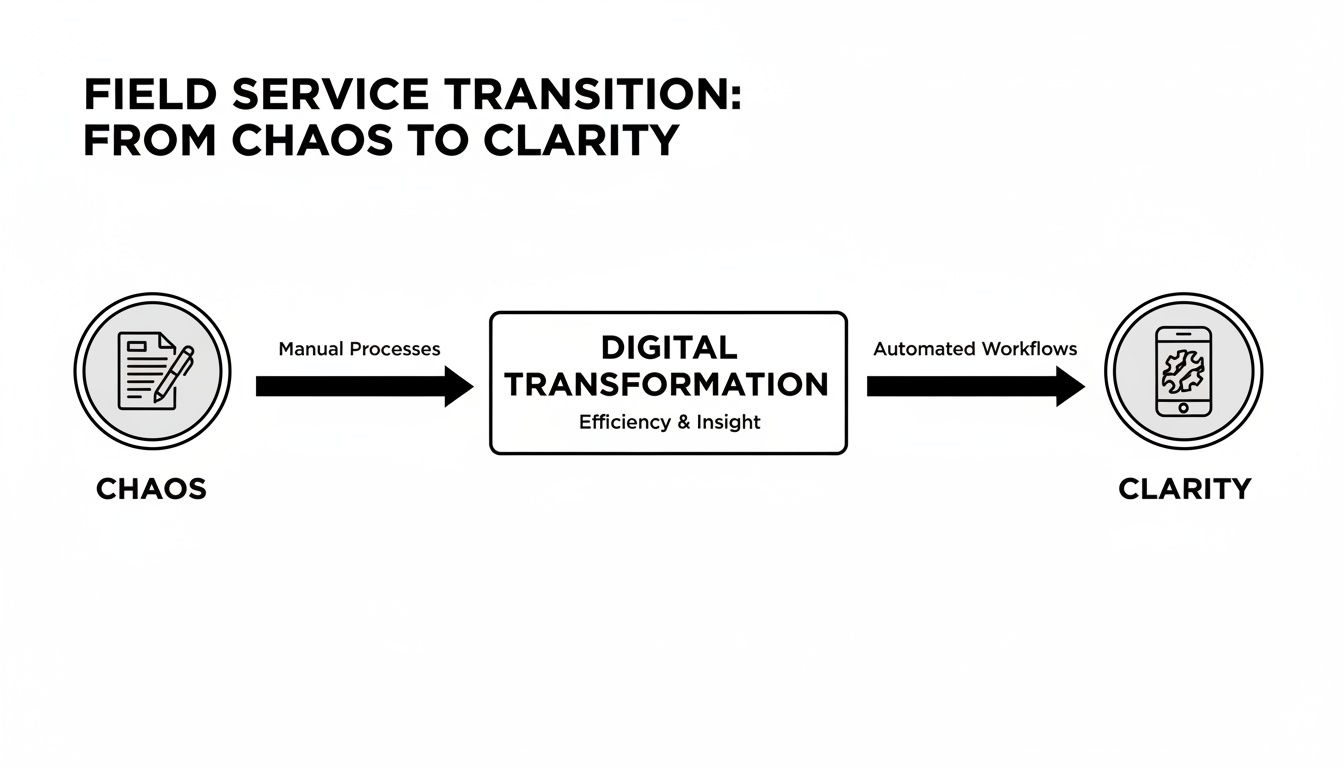
This is the heart of it: turning a tangled, paper-logged process into a simple, direct, and incredibly efficient digital workflow.
1. Smarter Dispatching and Scheduling
Think of your current dispatch board. Now, imagine it as a high-tech air traffic control system for your entire team. A mobile app completely replaces the chaotic whiteboard or messy spreadsheet with a clean, dynamic, drag-and-drop calendar.
You can see where everyone is in real-time on a map, which means you can instantly identify the closest technician for that urgent call. Even better, you can optimize their routes for the day, squeezing in more jobs while slashing wasted drive time and fuel costs—two of the biggest hidden expenses in any trade business.
2. Real-Time Visibility Into Every Job
The endless cycle of "Hey, where are you at with the Johnson job?" phone calls and texts is over. With a shared mobile platform, you get a live, transparent view of every single job in progress.
A technician can update their status with a single tap, moving from "En Route" to "Work in Progress" to "Job Complete." They can snap photos of the problem, add detailed notes on their diagnosis, and log every part they use, all within the app.
This constant, seamless flow of information means your office staff always knows exactly what’s happening in the field without ever having to pick up the phone. It kills the guesswork and lets your team give customers confident, accurate updates every time.
3. Mobile Inventory Control That Actually Works
Few things kill job profitability faster than lost or unbilled parts. A great mobile field service app with built-in inventory management turns every technician's van into a mini-warehouse you can track from anywhere.
- Track every single part: When a tech uses a part, they scan its barcode or select it from their digital van stock list. No more forgetting.
- Guarantee accurate billing: That part is automatically added to the customer's final invoice, ensuring you get paid for everything you use.
- Prevent stockouts and delays: The office gets automated alerts when a tech's van stock is running low, preventing those last-minute, job-delaying trips to the supply house.
4. Get Paid On-Site, Not in 90 Days
Let's be honest: waiting 30, 60, or even 90 days for a check to arrive can absolutely cripple your cash flow. Mobile FSM apps solve this by turning every technician's phone or tablet into a portable point-of-sale system.
The moment a job is finished, your tech can generate the final invoice and take payment right there on the spot. Modern apps give customers multiple ways to pay instantly, whether it's a secure credit card swipe, a tap with a mobile wallet, or a payment link sent straight to their phone via text.
5. Create Professional Digital Quotes That Win Jobs
Winning the best work starts with creating fast, accurate, and professional-looking quotes. Instead of scribbling numbers on a carbon-copy form, your technicians can use the app to build a detailed, itemized estimate right in front of the customer.
They can pull from your pre-loaded company pricebook, which has all the correct parts, labor rates, and markups built right in. This protects your margins on every single quote. Best of all, they can capture a digital signature right then and there, locking in the job and letting them get to work immediately.
From Paper to Platform: The Impact of Mobile FSM Apps
Looking at these benefits side-by-side makes the advantage of going digital crystal clear. The old way of doing things isn't just inefficient; it's actively costing you money and opportunities.
| Business Function | Traditional Method (The Problem) | Mobile App Solution (The Benefit) |
|---|---|---|
| Dispatch & Scheduling | Whiteboards, phone calls, and manual routing lead to wasted fuel and missed appointments. | Dynamic, map-based dispatch optimizes routes, reduces drive time, and fits more jobs into the day. |
| Job Updates | Constant back-and-forth calls between the office and field create confusion and delays. | Real-time status updates and job notes provide instant visibility for the entire team, eliminating guesswork. |
| Inventory Management | Parts are lost, forgotten, or not billed, silently eating away at job profit margins. | Mobile van stock tracking ensures every part is accounted for and automatically added to the invoice. |
| Invoicing & Payments | Paper invoices and waiting for checks create a 30-90 day delay, killing cash flow. | On-site digital invoicing and payment processing mean you get paid the moment the job is done. |
| Quoting & Estimates | Hand-written, often inaccurate quotes look unprofessional and can lead to unprofitable work. | Digital, pricebook-driven quotes ensure accuracy, protect margins, and allow for on-the-spot customer approval. |
By replacing outdated, disconnected processes with a single, integrated mobile platform, you’re not just making small improvements. You’re building a more resilient, profitable, and professional business from the ground up.
The Must-Have Features in a Field Service App
When you're sifting through the options for mobile apps for field service, it’s easy to get lost in a sea of features. But for any trade business looking to actually improve its operations, a few capabilities are absolutely non-negotiable. These aren't just bells and whistles; they're the tools that solve the real-world headaches you deal with every single day.
Think of a great app as the central hub for your entire operation—the glue that holds the office and the field together. If it's missing the right pieces, you're just swapping one set of problems for another.
Visual Dispatching and Scheduling
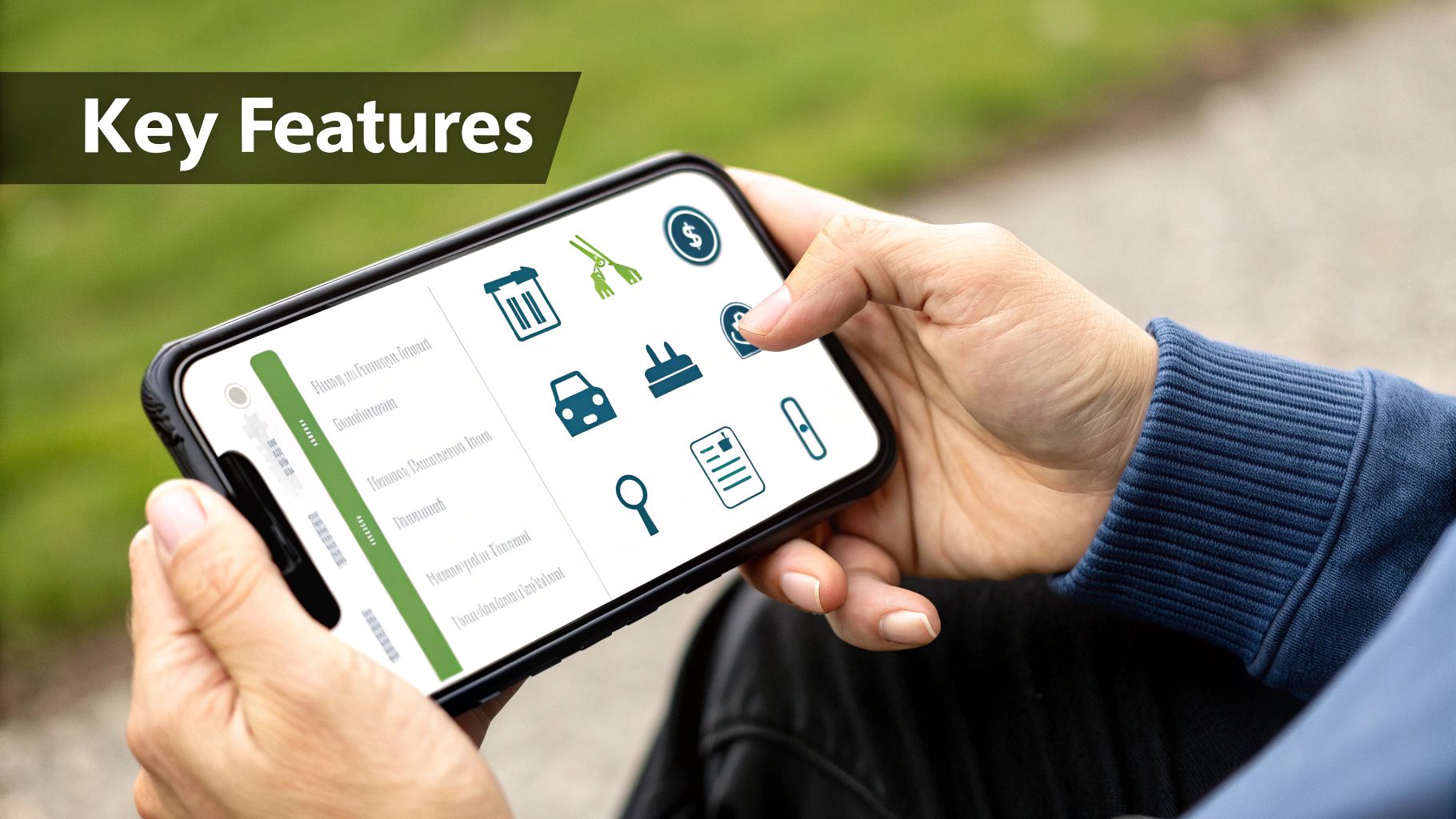
A simple digital calendar just doesn't cut it anymore. What you really need is a dynamic, visual dispatch board. A drag-and-drop interface is essential here. It gives your dispatchers a bird's-eye view of who's where, what job they're on, and who's free.
This makes it ridiculously easy to slot in an emergency call or shuffle the schedule without a chain of confusing phone calls. You'll turn scheduling from a logistical nightmare into a strategic advantage, cutting down on drive time and squeezing more jobs into every day.
A Dedicated Technician Mobile App
The app your techs use in the field is the heart and soul of the whole system. It has to be easy to use, quick to respond, and above all, dependable.
One of the most critical elements here is offline functionality. Job sites are unpredictable. A tech can have full bars one minute and be in a service-dead-zone basement the next. The app must allow them to pull up job notes, fill out checklists, and even create an invoice without an internet connection. Once they’re back online, everything should sync up automatically. Work can't stop just because the signal does.
Integrated Quoting and Invoicing
The power to build a professional quote on the spot and instantly flip it into an invoice is a total game-changer. This simple workflow cuts out the mind-numbing task of re-entering data back at the office, which is where mistakes always seem to creep in.
Your techs should be able to:
- Pull parts and labor from a pre-loaded pricebook, which keeps your pricing consistent and protects your margins.
- Get a customer's digital signature to get the green light right away.
- Convert that approved quote into a final invoice with one tap as soon as the job is done.
This smooth process dramatically speeds up your cash flow, taking you from estimate to paid in minutes, not days.
Beyond core functionalities, ensuring robust data protection and privacy is a non-negotiable, making strong security a must-have feature. Understanding mobile app security best practices is crucial for protecting your company and customer data from potential threats.
Multiple Digital Payment Options
Let's be honest: waiting around for checks to arrive in the mail is a recipe for cash flow problems. A modern field service app has to give customers multiple ways to pay you on the spot. This means accepting credit cards through a mobile card reader and having the ability to text or email a secure payment link directly to the customer.
Getting paid the second a job is finished completely changes the financial health of your business.
Automated Customer Communications
How much time does your office staff spend answering "Where's my technician?" calls? This is where automated communications come in. A good app should handle this for you.
Look for features that send out automatic appointment reminders, "on-my-way" texts (complete with a tech-tracking link), and even follow-up messages asking for a review. These small, professional touches make your business look polished and free up your team to work on things that actually make you money.
How to Choose the Right App for Your Trade Business
Picking the right mobile app for your field service team is one of the most important calls you'll make for your business. This isn't just about buying software; it's about bringing on a long-term partner who gets your trade and wants to see you grow. If you rush this decision, you’ll end up with wasted money, frustrated techs, and a system that causes more headaches than it cures.
The trick is to look past the slick sales pitches and ask the hard, practical questions. You need to know if an app will actually work for your team out in the real world. A generic, one-size-fits-all solution rarely fits anyone perfectly. You need a platform that was built from the ground up with the specific challenges of your industry—whether that’s HVAC, plumbing, or electrical—in mind.
Is the App Built for Your Specific Trade?
First things first: confirm the platform is actually designed for your line of work. A system built for a local delivery service has totally different needs than one for a plumbing contractor who handles complex emergency repairs.
A trade-specific app will come loaded with features that solve your daily problems, like pre-filled price books with industry-standard parts or job-specific checklists for common installations and repairs. This kind of specialization makes the workflow feel natural for your team, which slashes the learning curve and gets everyone on board faster. You’re looking for a partner who speaks your language, not one you have to constantly explain your business to.
Evaluating Pricing, Support, and Scalability
Once you’ve narrowed your list down to trade-specific options, it’s time to dig into the partnership itself. Your goal is to find a provider who will be there for you as your business changes and grows.
Here are the critical questions to ask any provider you're considering:
- Is the pricing transparent and scalable? You need a clear, straightforward pricing model with no hidden fees. Find out if the cost grows predictably as you add more techs, or if you'll face sudden, expensive jumps between pricing tiers.
- Do they offer a free trial? Never sign a contract without letting your team test-drive the software on actual jobs. A free trial is the best way to see if an app is easy for your techs to use and powerful enough for your office staff.
- How seamless is the data migration? Ask them about their process for moving your existing customer lists, job histories, and inventory data. A good partner will have a clear, guided onboarding process to make this switch as painless as possible.
- What does customer support look like? When a critical issue pops up on a busy Friday afternoon, you need fast, helpful support from someone who knows what they’re doing. Ask about their support hours, response times, and the expertise of their team.
Choosing the right software means finding a true partner, not just a vendor. You need a team that is invested in your success and understands the unique pressures and opportunities within the trades.
When looking at potential solutions, it's also smart to think about the total investment. For a deeper dive, understanding mobile app development costs can give you a better perspective on what it takes to build these kinds of powerful tools. This context helps you appreciate the value you're getting from a well-designed, off-the-shelf solution built for your industry.
Ultimately, the right app should feel like a natural extension of your business—a tool that not only solves today’s problems but also gives you a solid foundation to build on for years to come.
A Day in the Life with a Field Service App
To really get a feel for how mobile apps for field service change the game, let's step away from the feature lists and walk through a single job from beginning to end. We'll follow an HVAC company to see how the right app connects the office, the technician, and the customer into one smooth, efficient operation.

The Call Comes In
It’s 9:05 AM. A homeowner’s AC just died. The office manager takes the call, pulls up their file in the app, and sees they're a loyal customer. A quick glance at the visual dispatch board shows that Mark, one of their best techs, is wrapping up a job just two miles away.
With a simple drag-and-drop, the new emergency call is on Mark's schedule. Instantly, his tablet pings with a notification. He has the customer's name, address, notes from the call, and a full service history for that home. No frantic phone calls. No scribbled addresses. Just everything he needs to get started.
Arrival and Diagnosis
Mark taps for directions and is on his way. The moment he does, the system sends an automated "on-my-way" text to the homeowner, complete with a real-time ETA. No more guessing games for the customer.
On-site, Mark pulls up a pre-built digital checklist for AC diagnostics on his app. He methodically works through each step, snapping photos of a fried capacitor and typing notes directly into the work order. This process ensures nothing gets missed and creates a perfect digital trail of his findings—gold for any future service calls.
This level of efficiency isn't just a nice-to-have anymore; it's a must. The field service industry is up against a massive technician shortage, with a projected 2.6 million worker deficit expected to last into 2025 as veterans retire. Mobile FSM apps have become the key tool for getting the absolute most out of every tech you have. You can dig into the data on these field service workforce trends to see how technology is filling the gap.
Quoting and Approval On-Site
Right there in the customer's home, Mark uses the app to build a clean, itemized quote. He pulls the exact capacitor from his company’s digital parts list, which automatically applies the correct pricing and labor rate. This protects profit margins on every single job.
He turns the tablet around to show the homeowner. They can see the cost breakdown and the photos of the bad part for themselves. The customer gives a quick digital signature to approve the work, and the quote is instantly locked in. Mark can get started right away, with no need for follow-up calls or paperwork.
Completing the Job and Getting Paid
With the new part installed and the AC humming, Mark taps "Complete" on his app. That one action instantly converts the approved quote into a final invoice.
He hands the tablet to the customer, who swipes their credit card using a connected mobile reader. Payment processed. Receipt automatically emailed. By 9:55 AM—less than an hour after the initial call—the job is done and closed out. The office has the record, the tech is heading to his next call, and the customer is cool and happy. That’s what modern field service looks like.
Common Questions About Switching to a Field Service App
Making a big change in how you run your business always comes with questions. It's only natural. You're probably wondering about the headache of switching systems, whether your crew will actually use the new tech, and if the money you spend will really come back to you. Let's tackle those common concerns head-on.
"Is Switching from My Current System a Huge Pain?"
It’s a fair question, but with the right software partner, the move is much smoother than you might think. The best mobile apps for field service are built with this exact moment in mind, often including free, guided data migration to do the heavy lifting for you. All your customer lists, job histories, and parts data can be pulled right over from programs like QuickBooks or even another FSM tool.
The key is to find a provider that offers hands-on onboarding support. A dedicated person to walk you and your team through the setup makes all the difference. This way, you can start reaping the benefits right away without grinding your operations to a halt.
Think of it less like a massive overhaul and more like a simple handoff. The goal is to feel like you're getting a natural upgrade, not starting your business over from scratch. The right partner handles the technical stuff so you can stay focused on your work.
"Will My Technicians Actually Use This Stuff?"
This is probably the biggest worry we hear, and it's a valid one. That’s why the most effective field service apps are designed specifically for the person in the truck, not an accountant in an office. A clean interface with big, easy-to-tap buttons, logical steps, and the ability to work offline is non-negotiable. Techs can be stubborn about change, but when an app genuinely makes their job easier, they come around fast.
The core tasks they do every day should only take a couple of taps:
- Pulling up job details and customer history on site.
- Ticking off digital checklists and snapping photos of their work.
- Building a quick quote and getting a customer’s signature.
- Taking payment on the spot, no extra card reader needed.
The best way to see if it’ll stick? A free trial. Let your team get their hands on it and use it on a real job. That hands-on experience is what turns doubt into buy-in. An app that’s built for them becomes a tool they can't live without, not just another task to check off.
"What’s the Real Return on Investment Here?"
The ROI isn't just a fuzzy concept; it comes from very specific, measurable improvements. First, you’ll see revenue climb because your techs can fit more jobs into a day. Better scheduling and routing alone can solve what research shows is the #1 efficiency killer for field technicians. You'll also protect your profit on every job by creating consistent, accurate quotes directly from your digital price book.
On top of that, you stop bleeding money from lost parts. By tracking every single item used on a job, you make sure everything gets billed for. And maybe the biggest win of all is the boost to your cash flow. Getting paid on-site means money in the bank today, not waiting weeks—or months—for a check to clear. While every business is different, most see a serious jump in technician productivity and overall profit in just a few months.
Ready to see how an all-in-one platform built for the trades can solve these problems for you? TackonFSM combines powerful scheduling, quoting, inventory, and payment tools into one simple app your team will actually want to use.
See the difference for yourself. Start your free 14-day trial of TackonFSM.